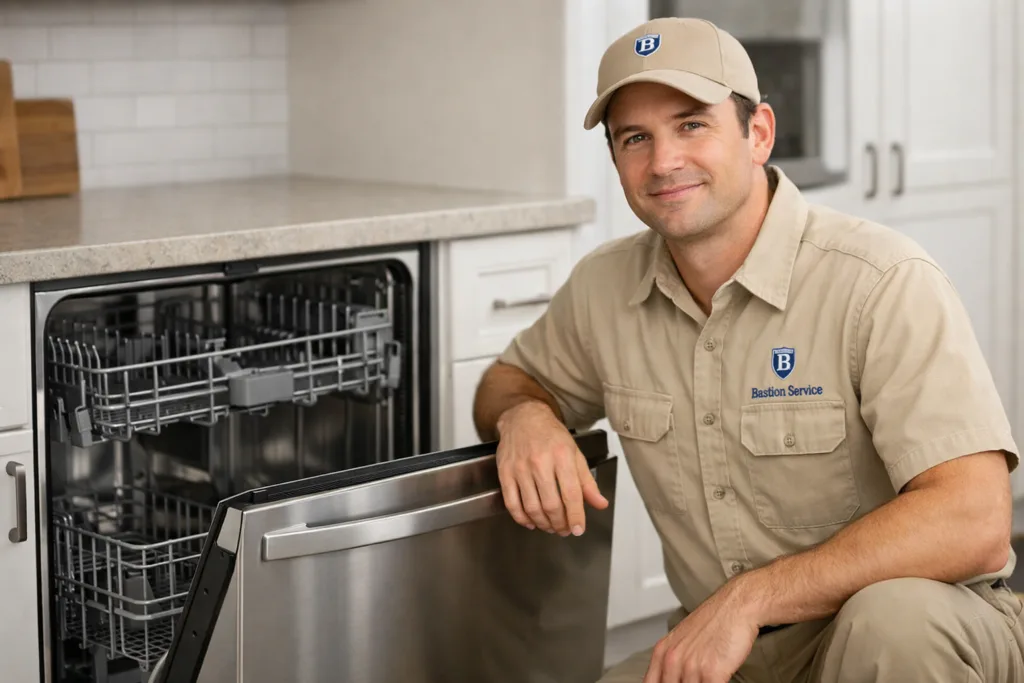
Dishwasher problems rarely stay limited to convenience. A unit that leaves residue behind, holds dirty water in the tub, or leaks near the toe kick can quickly affect daily kitchen cleanup and, in some cases, the surrounding floor area. With GE models, the most useful approach is to match the exact symptom to the part of the machine that is failing rather than assuming every wash or drain problem has the same cause.
Common GE dishwasher symptoms homeowners notice
Some failures appear suddenly, such as a dishwasher that will not start or a cycle that stops halfway through. Others develop slowly over time, including weaker wash performance, longer cycle times, or dishes that come out wet at the end. Paying attention to the specific pattern helps narrow down whether the issue involves water fill, wash circulation, draining, heating, door sealing, or the electronic controls.
Typical complaints include:
- Dishes still dirty after a full cycle
- Standing water left in the bottom of the tub
- Water leaking onto the kitchen floor
- Cloudy glasses or gritty residue
- Cycles that do not finish properly
- A control panel that does not respond
- Unusual buzzing, grinding, or humming sounds
- Little or no heat during drying
Poor washing and residue on dishes
If a GE dishwasher runs but cleaning results are weak, the cause is not always a major component failure. A blocked spray arm, reduced water fill, a restricted filter area, circulation trouble, or wash system debris can all produce similar results. When dishes come out with food still attached, a greasy film, or a chalky appearance, the machine may not be moving enough water through the wash arms or may not be rinsing correctly.
Sometimes the issue is most noticeable on the top rack or only on certain loads. That can suggest a spray pattern problem, loading interference, or reduced pressure in the wash system. If the symptom shows up on nearly every cycle, it is more likely a functional repair issue than a one-time loading mistake.
Drain problems and standing water
Water remaining at the end of the cycle is one of the most common dishwasher complaints. On a GE unit, that can be caused by a clogged filter area, a kinked or restricted drain hose, a drain pump problem, or a blockage farther along the drain path. Slow draining may start as an occasional issue and then turn into water consistently sitting at the bottom of the tub.
Ignoring this symptom can lead to odor, residue transfer back onto dishes, and added wear on the drain system. If the dishwasher sounds like it is trying to pump out but the water remains, that usually points to a restriction or pump-related fault that needs inspection.
Leaks during or after a cycle
A dishwasher leak is not always coming from the same place, even when the water shows up in the same area on the floor. Door gasket wear, overfilling, loose connections, a damaged sump area, or a spray arm sending water toward the door can all create similar signs. Some leaks appear only during the wash portion of the cycle, while others happen when the unit drains.
That timing matters. A leak during fill may suggest one type of failure, while a leak later in the cycle may point somewhere else entirely. Continued use is risky when water is escaping the cabinet area, especially if the moisture is spreading beneath the appliance.
Start, cycle, and control problems
If the dishwasher will not start at all, the fault may involve the door latch, the user interface, power supply issues, or the main control system. A machine that lights up but does nothing after pressing start is a different problem from a machine that begins normally and then stops mid-cycle.
Cycle interruptions can be tied to sensing issues, heating faults, control board problems, or conditions that cause the dishwasher to pause and fail to continue properly. In many homes in El Segundo, this shows up as a unit that seems to run for a while, then sits full of water or never reaches the drying stage.
Intermittent behavior is especially important to address early. Electronic problems often become less predictable over time, which can make the repair process more involved if the unit continues to be used without attention.
Noise, odor, and drying complaints
Unusual sounds
GE dishwashers are not silent, but a sudden change in sound level usually means something has changed inside the machine. Grinding may indicate debris in the wash system or wear in pump-related components. Buzzing can point to motor or drain issues. Repetitive knocking may come from spray arm interference or loose items shifting during operation.
If the appliance was previously operating normally and now sounds rougher or louder, it is worth checking before the condition worsens. Mechanical sounds that repeat on every cycle usually do not resolve on their own.
Persistent odor
Bad smells often trace back to retained food debris, leftover standing water, a dirty filter area, or poor draining. If the tub has been cleaned and the odor returns quickly, the problem may be functional rather than cosmetic. A dishwasher that is not emptying fully can keep moisture and debris trapped in the system, which leads to recurring odor even after wipe-downs or cleaning products are used.
Low heat or poor drying
When dishes come out wet every time, the issue may involve the heating circuit, cycle selection, rinse aid use, or how the dishwasher is loaded. Plastic items naturally retain more water, but if glassware, plates, and metal utensils are all staying noticeably wet, the machine may not be reaching proper rinse or drying conditions.
Low rinse temperature can also affect wash quality. Detergent dissolves and performs best under the right conditions, so a heating-related fault may show up as both poor cleaning and poor drying.
Why symptom-based diagnosis matters
Two GE dishwashers can show the same symptom and need completely different repairs. For example, “not cleaning” might be caused by a circulation motor problem, but it could also come from restricted water flow, blocked wash arms, or poor fill. “Not starting” could mean a failed latch assembly, a user interface problem, or a control issue.
That is why replacing parts based on guesswork often leads to extra cost without solving the original problem. A symptom-based inspection helps determine whether the issue is isolated and repairable or part of a broader pattern of wear inside the appliance.
When to stop using the dishwasher
It is best to pause use of the unit if you notice any of the following:
- Water leaking onto the floor or under cabinetry
- Burning smells or repeated electrical interruptions
- Mechanical grinding that is getting louder
- Standing water that does not drain out
- Repeated mid-cycle shutdowns
- Evidence of overfilling or water escaping from the door area
Running additional cycles in these conditions can increase damage to pumps, seals, flooring, or nearby cabinet surfaces. Even a problem that starts small can become more expensive if the machine is pushed through repeated failed cycles.
Repair or replace?
Many GE dishwashers are reasonable to repair when the issue is limited to one system, such as draining, latching, filling, circulation, or controls, and the rest of the machine is in solid condition. Repair becomes less attractive when the unit has multiple unrelated problems, obvious internal wear, or a history of recurring breakdowns.
Age matters, but overall condition matters more. A newer model with one well-defined failure is often worth fixing. An older dishwasher that leaks, cleans poorly, and has intermittent control problems at the same time may be approaching the point where replacement makes more sense.
For homeowners in El Segundo, the better decision usually comes from looking at the full symptom picture rather than focusing on only the most visible complaint.
What to expect from residential GE dishwasher service
Good service should explain what the dishwasher is doing, what that behavior usually points to, and whether it is safe to keep using the appliance before repair. It should also separate simple maintenance-related causes from actual component failure so you can make an informed decision about next steps.
If your GE dishwasher is leaving dishes dirty, failing to drain, leaking, not heating properly, or stopping mid-cycle, the clearest path forward is a diagnosis based on the exact behavior of the machine in your home.