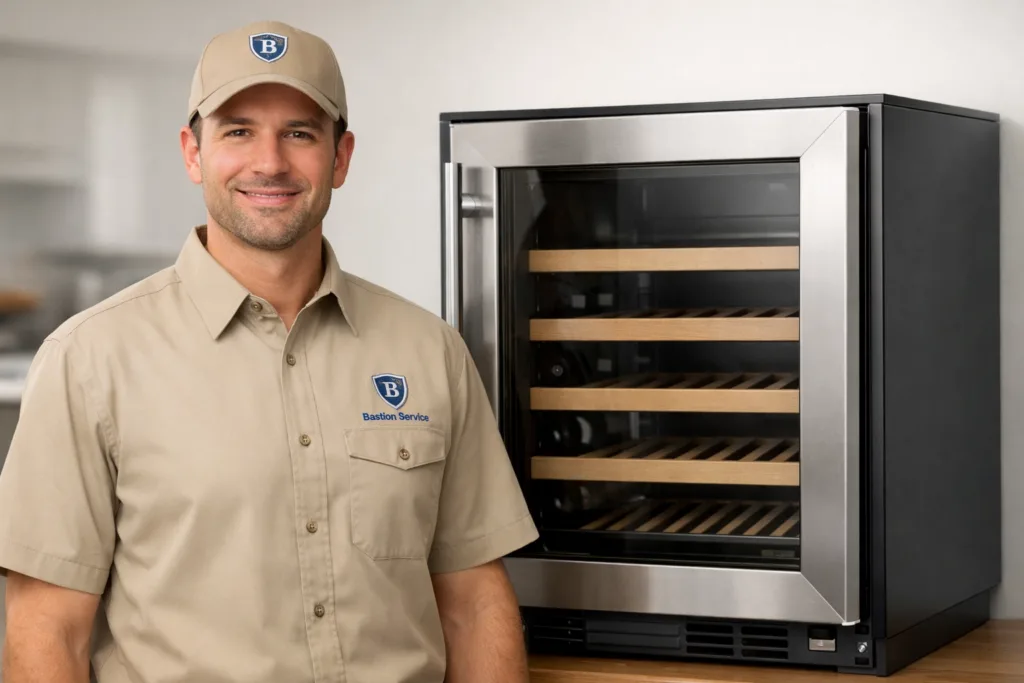
A U-Line wine cooler that starts running warm, sweating, vibrating, or cycling nonstop can put a collection at risk quickly. Similar symptoms can come from very different faults, including restricted airflow, a control problem, a weak door seal, fan trouble, or a more serious cooling-system issue. Sorting out which one applies is what makes the next step more cost-effective.
Common U-Line wine cooler symptoms and what they usually mean
Temperature drift is one of the most common complaints. If bottles no longer feel evenly chilled, the cause may be a sensor or thermostat problem, blocked airflow, dirty condenser areas, a fan issue, or declining cooling performance. Even when the temperature is only slightly off, the unit may be working much harder than normal behind the scenes.
Frequent cycling or nonstop operation is another warning sign. When the cooler rarely seems to satisfy the set temperature, possibilities include warm air leaking in through the door, poor ventilation around the cabinet, a control fault, or a compressor struggling to keep up. Letting it run like this for too long can increase wear on parts that are still salvageable.
Moisture is also an important clue. Interior condensation, fogging on the glass, or a small puddle below the unit can point to a sealing problem, drainage trouble, or repeated warm-air intrusion. In built-in installations, these problems often go unnoticed until cooling performance starts to drop.
Noise changes that should not be ignored
Wine coolers are not silent, but new sounds usually mean something has changed. A steady hum may be normal, while louder clicking, buzzing, rattling, or repeated start-stop sounds often suggest a part beginning to fail.
Different noises can suggest different repair paths:
- Rattling or vibration: loose panels, mounting vibration, or a fan assembly issue.
- Clicking: start device, relay, or control trouble.
- Buzzing: compressor strain or a fan obstruction.
- Intermittent scraping: possible frost buildup interfering with fan movement.
If the compressor tries to start repeatedly and fails, that is worth addressing sooner rather than later. Repeated failed starts can put extra stress on electrical components and may turn a smaller repair into a broader one.
Door seal and airflow problems can mimic bigger failures
On many household service calls in Palms, the root cause is not a failed compressor at all. A door that does not close squarely, a shelf loaded in a way that blocks closure, or a gasket that no longer seals evenly can allow warm room air into the cabinet. That leads to longer run times, unstable temperatures, and excess moisture.
Ventilation matters too, especially for undercounter or built-in U-Line models. If heat cannot escape properly, the wine cooler may appear to have a serious cooling problem when the main issue is restricted air movement around the cabinet. This is one reason symptom-based diagnosis matters more than guessing from temperature alone.
Signs the issue is becoming more urgent
- The interior stays warmer than the selected setting.
- The unit runs almost constantly.
- You notice new clicking, buzzing, or repeated restart attempts.
- Condensation, fogging, or leaking keeps returning.
- The door pops open, feels loose, or does not seal evenly.
- Cooling is uneven from top to bottom or front to back.
When cooling problems point to controls, fans, or sealed-system trouble
Not every “not cooling” complaint means the same thing. Some U-Line wine coolers lose temperature because the evaporator or condenser fan is not moving air properly. Others may have a sensor reading incorrectly and telling the system to cycle at the wrong times. In some cases, the compressor or sealed system may be losing efficiency, which tends to show up as longer run times, poor pull-down, and temperatures that slowly climb.
A useful inspection separates these categories. That matters because a fan motor or control-related repair is very different from a sealed-system diagnosis, both in complexity and in cost. Homeowners usually benefit most when the problem is narrowed down before parts are ordered or bigger decisions are made.
Repair versus replacement for a residential U-Line wine cooler
Repair is often the sensible choice when the problem is tied to accessible parts such as sensors, fans, relays, gaskets, controls, or drainage components. Replacement becomes more likely when the unit has major sealed-system failure, repeated age-related breakdowns, or repair costs that no longer make sense for the condition of the appliance.
The age of the cooler matters, but so does the symptom pattern. A unit that seems severely warm may only need a targeted fix related to sealing or airflow. On the other hand, a cooler that still chills somewhat can still have a deeper mechanical issue. Looking at performance, run behavior, moisture, and noise together usually gives a better answer than focusing on one symptom by itself.
What homeowners in Palms should look at before service
Before scheduling repair, it helps to note a few details:
- Whether the problem is constant or comes and goes.
- If the unit is fully built in or has tight surrounding cabinetry.
- Whether the door closes smoothly and seals all the way around.
- If the noise happens during startup, while running, or only occasionally.
- Whether condensation appears inside, outside, or beneath the cooler.
These details can make diagnosis faster and help determine whether the problem is installation-related, maintenance-related, or part failure.
What service should clarify before any repair is approved
For U-Line wine cooler repair in Palms, the most helpful service outcome is a direct explanation of what has failed, whether continued operation risks further damage, and whether the repair is likely to restore stable performance. That is especially important for built-in units, dual-zone models, or coolers protecting a larger collection.
If your U-Line wine cooler is running warm, making new noises, or showing signs of moisture or poor sealing, the next best step is to have the symptom pattern evaluated before the unit is pushed harder. That helps protect the appliance, reduces unnecessary parts replacement, and gives you a clearer decision on repair versus replacement.