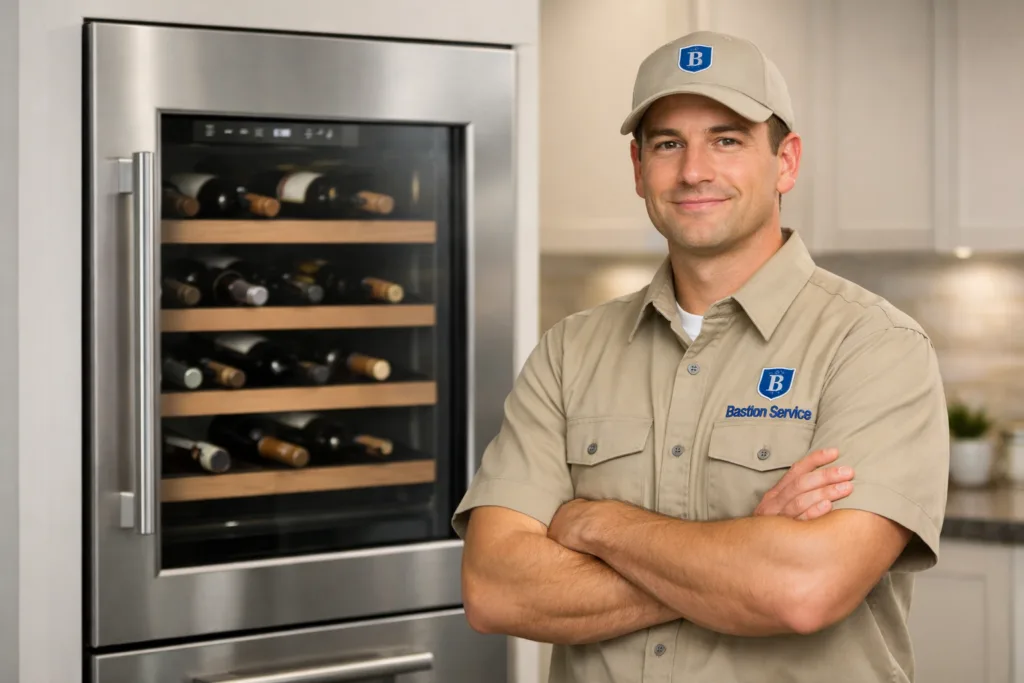
Temperature drift in a KitchenAid wine cooler usually starts as a small annoyance, then turns into an obvious storage problem. Bottles may feel a little warmer than expected, the display may seem accurate even when the cabinet is not, or the unit may begin running longer than normal. In Palms homes, these signs often trace back to airflow restrictions, sensor or control faults, fan problems, door sealing issues, or a deeper cooling-system failure that needs to be identified before any repair is approved.
Common KitchenAid wine cooler symptoms at home
Most homeowners first notice that the cooler is no longer holding a steady temperature. A unit that runs but does not cool properly can have several different causes that look similar at first. A weak fan motor, dirty condenser area, faulty thermistor, control issue, or warm air leaking in around the door can all create the same basic complaint: the wine cooler is on, but storage conditions are inconsistent.
Another frequent issue is nonstop operation. If the compressor seems to run for very long periods, the appliance may be struggling to remove heat efficiently. Sometimes that comes from dust buildup or poor cabinet ventilation. In other cases, it points to a component problem that should be checked before extra wear builds up.
Noises are also worth paying attention to. Normal cycling sounds are expected, but new rattling, clicking, buzzing, or a strained fan sound can indicate a loose part, obstructed blade, failing motor, or start problem. If the sound appears along with weak cooling, the two symptoms are often connected.
What different symptom patterns can mean
Not cooling enough
A KitchenAid wine cooler that stays too warm may have restricted airflow, a failing evaporator fan, dirty condenser components, inaccurate temperature sensing, or an electronic control problem. If the display looks normal while the cabinet temperature drifts, the issue may be deeper than the user controls.
Too cold or partially freezing
Overcooling is less common, but it does happen. When the unit reads the cabinet temperature incorrectly or fails to regulate the cooling cycle, bottles can be stored below the intended range. This often points to a sensor or control fault rather than a simple setting problem.
Condensation or water inside
Moisture on shelves, around the gasket, or beneath the unit usually means warm air is entering the cabinet or water is not draining correctly. A door that is slightly misaligned, a worn gasket, or unstable internal temperature can all contribute to condensation that keeps returning.
Runs constantly or short cycles
Long run times usually suggest heat gain or reduced cooling efficiency. Short cycling, where the unit starts and stops too frequently, can indicate an electrical issue, a control fault, or trouble with the compressor start components. Both patterns can increase wear if they continue unchecked.
Controls not responding
If the panel becomes erratic, settings will not change, or the display behaves strangely alongside cooling problems, the root cause may be in the interface, main control, wiring, or sensor communication. This type of issue should not be treated as cosmetic if the cabinet temperature is also unstable.
Why accurate diagnosis matters
Wine cooler symptoms can be misleading. A homeowner may suspect the thermostat because the temperature is off, but the actual cause may be a fan that is no longer moving air correctly, a gasket allowing warm air in, or a sealed-system issue reducing cooling performance. Replacing parts based on guesswork can add cost without solving the problem.
Diagnosis also helps determine whether repair is still practical. Many KitchenAid wine cooler issues are repairable when the fault is limited to a fan motor, sensor, control component, door gasket, or drainage problem. If testing points to a major cooling-system failure in an older unit, replacement may make more sense than a large repair.
Signs you should schedule service soon
- The cabinet temperature keeps drifting away from the setting.
- Bottles no longer feel consistently cool.
- The compressor seems to run almost all the time.
- Condensation keeps appearing on the glass, shelves, or door area.
- The unit has started making new clicking, buzzing, or rattling sounds.
- The door does not seal or close as firmly as it used to.
- The controls are unresponsive or behave unpredictably.
Waiting can turn a manageable repair into a larger one. A fan problem can strain the cooling system, a bad seal can force the appliance to run harder, and persistent short cycling can stress electrical components. Even when the cooler is still operating, unstable storage conditions usually mean something is already deteriorating.
Repair versus replacement
For many households in Palms, the decision depends on the age of the KitchenAid wine cooler, the condition of the cabinet, the exact failed part, and the total repair path. A newer unit with a fan, sensor, control, or gasket problem is often worth repairing. Those are targeted faults that can restore normal performance when the rest of the appliance is in good shape.
Replacement becomes a more serious consideration when the cooler has repeated breakdowns, major sealed-system trouble, or multiple worn components at once. An older unit that still powers on is not always the better repair candidate, while a unit that seems completely dead may turn out to have a repairable control or power issue. The useful next step is to identify the actual failure before deciding.
What a focused service visit should cover
A proper visit for a KitchenAid wine cooler should include symptom review, temperature behavior checks, inspection of airflow and condenser condition, door gasket assessment, and testing of the components most closely tied to the complaint. That process helps separate simple airflow or control problems from more serious cooling failures.
For homeowners in Palms, that means less trial-and-error and a better basis for choosing whether to move forward with repair. If your wine cooler is running but not protecting a stable environment, the most helpful path is a clear diagnosis and a repair recommendation based on the actual symptom pattern rather than assumptions.