
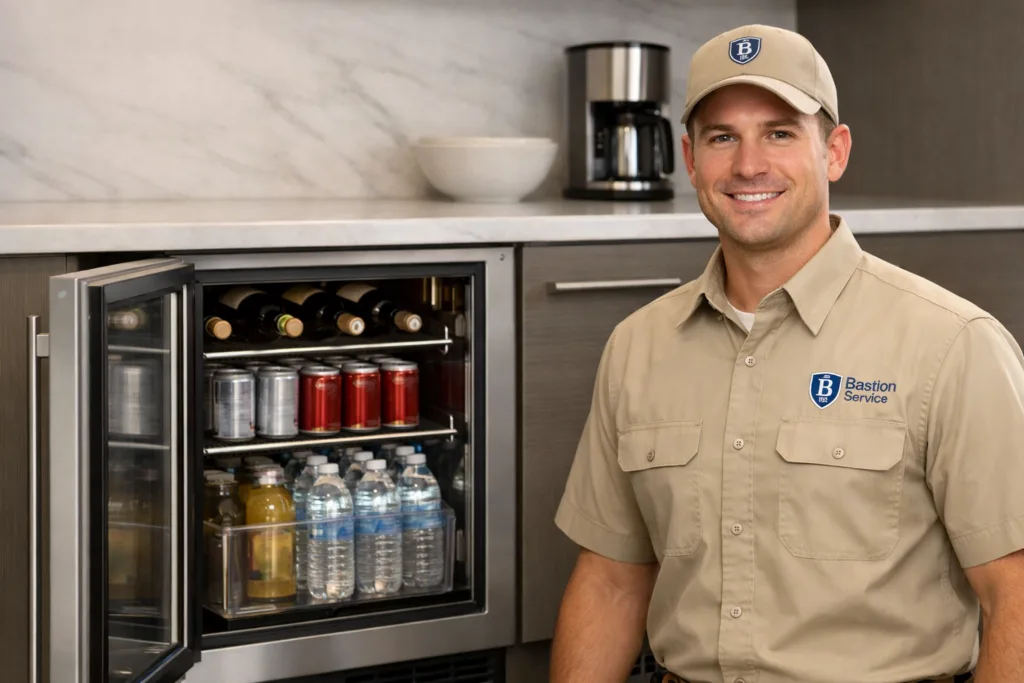





U-Line appliances are often installed where size, appearance, and steady performance all matter, so even a modest change in operation can become disruptive quickly. A beverage unit that no longer holds temperature, a freezer with fresh frost, or an ice maker that suddenly slows down can each point to very different causes. The most useful approach is to match the symptom pattern to the likely system involved before deciding whether the problem is minor, urgent, or expensive.
For specific U-Line appliance paths in Palms, review U-Line Refrigerator Repair in Palms, U-Line Freezer Repair in Palms, and U-Line Ice Maker Repair in Palms.
How U-Line problems usually show up at home
Many household appliance failures do not begin with a complete shutdown. Instead, performance slips in ways that are easy to dismiss at first. A refrigerator may seem slightly warmer near the door shelves. A wine cooler may begin fluctuating more than usual during the day. An ice maker may still work, but produce smaller batches, hollow cubes, or uneven ice. These early changes often help narrow the problem faster than a simple “not working” description.
In Palms homes, built-in and undercounter units are especially easy to overlook because they are quieter and less visible than full-size kitchen appliances. That makes it important to pay attention to subtle warning signs such as longer run times, more condensation, clicking, fan noise, or water collecting where it did not before.
Refrigerator symptoms that deserve a closer look
A U-Line refrigerator can lose performance for reasons ranging from basic airflow trouble to a more serious cooling-system fault. The symptom itself matters, but so does the pattern. A unit that is warm all the time suggests a different issue than one that cools normally overnight and struggles during the day.
Warm interior or uneven cooling
If drinks or food are not staying cold enough, likely causes can include restricted airflow, dirty condenser surfaces, sensor or control problems, a weak fan, or a sealed-system issue. Uneven temperatures between upper and lower sections may point more toward circulation than total cooling failure.
Water under drawers or around the door
Moisture inside the cabinet can come from a blocked drain path, excess condensation, a poor door seal, or frequent warm-air intrusion. If water is pooling outside the unit, the issue should be addressed quickly to avoid damage to nearby flooring or cabinetry.
Constant running or short cycling
A refrigerator that rarely shuts off may be trying to compensate for heat gain, low cooling efficiency, or a control problem. Short cycling, where the unit starts and stops too often, can suggest temperature sensing issues or electrical faults. Either pattern is worth checking before wear spreads to other components.
Freezer issues that can signal more than frost
Freezer problems are often noticed only after food quality changes, but the visible clues usually begin earlier. Frost on packages, ice around the door opening, or a drawer that becomes harder to move can all indicate a shift in how the unit is sealing, defrosting, or circulating air.
Soft food or rising temperature
If frozen items are becoming soft, the problem may involve weak cooling, poor airflow, an evaporator fan issue, or a door that is not closing as tightly as it should. A single warm event can be accidental, but repeated softening points to a real operating fault.
Heavy frost or ice buildup
Frost does not always mean the same thing. It can result from humid air entering through a damaged gasket, from defrost trouble, or from a circulation problem that leaves certain surfaces too cold and others too warm. Thick frost around vents or panels usually means the unit needs more than simple cleanup.
Door alignment and sealing trouble
If the freezer door pops open, sticks, or no longer seals evenly, cooling loss may follow. A bad seal can cause frost, longer run times, and unstable storage temperatures. In compact units, even a small alignment problem can have a noticeable effect.
Ice maker problems and what they often mean
When an ice maker stops producing normally, the issue may be related to water supply, freezing conditions, sensing, or the harvest cycle. Because several systems have to work in sequence, symptoms are especially important when deciding where to look first.
- No ice at all: can point to supply restrictions, valve trouble, a control fault, or a failure during freeze or harvest.
- Slow production: may indicate partial water feed, scaling, temperature issues, or a unit that is not cycling on schedule.
- Small or misshapen cubes: often suggest fill problems, low water volume, or mineral buildup affecting the process.
- Leaking: may come from overfilling, drain issues, loose connections, or ice melt caused by unstable cooling.
- Grinding, clicking, or knocking: can be tied to mechanical movement during harvest, fan interference, or stress in the ice-making assembly.
If leaking is present, it is smart to stop normal use until the source is identified. Water from a compact appliance can travel farther than expected, especially around finished cabinetry.
Wine cooler temperature drift is not a minor issue
Wine coolers are designed for consistency more than rapid cooling, so repeated fluctuation is often the main complaint. A unit may still feel cool, yet still be failing at the job it was meant to do. That is why even modest changes in temperature behavior matter.
Inconsistent cabinet temperature
Drift can be caused by thermostat or sensor errors, airflow problems, fan wear, poor door sealing, or declining cooling performance. If the display setting and actual cabinet feel no longer match, a control or sensing issue becomes more likely.
Condensation on glass or around the frame
Condensation usually reflects warm-air intrusion or cooling imbalance. It can appear when the gasket is no longer sealing cleanly, when the unit is cycling abnormally, or when internal airflow is not distributing temperature evenly.
Loud fan noise or unusual vibration
Noise changes matter in wine coolers because they often operate quietly under normal conditions. New rattling, buzzing, or fan sounds can indicate obstruction, wear, loose mounting, or strain from a system working harder than it should.
Why the same symptom can lead to different repairs
One of the biggest mistakes with refrigeration appliances is assuming one visible problem always has one cause. A warm cabinet might be traced to a dirty condenser area and restored with corrective service, while another unit with the same complaint may have compressor or sealed-system trouble. An ice maker that quits may need a water component, while another may be failing because it never reaches the right operating temperature.
That difference is why symptom-based evaluation matters. It helps separate issues that are commonly repairable from failures that may carry higher parts cost, more labor, or less favorable long-term value.
Signs it is time to stop waiting
Some problems can tolerate a short window of observation. Others should be addressed promptly. Households in Palms should move quickly when a U-Line unit shows any of the following:
- food or beverages are no longer staying at a safe or expected temperature
- the appliance is leaking onto surrounding surfaces
- new clicking, grinding, or loud fan noise has started
- frost keeps returning after being cleared
- the unit runs almost constantly or cycles in an unusual pattern
- controls, lights, or display response have become erratic
Waiting too long can turn one failed part into a larger problem. A fan working under strain, a door left with a weak seal, or a unit repeatedly overheating can create secondary wear that was not present at the beginning.
Repair or replace: what usually makes the difference
Many U-Line problems still make sense to repair, especially when the appliance fits a finished built-in opening or matches surrounding kitchen design. Door gaskets, fans, controls, drains, water-related components, and many accessible electrical parts can often justify repair when the unit is otherwise in solid condition.
Replacement becomes a more serious consideration when the appliance has a history of recurring failures, shows signs of major cooling-system trouble, or needs repairs that approach the value of the unit. Age alone does not decide the issue. The better question is whether the expected result is reliable enough for daily household use.
What homeowners should note before scheduling service
A few details can make diagnosis faster and more accurate. Before an appointment, it helps to note:
- when the problem started and whether it was sudden or gradual
- whether the issue is constant or comes and goes
- any recent power interruption, cleaning, moving, or plumbing change
- what temperatures, leaks, noises, or frost patterns you have observed
- whether the door has been sealing normally
These details are especially useful for intermittent problems, where the appliance may appear to recover briefly and then fail again later.
U-Line appliance repair in Palms with a symptom-first approach
Whether the issue involves a refrigerator, freezer, ice maker, or wine cooler, the goal is the same: identify what system is failing and determine whether repair is the sensible next step. That keeps the decision grounded in actual condition rather than guesswork. For homeowners in Palms, a clear diagnosis and practical repair plan is the most direct way to understand whether the problem is manageable, urgent, or a sign that replacement should be considered.


