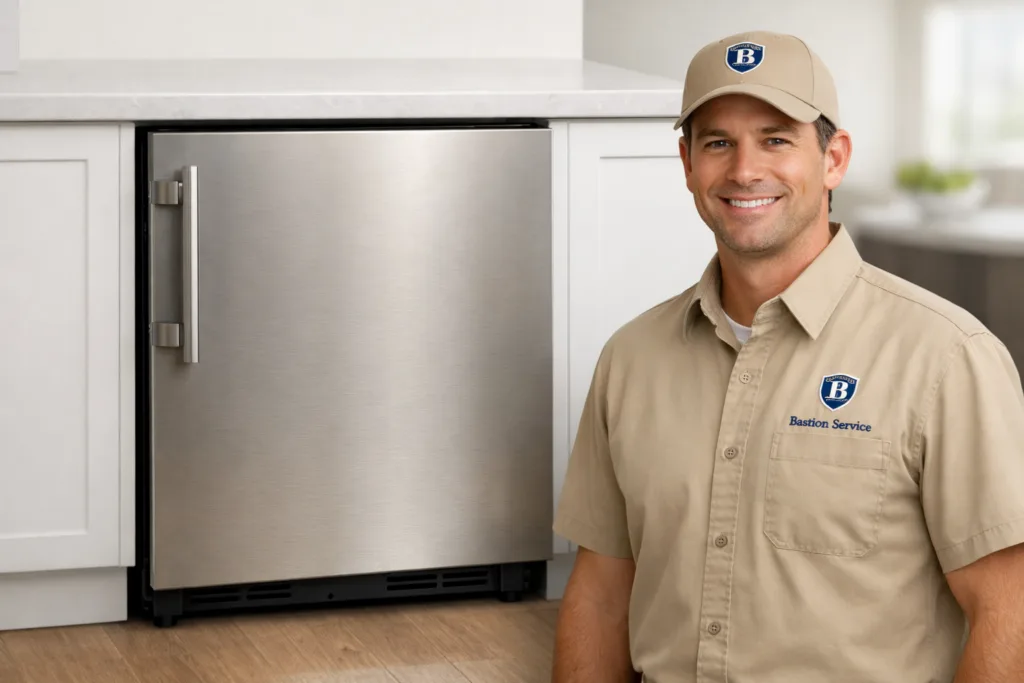
A U-Line freezer that stops holding temperature, develops heavy frost, or starts making unusual noises can put food at risk quickly. In Palms homes, the smartest next step is to match the symptom pattern to the most likely failed system instead of guessing from a single visible issue. The same freezer can appear to have “one problem” while the real cause is airflow loss, a control issue, a weak fan, a sealing problem, or a deeper cooling fault.
How U-Line freezer problems usually show up
Freezer failures are often easier to understand when you look at what changed first. Did the unit become slightly warmer over several days? Did frost appear before cooling dropped? Did a new clicking or buzzing sound start at the same time food began softening? Those details help separate minor faults from more involved repairs.
Many homeowners notice one of these patterns first:
- Food stays cold but not fully frozen
- Ice or frost keeps returning after you clear it
- The freezer runs longer than usual or seems to never stop
- The unit turns on and off too often
- Water appears under or inside the freezer
- New fan noise, rattling, clicking, or loud humming develops
Each pattern points toward a different repair path, which is why symptom-based testing matters.
Common U-Line freezer symptoms and what they may mean
Not freezing well or temperature keeps changing
If frozen food is soft, ice cream is loose, or the interior seems cold but not cold enough, the issue may involve weak airflow, a failing evaporator fan, sensor or thermostat trouble, dirty heat exchange surfaces, or compressor-related problems. Temperature swings can also happen when frost is blocking air movement inside the cabinet. A freezer that runs constantly without reaching the proper temperature usually needs attention sooner rather than later.
Heavy frost on shelves, walls, or the back panel
Frost buildup is rarely just cosmetic. It often means warm air is entering where it should not, or the defrost system is not clearing moisture as designed. A worn door gasket, a door that does not close squarely, repeated warm-air intrusion, or a failed defrost component can all create the same visible result. As frost thickens, cooling efficiency drops and the freezer may begin running longer to compensate.
Clicking, buzzing, rattling, or louder-than-normal operation
Some operating sound is normal, but a noticeable change in sound matters. Repeated clicking may suggest trouble with starting components or compressor engagement. Buzzing or humming that becomes harsher than usual can point to mechanical strain or vibration. Rattling may be something simple like loose panels or mounting issues, but if it appears with warming or short cycling, it can signal a more important cooling or fan problem.
Water leaks or excess moisture
Water under the freezer, droplets inside, or unexplained moisture near the door usually means something is interrupting normal drainage or temperature balance. Meltwater can back up when a drain path is restricted. Moisture can also develop when the freezer is pulling in warm air through a poor seal. In many cases, water is not the only problem; it is a symptom of a larger cooling or frost issue.
Runs all the time or shuts off too quickly
A U-Line freezer that never seems to rest may be trying to overcome heat gain, poor airflow, sensor error, or declining cooling performance. Short cycling, where the unit starts and stops too often, can indicate control faults, electrical issues, or compressor stress. Either pattern can lead to unstable storage temperatures and should not be ignored if it continues.
Why frost and airflow problems matter so much
One of the most common reasons a freezer seems unreliable is that airflow inside the unit is no longer moving the way it should. Cold air has to circulate correctly for the cabinet to freeze evenly. If frost blocks vents or the evaporator area, temperatures may look acceptable in one spot and be too warm in another. That is why a freezer can still sound “alive” while food quality gets worse.
In household use, this often shows up as food near one shelf staying harder than food stored elsewhere, or items thawing slightly and then refreezing. That pattern should not be written off as normal variation. It usually means the freezer is no longer operating consistently.
When to stop waiting and schedule service
It is time to schedule service if your freezer is no longer keeping food solidly frozen, if frost keeps coming back, if the door seal looks compromised, or if the unit begins making repeated start-up noises without restoring proper temperature. Waiting too long can increase food loss and may allow a smaller issue to turn into damage affecting other components.
You should also act promptly if:
- The freezer feels warm even though it is running
- The compressor seems to struggle to start
- Moisture keeps appearing around the door or on the floor
- The interior back panel is icing over
- The fan sound changes suddenly
- The unit trips power or behaves erratically after restarting
What homeowners in Palms can check before service
There are a few simple observations that can help clarify the problem before a repair visit. Check whether the door closes fully and whether containers or food packages are keeping it slightly open. Look for visible frost concentrated around the gasket, vents, or rear interior panel. Listen for whether the fan starts normally and whether the compressor tries repeatedly to kick on.
You can also note whether the problem is constant or intermittent. A freezer that is warm all the time points in a different direction than one that cools for hours and then drifts upward overnight. If food is already softening, move it to reliable cold storage rather than hoping the unit will recover by itself.
Avoid forcing frozen drawers, scraping heavy ice with sharp tools, or repeatedly unplugging and reconnecting the freezer in an attempt to reset it. Those steps can create additional damage or make the original fault harder to evaluate.
Repair or replacement: what usually decides it
Many U-Line freezer problems are repairable when the cabinet is in good condition and the failure is limited to a specific component or system. Repair tends to make sense when the issue can be isolated and the freezer is otherwise structurally sound. Replacement becomes a more serious consideration when testing points to major sealed-system trouble, repeated electronic failures, or multiple problems that have built up over time.
The best decision usually depends on:
- The exact cause of the cooling failure
- The overall condition of the freezer
- Whether the problem has caused secondary damage
- How reliably the unit performed before this issue
- The scope of parts and labor needed to restore stable operation
That is why a practical repair plan starts with confirmed findings, not assumptions based on one symptom alone.
Household impact of an unstable freezer
Freezer problems are disruptive even when they seem minor at first. Temperature inconsistency can shorten storage life, damage food texture, and create uncertainty about what is still safe to keep. For busy households in Palms, a freezer that only “mostly works” is often more frustrating than one that fails completely, because the problem is easier to overlook until food loss has already happened.
If you have noticed repeated softening, refreezing, or moisture inside the cabinet, it is worth treating those as warning signs rather than everyday quirks. Freezers are designed for stable storage, and ongoing fluctuation usually means something inside the cooling process is no longer working correctly.
What a symptom-based service approach helps uncover
With U-Line freezer repair in Palms, the most useful approach is to follow the actual behavior of the machine. A unit that frosts heavily calls for different testing than one that clicks and fails to start, and both differ from a freezer that runs non-stop while only partially freezing food. That kind of diagnosis helps narrow the problem efficiently and gives homeowners a better basis for deciding whether repair is practical for normal household use.