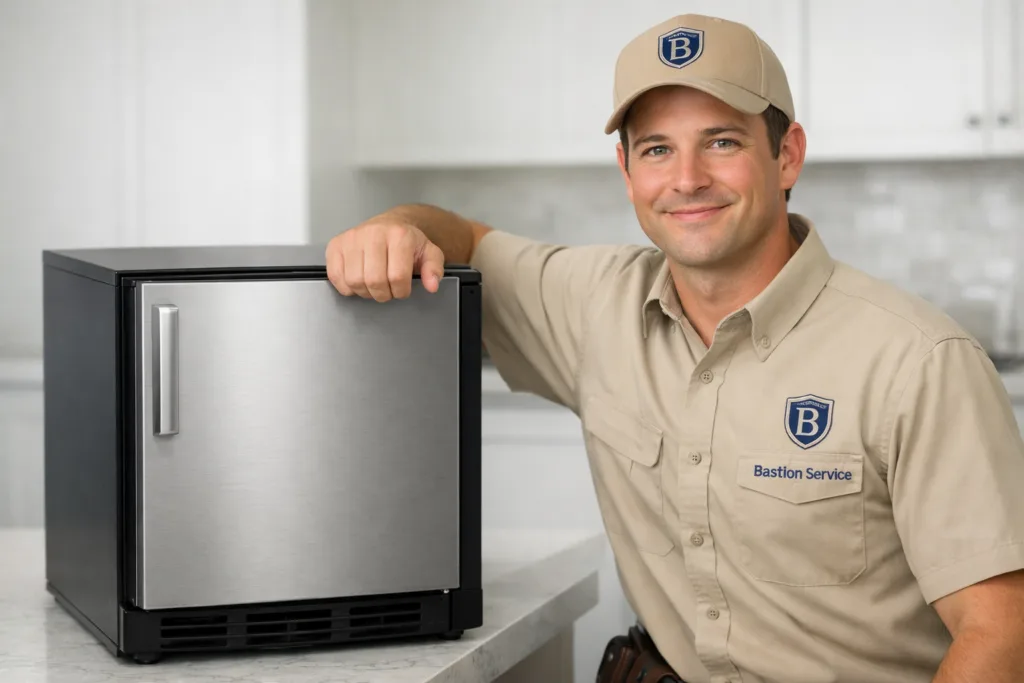
Ice maker failures are easiest to solve when the symptom is matched to the part of the machine that controls it. With a U-Line unit, problems that look similar from the outside can come from very different causes, including water supply restrictions, scale buildup, drain issues, sensor faults, airflow problems, or cooling-system trouble. Looking at what the machine is doing step by step usually points to the most sensible repair path.
How to read common U-Line ice maker symptoms
A U-Line ice maker follows a sequence: it fills with water, freezes the batch, harvests the ice, and drains or recirculates as designed. When one stage is interrupted, the symptom changes. That is why the same complaint from two households in Palms can lead to two completely different repairs.
No ice at all
If the unit powers on but never produces a batch, the problem may be tied to water not entering the machine, the cabinet not reaching the required temperature, or a failed control or sensor preventing the cycle from advancing. In some cases, the machine appears normal from the outside but never completes the freeze stage. In others, it may try to run repeatedly without harvesting anything.
- Water supply shutoff or low incoming pressure
- Inlet valve not opening correctly
- Temperature sensor or control issue
- Cooling system not getting cold enough
- Internal component failure in the freeze-and-harvest cycle
Slow production or smaller batches
When the machine still makes ice but not enough of it, the issue is often developing rather than total failure. A dirty condenser, restricted airflow, mineral buildup, partial fill problems, or weak cooling performance can all reduce output. Many homeowners first notice this when the bin no longer stays full under normal use.
Slow ice production should not be brushed off as a minor inconvenience. It can be the early sign of a larger issue, especially if the machine runs longer than usual, feels warmer around the cabinet, or produces inconsistent batch sizes.
Clumped, wet, or partially melted ice
Ice that sticks together usually means the cubes are melting slightly before the next cycle or before they settle in the bin. That can happen when temperatures are unstable, the door is not sealing well, the machine is not harvesting cleanly, or cooling performance is declining. If the clumping keeps returning after you empty the bin, there is usually an operating problem that needs attention.
Thin, cloudy, or misshapen cubes
Cube shape and clarity can tell you a lot. Thin cubes often suggest underfilling. Cloudy or brittle cubes may point to water quality issues, incomplete freezing, or scale affecting the way water moves through the system. Misshapen cubes can also show up when controls are no longer timing the cycle correctly.
Leaking water around the unit
Leaks should be addressed quickly because they can damage nearby flooring and cabinetry. Common causes include a loose or damaged water line, an overfill condition, a blocked drain path, or meltwater caused by poor cooling. Even a small amount of water can be misleading, since the leak may only appear during one part of the cycle.
New buzzing, clicking, or grinding sounds
Some operating noise is normal, but a change in sound usually matters. Buzzing can point to a struggling inlet valve. Rattling may come from fan or panel vibration. Repeated clicking can be related to controls or a failed start attempt. Grinding or harsh mechanical noise during harvest may indicate ice handling parts are under stress.
What these symptoms usually mean inside the machine
U-Line ice makers depend on several systems working together. The water system must fill correctly, sensors must read correctly, controls must advance the cycle correctly, and the refrigeration side must create and maintain the right temperatures. Because those systems overlap, one visible problem can have more than one possible cause.
For example, wet ice in the bin might come from a drain problem, but it can also happen when the machine is not cooling properly. Low output might be a simple maintenance issue such as dirty coils, or it might point to a deeper refrigeration fault. This is why symptom-based diagnosis matters more than replacing parts based on a guess.
Issues homeowners can notice before service
You do not need to disassemble the appliance to gather useful clues. A few simple observations can help narrow down what is happening with your ice maker:
- Whether the machine has power and the controls respond normally
- Whether water is reaching the unit at all
- Whether the machine sounds like it is cycling, filling, or attempting to harvest
- Whether the bin contains thin, cloudy, clumped, or partially melted ice
- Whether water appears only during operation or remains on the floor continuously
- Whether performance dropped suddenly or declined over time
These details can make it easier to identify whether the problem is related to fill, freeze, harvest, drain, or cooling performance.
When a repair is often worthwhile
Many U-Line ice maker problems are repairable when the failure is limited to a valve, pump, sensor, drain issue, fan-related problem, control component, or maintenance-related restriction. If the appliance is otherwise in solid condition and the issue is isolated, repair is often the more practical option for a household in Palms.
This is especially true when the machine has been reliable until a specific symptom appeared, such as leaking during fill, producing thin cubes, or slowing down noticeably over a short period.
When replacement may deserve consideration
Replacement becomes more reasonable when the unit has repeated major breakdowns, significant cooling-system trouble, or overall wear that makes one repair likely to be followed by another. Age alone does not decide it, but age combined with unstable temperature performance, recurring leaks, or costly internal failures can shift the decision.
A useful evaluation looks at more than whether the machine still turns on. It should include batch consistency, ice quality, temperature stability, leak risk, and whether the current fault is likely to return because of broader wear inside the appliance.
Signs you should stop using the ice maker for now
Some symptoms justify shutting the machine down until it can be checked. Continued operation can turn a manageable repair into a more expensive one.
- Active leaking under or around the appliance
- Loud new mechanical noise
- Repeated cycling with no ice produced
- Ice melting in the bin
- Burning smell, tripped breaker, or intermittent power loss
- Noticeable temperature instability inside the unit
If any of these are happening, avoiding further use can help limit water damage and prevent extra stress on internal components.
What Palms homeowners should expect from service
The most helpful service call starts with the actual behavior of the machine rather than a broad assumption about the cause. If your U-Line ice maker leaks, overfills, produces slow batches, or stops making ice entirely, the right next step is to identify which stage of operation is failing and whether the issue is isolated or part of a larger cooling problem.
For households in Palms, that kind of practical inspection helps answer the question that matters most: whether the ice maker should be repaired now, monitored after maintenance, or replaced because the failure pattern no longer makes economic sense. A focused diagnosis also helps reduce repeat visits and unnecessary parts replacement.