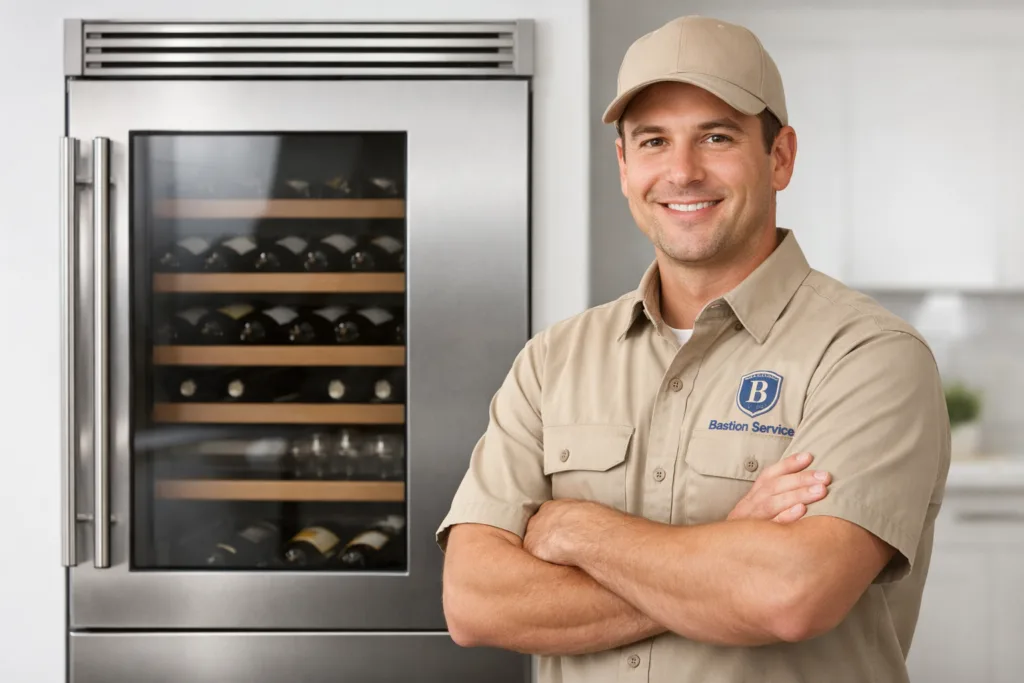
Wine coolers are built for stability, so even a small change in performance can affect how bottles are stored over time. When a Sub-Zero unit in a Palms home starts warming, cycling oddly, collecting moisture, or making new sounds, the most useful next step is to match the symptom to the system that is likely failing. That approach helps narrow down whether the issue is related to airflow, controls, door sealing, drainage, fan operation, or the cooling system itself.
How wine cooler problems usually show up
Many failures start subtly. A cabinet may still feel cool, but the temperature may drift above the selected setting. A fan may still run, but airflow may be weaker than normal. Moisture may appear only around the door at first, then begin showing up on shelves or near the base. Because these symptoms can overlap, it helps to look at the full pattern instead of assuming one bad part is responsible.
In Palms households, the biggest concern is usually protecting stored wine before a minor issue turns into a storage problem. If a cooler is no longer holding a consistent environment, it is usually better to address it early than keep adjusting settings and hoping the problem settles on its own.
Temperature swings and uneven cooling
If one section feels cooler than another, or the cabinet temperature seems to move up and down without explanation, several faults may be involved. A sensor that is reading inaccurately can cause the unit to cycle at the wrong times. Restricted internal airflow can leave some bottles cooler than others. Fan problems can also create hot spots inside the cabinet, especially when the cooler appears to be running but never quite reaches the target temperature.
Uneven cooling does not always mean the compressor has failed. In many cases, the problem is tied to air circulation, controls, condenser heat buildup, or a door that is not sealing tightly. The challenge is that these causes can feel similar from the outside, which is why symptom-based testing matters before replacing parts.
Signs the temperature problem is getting more serious
- The display setting looks normal, but the cabinet feels warmer than expected.
- The unit runs longer than usual after the door has been closed for a while.
- Bottles near one shelf or wall feel noticeably different from others.
- The cooler struggles more during routine daily use, not just after loading bottles.
When the unit runs constantly
A Sub-Zero wine cooler that rarely shuts off is usually trying to compensate for something. Sometimes that is as simple as condenser buildup reducing heat release. In other cases, the cause may be poor ventilation, warm air leaking past the gasket, a control issue, or increased strain on the cooling system.
Constant running matters because it adds wear. Even if the cabinet still seems usable, long run times can push fans and compressor components harder than normal. If the unit has changed from occasional cycling to near-continuous operation, that is usually a sign that performance is no longer where it should be.
Common reasons for nonstop operation
- Dirty condenser area causing heat to stay trapped
- Door seal wear allowing outside air into the cabinet
- Sensor or thermostat faults that keep the system running too long
- Airflow restrictions inside the cooler
- Early cooling-system performance decline
Moisture, condensation, and water around the cooler
Condensation is one of the most common complaints because it is easy to spot and easy to underestimate. Moisture around the door can suggest a sealing problem or excess humid air entering the cabinet. Water inside can point to drainage trouble, while repeated condensation on shelves or trim can mean the unit is no longer controlling internal conditions properly.
For homeowners in Palms, this is often more than a cosmetic issue. Persistent moisture can affect labels, shelving materials, surrounding cabinetry, and overall storage conditions. If wiping the area down solves the issue only briefly, the cause usually needs more than routine cleaning.
What recurring moisture may indicate
- A worn or misaligned door gasket
- A blocked or poorly draining condensate path
- Temperature instability inside the cabinet
- Air leaks that allow humidity to enter repeatedly
Buzzing, rattling, clicking, or fan noise
Not every sound is a repair issue. Wine coolers do make normal operating noises as fans move air and cooling components cycle on and off. The concern is a new sound, a louder sound, or a repeating sound that was not there before.
Buzzing can come from vibration or a stressed component. Rattling may be caused by a loose panel, mounting issue, or shifting around the installation area. Clicking can be linked to controls or start-related component problems. A scraping or fan-like noise often points to obstruction, imbalance, or fan motor wear. These noises are worth checking sooner rather than later, especially if cooling performance has changed at the same time.
Control and display problems
Sometimes the cooler is physically running, but the controls are not behaving normally. The display may be inaccurate, settings may not respond as expected, or the unit may seem to ignore the selected temperature. These issues can stem from sensor faults, control board problems, or communication failures between components.
What makes control issues tricky is that they can mimic cooling failure. A cooler may appear warm because it is being told to operate incorrectly, not because the core refrigeration system has already failed. Separating those two possibilities is an important part of deciding how involved the repair is likely to be.
Simple checks homeowners can make first
Before scheduling service, there are a few reasonable things to look at without disassembling anything. Make sure the door closes fully and is not being pushed open by bottle placement or shelving. Check that interior vents are not blocked. Look for obvious debris around accessible ventilation areas. Pay attention to whether the problem happens all the time or only under certain conditions.
If those checks do not change anything, continued guessing usually is not helpful on a premium refrigeration system. A practical repair plan is usually based on measured temperatures, airflow behavior, component response, and the exact pattern of symptoms rather than trial and error.
When repair usually makes sense
Many Sub-Zero wine cooler problems are repairable when the issue is isolated to a fan, sensor, control component, door seal, drain-related part, or another serviceable system. That is especially true when the cabinet is otherwise in solid condition and the problem is recent or limited to one operating function.
Repair decisions become more complicated when the unit has a long history of repeated failures, multiple major symptoms at once, or signs of broader cooling-system decline. In those cases, the question is not just whether one part can be replaced, but whether the overall condition of the appliance supports further investment.
When to stop using the wine cooler normally
If the cabinet is clearly warming, bottles no longer feel consistently cool, moisture is persistent, or the unit is running hard without reaching the set temperature, normal use may put both the appliance and the wine at greater risk. Continued operation under those conditions can add stress to mechanical parts and make the underlying issue worse.
In a Palms home where the cooler holds valuable bottles or long-term storage selections, it is usually wise to take performance changes seriously as soon as they become consistent rather than waiting for a complete loss of cooling.
What helps speed up service
When describing the problem, it helps to note whether the temperature is too warm all the time or only part of the day, whether the noise is constant or intermittent, and whether condensation appears inside, outside, or both. Also useful is whether the display shows normal settings despite the performance issue. Details like these can make diagnosis more efficient and help determine whether the problem points more toward airflow, controls, sealing, drainage, or cooling components.
Sub-Zero wine cooler service for Palms homes
Sub-Zero wine cooler issues are easiest to solve when the repair is matched to the actual failure pattern. If the unit is warming, running nonstop, making new noise, or showing repeated condensation, the goal is to identify what changed and whether the fault is isolated or part of a larger wear issue. That gives homeowners in Palms a more realistic way to decide whether service should happen immediately, whether use should be limited, and whether repair is the sensible next step.