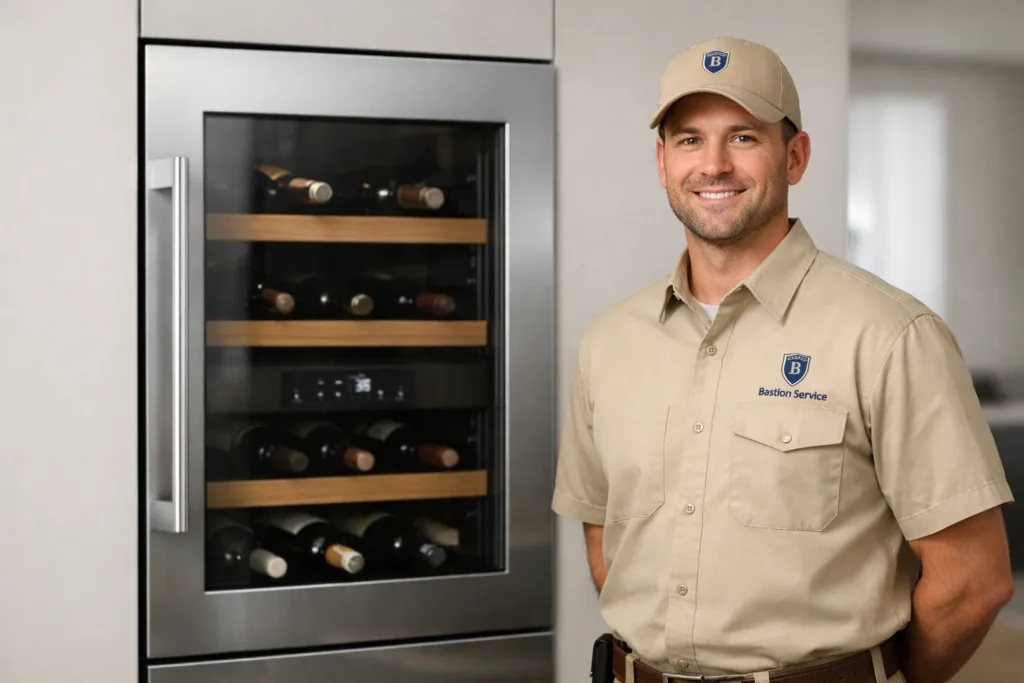
A Miele wine cooler that runs warm, cycles constantly, or develops condensation can affect both the appliance and the bottles stored inside. Because these units are designed for steady conditions rather than simple cold storage, the most useful first step is identifying which system is actually failing before any repair is attempted.
What the symptoms usually mean
Wine coolers often give early warning signs before they stop working completely. In many Palms homes, the problem starts as a small shift in temperature, extra moisture on the glass, or a new sound that was not there before. Those details matter because the same cabinet can show similar symptoms for very different reasons.
A temperature issue, for example, may be caused by airflow restrictions, a weak door seal, a fan problem, a sensor reading incorrectly, or trouble in the cooling system itself. Moisture may point to warm air entering the cabinet, drainage trouble, or unstable internal temperatures. A clicking or buzzing noise can be something minor like vibration, or it can signal a component under strain.
Common Miele wine cooler problems in Palms homes
Cabinet not cooling enough
If bottles feel warmer than expected or the display setting does not match actual conditions inside, the cooler may have an airflow problem, sensor fault, fan issue, or cooling-system failure. In some cases the appliance still runs and lights up normally, which can make the problem easy to miss until the temperature drift becomes more obvious.
On dual-zone models, one section may fall out of range while the other seems normal. That pattern often points to a control, sensor, or circulation issue rather than a simple setting error.
Overcooling or freezing
A wine cooler that becomes too cold is also malfunctioning. Overcooling can be tied to incorrect temperature sensing, control board problems, or airflow faults that keep one part of the cabinet colder than intended. Even when the unit appears to be cooling strongly, freezing conditions can damage labels, affect corks, and create unnecessary stress inside the cabinet.
Condensation or water inside
Moisture on the door, fogging on glass, or water collecting inside the unit usually means warm air is getting in or water is not draining as it should. Common causes include worn gaskets, alignment problems, frequent door opening, or internal temperature instability. If the same moisture keeps returning, it is worth checking before it leads to musty odors, shelf damage, or declining cooling performance.
Fan noise, buzzing, or constant operation
New sounds should not be ignored, especially if cooling has changed at the same time. A rattling or buzzing wine cooler may have a fan motor problem, loose mounting, vibration from installation shift, or a compressor working harder than it should. When the unit seems to run without normal off-cycles, that usually means it is struggling to reach or hold the target temperature.
Display or control issues
If the panel does not respond properly, settings do not stay saved, lights behave erratically, or alarms appear without a clear reason, the fault may involve the user interface, wiring, sensors, or the main control system. Electronic issues can exist on their own, but they also often appear alongside cooling problems.
Signs the issue is getting worse
Some wine cooler problems stay subtle for a while, but there are a few signs that usually mean service should not wait:
- The cabinet temperature no longer matches the setting
- The compressor or fans seem to run much more than before
- Condensation keeps returning after the door has been fully closed
- One zone cools properly while the other does not
- The door does not seal evenly or pops open slightly
- New clicking, buzzing, or rattling becomes persistent
- The display works inconsistently or resets on its own
When these symptoms continue, the appliance may still appear partly functional while the storage environment becomes increasingly unstable.
Why continued use can cause added wear
A standard refrigerator can sometimes hide a performance problem for a while, but a wine cooler depends on consistency. Repeated temperature swings, excess humidity, or nonstop running place extra stress on fans, controls, and the cooling system. If the unit is obviously warm, freezing, leaking, or making sustained mechanical noise, limiting use until it is inspected is usually the safer choice.
It also helps to avoid repeatedly changing settings in an attempt to force the cooler back into range. Frequent adjustments can mask the original symptom pattern and make the fault harder to isolate.
Basic checks homeowners can make first
Before scheduling service, a few simple observations can help narrow down the problem:
- Confirm the door is closing fully and nothing on the shelves is blocking it
- Look for visible gasket gaps, twists, or debris preventing a seal
- Check whether the cabinet is cooling evenly or if one area feels noticeably different
- Note whether noise happens constantly or only during certain parts of operation
- Watch for recurring moisture near the same spot on the door or inside the cabinet
- Pay attention to whether the issue began after the unit was moved or adjusted
These checks do not replace repair, but they can make the service visit more efficient and help distinguish between installation, sealing, control, and cooling-related issues.
Repair versus replacement
Many Miele wine cooler issues are repairable, especially when the problem involves sensors, fans, controls, gaskets, drainage components, or other accessible parts. Repair is often the better path when the cabinet is in otherwise good condition and stable performance can be restored without stacking multiple major issues together.
Replacement becomes more likely when there is a serious sealed-system failure, extensive age-related wear, or repeated high-cost breakdowns that make long-term reliability uncertain. The right decision depends on the exact fault, the condition of the appliance overall, and whether the repair is likely to restore proper temperature control.
What a service visit should focus on
For Miele wine cooler repair in Palms, the most useful service approach starts with the symptom pattern rather than assumptions about parts. That usually means checking actual cabinet performance, airflow, door sealing, sensors, controls, drainage, and the cooling system as a whole. A practical repair plan is easier to make once the true source of the problem has been confirmed.
If your wine cooler is no longer holding the right temperature, collecting moisture, or sounding different during normal operation, having it evaluated early can help protect both the appliance and the collection stored inside.