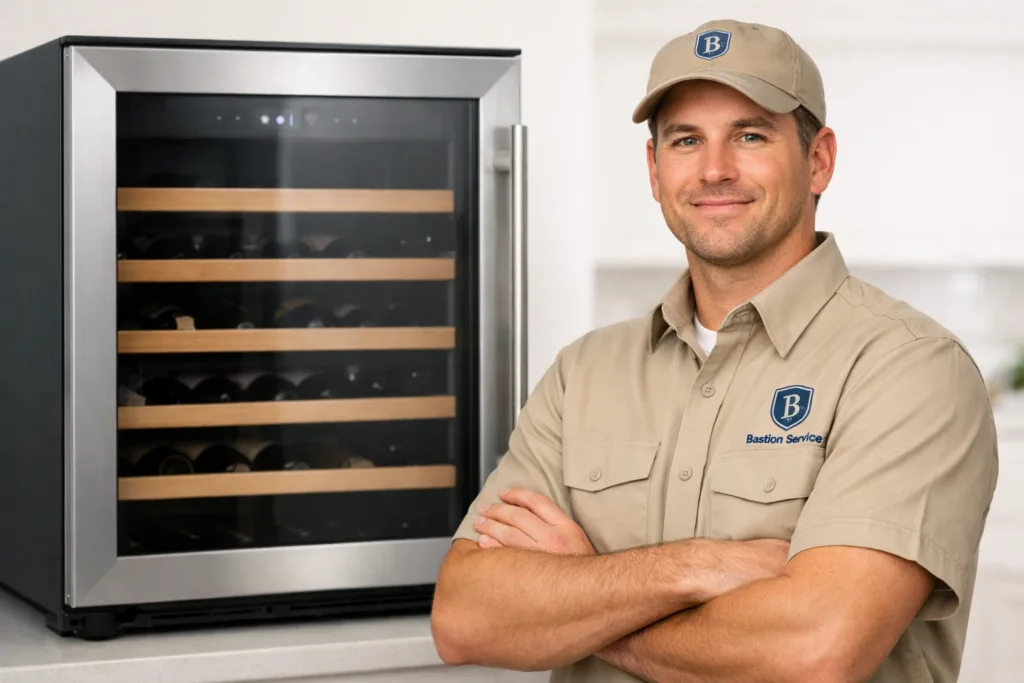
An EdgeStar wine cooler that runs warm, collects water, or cycles oddly can affect both storage conditions and the long-term quality of what is inside. The most useful next step is to focus on the exact symptom pattern, because similar complaints can come from very different parts of the unit, including airflow, controls, sensors, seals, fans, or the cooling system itself.
Common EdgeStar Wine Cooler Problems in Palms Homes
Wine coolers rarely fail all at once without warning. More often, homeowners notice subtle changes first: bottles no longer feel consistently cool, the display seems accurate but the cabinet does not, or the appliance runs longer than usual. Those early clues help narrow down what is happening.
Not Cooling Properly
If the cabinet is not reaching the set temperature, possible causes include restricted ventilation, dirty condenser areas, weak fan operation, sensor problems, control failure, or a sealed-system issue. Some EdgeStar units may still power on normally even when cooling performance is falling off, which is why the symptom can be misleading at first.
A unit that is only slightly warm one day and clearly underperforming the next should not be ignored. In many homes, this kind of intermittent cooling issue becomes more obvious after the door has been opened a few times or during heavier use.
Too Cold or Freezing Bottles
Overcooling can be just as damaging as running warm. If bottles are getting too cold, certain sections of the cabinet are freezing, or temperatures swing below the setting, the problem often points to temperature regulation. That may involve a faulty sensor, thermostat issue, control board error, or uneven airflow inside the cooler.
Even when the appliance seems to be “cooling well,” freezing conditions are a sign that regulation is no longer working correctly.
Water Leaks or Interior Condensation
Moisture inside or around the unit can come from several sources. A worn door gasket may allow warm air to enter. A drainage problem can leave water pooling where it should not. In some cases, limited ventilation around the cabinet contributes to excess condensation and makes the cooler work harder than necessary.
If you are seeing fogging on the glass, damp shelving, or water near the base of the unit, it helps to note whether the issue is constant or appears after heavy cycling.
Noise, Clicking, or Constant Running
An EdgeStar wine cooler should make some operating sounds, but loud humming, repeated clicking, rattling, or nonstop running can indicate a problem. Fan motors, compressor start components, leveling issues, and control faults are all common suspects depending on the exact sound and when it occurs.
Constant running is especially important to watch. If the cooler rarely shuts off and still cannot maintain temperature, the appliance is usually compensating for an underlying failure rather than simply working harder.
Why Symptom Patterns Matter
Wine cooler problems are easy to misread. A homeowner may assume the cooling system has failed when the actual issue is airflow or a bad sensor. In other cases, a cooler that still lights up and appears normal may already be losing its ability to hold a stable temperature.
That is why symptom-based troubleshooting matters. The timing of the issue, the sound the unit makes, whether the display is behaving normally, and how the cabinet responds after the door is opened all help separate a manageable repair from a larger component failure.
Signs the Problem Is Getting Worse
Some issues stay minor for a while, but others progress quickly. It is smart to schedule service when the unit shows repeated temperature swings, leaks, heavy condensation, new fan noise, or inconsistent operation. Waiting too long can place extra stress on parts that are still working.
- The cooler runs constantly without reaching the target temperature
- The display is on, but the cabinet temperature does not match it
- Water is collecting underneath or inside the unit
- The door is not sealing tightly
- Fans sound weak, noisy, or intermittent
- The unit clicks repeatedly when trying to start
- The appliance shuts down unexpectedly or struggles to restart
When these signs appear together, the risk of worsening wear goes up.
What Palms Homeowners Can Check First
Before service, a few simple observations can make the problem easier to identify. Check whether the door closes firmly, whether the cabinet is packed too tightly for proper airflow, and whether the surrounding space allows enough ventilation. It also helps to compare the display reading with the actual interior condition rather than assuming the panel is accurate.
Pay attention to when the problem happens. Does the cooler run warm all the time, only after the door is opened, or only during longer cycles? Does the noise start immediately or after the unit has been running for a while? Those details are often more useful than a general description like “it stopped working.”
Repair or Replace?
For many Palms households, the answer depends on the age of the unit, its overall condition, and the type of failure involved. Problems related to fans, controls, seals, drainage, or accessible electrical components are often more practical to repair. Major cooling-system failures or repeated breakdowns may point toward replacement instead.
The important thing is not to decide too early. A wine cooler that seems completely unreliable may need only one targeted repair, while a unit with mild temperature drift may have a more significant internal problem. A proper diagnosis helps determine which path makes more sense.
Household Use Makes Small Issues Easier to Miss
Unlike a kitchen refrigerator, a wine cooler may not be opened as often, which can make gradual performance changes less obvious. That is why some owners do not notice a problem until bottles are warmer than expected, condensation becomes visible, or the cooler starts making an unfamiliar sound.
In Palms homes, early attention usually helps prevent bigger issues. If an EdgeStar wine cooler is no longer holding temperature consistently, running louder than normal, or showing moisture where it should not, addressing the cause sooner can help protect both the appliance and the contents inside.