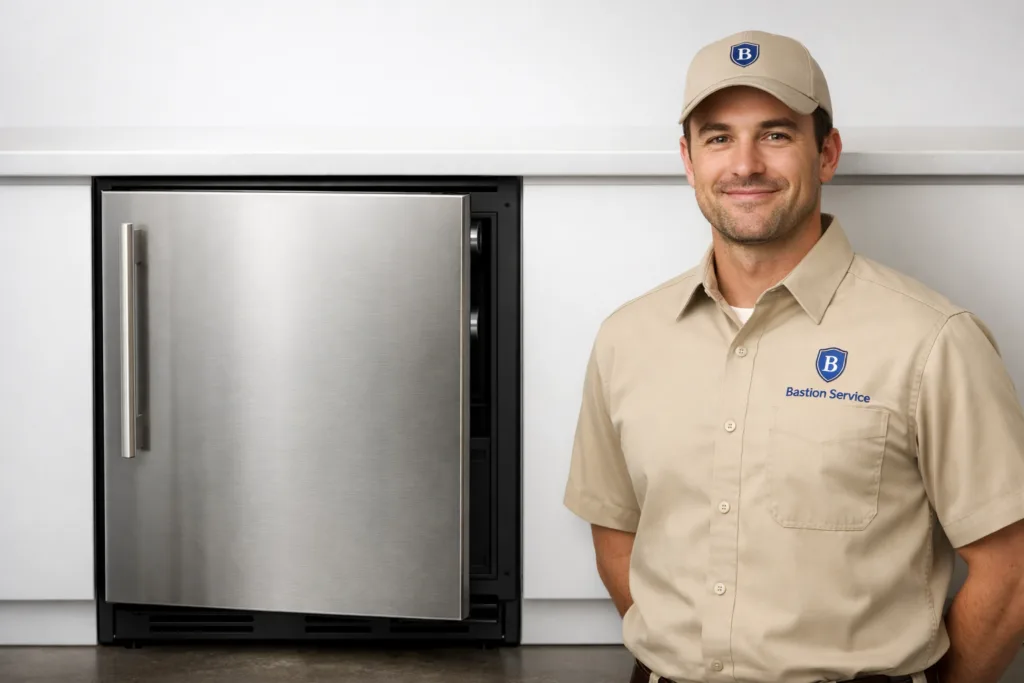
Temperature problems in a U-Line refrigerator rarely have a single obvious cause. A unit that feels a little warm may be dealing with reduced airflow, a fan problem, a control issue, dirty condenser areas, or a door that is allowing warm air into the cabinet. A refrigerator that seems completely down can point to a different set of failures altogether. The most useful starting point is to look at how the symptom shows up over time, not just whether the compartment feels cold at one moment.
Common U-Line refrigerator issues in Palms homes
Households in Palms often notice one of a few patterns first: food not staying cold enough, items freezing unexpectedly, water appearing under the appliance, frost collecting inside, or a refrigerator that suddenly sounds louder than normal. Those patterns matter because they help narrow down whether the issue involves airflow, drainage, controls, door sealing, fan operation, or a larger cooling-system problem.
U-Line refrigerators are frequently installed in finished kitchen areas, home bars, or other built-in spaces where ventilation and fit can affect performance. In those setups, even a small airflow restriction or heat buildup around the cabinet can change how the refrigerator cools and how long it runs.
What specific symptoms may indicate
Refrigerator not cooling enough
If milk, leftovers, or beverages are warming up before the refrigerator appears fully failed, the issue may be developing rather than sudden. Weak cooling can come from restricted airflow, a faulty evaporator or condenser fan, sensor or thermostat problems, dirty heat-transfer surfaces, or poor door sealing. In some cases, the compressor is still running but cannot maintain target temperature consistently.
Warning signs include:
- Food spoiling sooner than usual
- Different shelves feeling noticeably different in temperature
- The cabinet cooling better at night than during the day
- The refrigerator running longer than normal without recovering properly
Items freezing inside the fresh-food section
When produce, drinks, or other refrigerated items begin freezing, the problem is not always “too much cooling.” It can also be caused by a control that is reading temperatures incorrectly, an airflow imbalance that pushes cold air into one area, or loading patterns that block proper circulation. This symptom is easy to misread, which is why part replacement by guesswork often fails to solve it.
Frost buildup or heavy condensation
Frost inside the cabinet or moisture collecting on surfaces can point to warm air entering through a poor seal, a defrost-related issue, or blocked airflow that creates uneven temperatures. Condensation on its own may look minor at first, but repeated moisture inside a refrigeration compartment usually means the unit is not managing temperature and humidity the way it should.
Leaks or water under the unit
Water on the floor does not always mean the same thing as ice buildup inside the refrigerator. A leak may come from a blocked drain path, excess condensation, a door not sealing tightly, or an installation angle that affects how water moves and exits. If puddling continues, nearby flooring and cabinetry can be affected in addition to the appliance itself.
Buzzing, clicking, rattling, or nonstop operation
Some refrigerator sounds are normal, but a change in sound usually deserves attention. Buzzing or clicking can suggest starting trouble, fan issues, or vibration. Rattling may be as simple as cabinet contact or as serious as a component working under strain. A refrigerator that rarely cycles off is often trying to compensate for another fault, such as poor airflow, heat buildup, or declining cooling performance.
Why symptom patterns matter on U-Line units
With U-Line refrigeration, one complaint can hide several possible failures. “Not cold enough” may describe a fan problem, a seal issue, a control fault, or sealed-system trouble. “Leaking” may involve drainage, condensation, or frost melting in the wrong place. Looking at when the problem started, whether it is constant or intermittent, and whether other symptoms appeared at the same time usually leads to a better repair plan.
That is especially important when the refrigerator is installed under a counter or in a tighter finished space. Restricted ventilation, dust accumulation, and cabinet fit can affect performance in ways that are easy to overlook if the focus stays on a single symptom.
When to stop using the refrigerator and schedule service
Service should move higher on the priority list when food is no longer staying safely cold, the refrigerator is warming noticeably between cycles, frost keeps returning after being cleared, or leaks continue to show up around the unit. These issues typically do not resolve on their own, and continued operation can add wear to already stressed components.
Intermittent cooling is another reason not to wait too long. A refrigerator that works normally for a day and then drifts warm the next can be harder on food storage than a complete failure, because the problem is easier to miss until spoilage has already happened.
Simple checks homeowners can make first
Before arranging service, a few basic observations can help clarify the issue:
- Make sure the power supply is steady and the controls have not been changed accidentally.
- Check whether the door closes fully and the gasket sits evenly against the frame.
- Look for items blocking vents or packed too tightly against interior airflow paths.
- Notice whether the noise, leak, or temperature problem appears all the time or only at certain times of day.
- Check for visible frost, standing water, or heavy condensation inside the compartment.
If the same symptom returns after these basics are addressed, the next step is usually diagnosis rather than more trial-and-error adjustment.
Repair or replace?
Repair often makes sense when the problem is isolated to a serviceable component such as a fan motor, control-related part, door seal, or drainage issue, and the refrigerator is otherwise in solid condition. Replacement becomes a more realistic consideration when testing points to major cooling-system trouble, repeated breakdowns, or a unit with multiple active problems at once.
For homeowners in Palms, the decision is usually easier when it is based on the actual failure, the condition of the cabinet and interior, and how reliably the refrigerator has been performing before this issue. A focused service visit should help determine whether the appliance is a good repair candidate or whether further investment is hard to justify.
Helpful details to note before service
If you are scheduling U-Line refrigerator repair in Palms, it helps to note a few details before the appointment. Try to remember when the symptom began, whether the unit is warm all the time or only sometimes, where moisture is appearing, and whether the sound of the refrigerator has changed. Even small details, such as frost only forming in one area or the cabinet running louder late in the day, can help identify the most likely cause faster.
When a refrigerator begins showing multiple signs at once, such as weak cooling plus new noise or leaking plus frost, that usually points to a problem that should be addressed sooner rather than later. Early attention can limit food loss, reduce strain on the system, and make the repair path easier to assess.