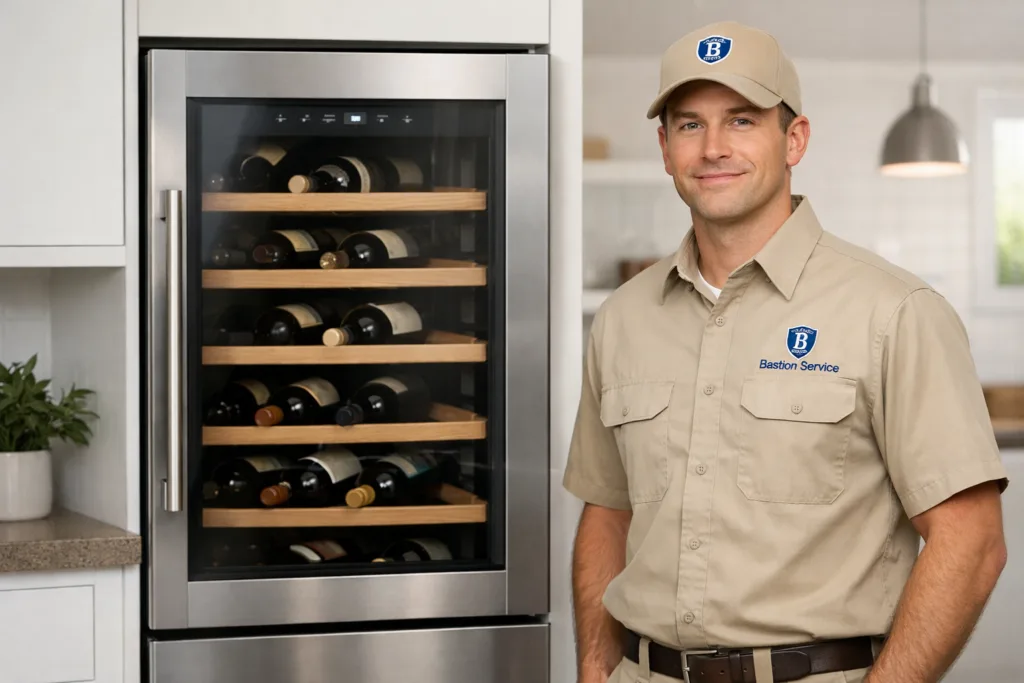
Temperature swings in a wine cooler usually point to one of a few core issues: weak airflow, inaccurate sensing, door-seal leakage, or trouble in the cooling system itself. A cabinet that feels only slightly warm one day and much warmer the next often has a different cause than a unit that never cools at all. Because wine storage depends on steady conditions more than extreme cold, even small changes in performance are worth paying attention to.
Common wine cooler problems and what they may mean
If the cabinet is too warm, possible causes include dirty condenser coils, a failing thermostat or sensor, an evaporator fan problem, a control issue, or a compressor that is struggling to start. If the unit is too cold, freezing bottles, or overshooting the set temperature, the fault often points more toward controls or sensing than simple lack of airflow.
Noise can also help narrow the diagnosis. A normal fan hum is expected, but buzzing, repeated clicking, rattling, or loud cycling may suggest loose panels, fan motor wear, compressor strain, or failing start components. Water inside the cabinet or around the base may come from excess condensation, a blocked drain path, or a door that is not sealing tightly.
Display glitches and interior light failures are usually separate from cooling performance, but they can still matter. On some units, an unresponsive control panel can prevent accurate temperature regulation, change settings unexpectedly, or hide an underlying fault code that helps explain what the cooler is doing.
Why diagnosis matters before parts are replaced
Wine coolers are compact refrigeration appliances, but the same symptom can come from very different causes. Poor cooling may look like a thermostat problem when the real issue is a weak fan motor. Constant running can seem like a sealed-system problem when the actual cause is warm air leaking through a damaged gasket or blocked ventilation around the cabinet.
Testing matters because replacing visible parts without confirming the failure can lead to repeat service and unnecessary expense. A cooler with uneven temperatures from top to bottom, for example, may not need a major component at all if airflow is restricted by frost, dust buildup, or a fan that is spinning too slowly under load.
Symptoms that should not be ignored
Some problems start small and then become much more expensive if left alone. If your unit runs nonstop, shuts off and restarts repeatedly, or cannot recover temperature after the door has been opened briefly, it is usually time to stop guessing and arrange service. A sharp increase in operating noise or sidewall heat can also be a sign that the system is working harder than it should.
Burning smells, tripped breakers, or visible moisture near electrical components should be treated as higher-priority warning signs. In those cases, continued operation can increase damage and may create a safety concern inside the home.
When the issue may be closer to freezer behavior
Most wine coolers are designed for stable, moderate cooling, not deep freezing. If the problem is centered on frost buildup, a section that turns unusually icy, or temperatures that plunge far below the setting, Freezer Repair in Palms may be more relevant for comparing how airflow and defrost-related symptoms behave in colder compartments.
How wine cooler issues compare with refrigerator problems
Wine cooler complaints often overlap with standard kitchen cooling problems, especially when the symptom is inconsistent temperature, noisy operation, or poor recovery after the door opens. If similar issues are affecting fresh-food storage elsewhere in the kitchen, Refrigerator Repair in Palms may be the better place to compare thermostat, fan, and compressor-related behavior in a full-size appliance.
The main difference is that a wine cooler is more sensitive to small control errors. A refrigerator can still feel functional while drifting a few degrees, but a wine cooler may show the problem sooner through bottle temperature changes, condensation, or erratic cycling.
Ice-maker and water-related symptoms that point elsewhere
Some homeowners first notice a cooling problem while dealing with water drips, fill issues, or poor ice production from another appliance nearby. If the symptom is really tied to a water valve, fill tube, dispenser, or ice production system rather than the wine cabinet itself, Ice Maker Repair in Palms may be the more useful service path.
What you can check before scheduling service
Before arranging repair, confirm that the outlet has power, the temperature setting was not changed accidentally, and bottles or shelving are not blocking interior airflow. Check the door gasket for gaps, tears, or spots where it does not sit flat against the frame. If the model has exterior venting, make sure dust and lint are not restricting airflow around those openings.
These checks can rule out simple issues, but they do not replace diagnosis when the cabinet continues to run warm, fluctuates without explanation, or makes unusual noises. If the cooler still cannot maintain a stable temperature after basic inspection, the next step is to identify whether the fault is in controls, airflow, starting components, or the sealed cooling system.
Repair versus replacement considerations
Not every wine cooler should be replaced at the first sign of trouble, and not every older unit is a good candidate for repair. The practical choice usually depends on the age of the appliance, how severe the fault is, and whether the cabinet and door seals are still in good condition. Straightforward repairs involving fans, thermostats, sensors, switches, or gaskets are often more reasonable than replacing a built-in unit that otherwise fits the space well.
Replacement becomes more likely when there is major sealed-system trouble, repeated electronic failures, corrosion, or a long history of unstable performance. For many households in Palms, the deciding factor is whether the repair is likely to restore steady temperature control without recurring issues shortly afterward.
Choosing the right time to call for service
If your wine cooler is no longer holding the set temperature, developing persistent condensation, or producing new noises that were not there before, early attention usually helps. Smaller cooling issues are often easier to resolve before constant running, compressor stress, or repeated temperature swings create a larger failure. A focused diagnosis can show whether the problem is minor, urgent, or a sign that replacement should be considered.