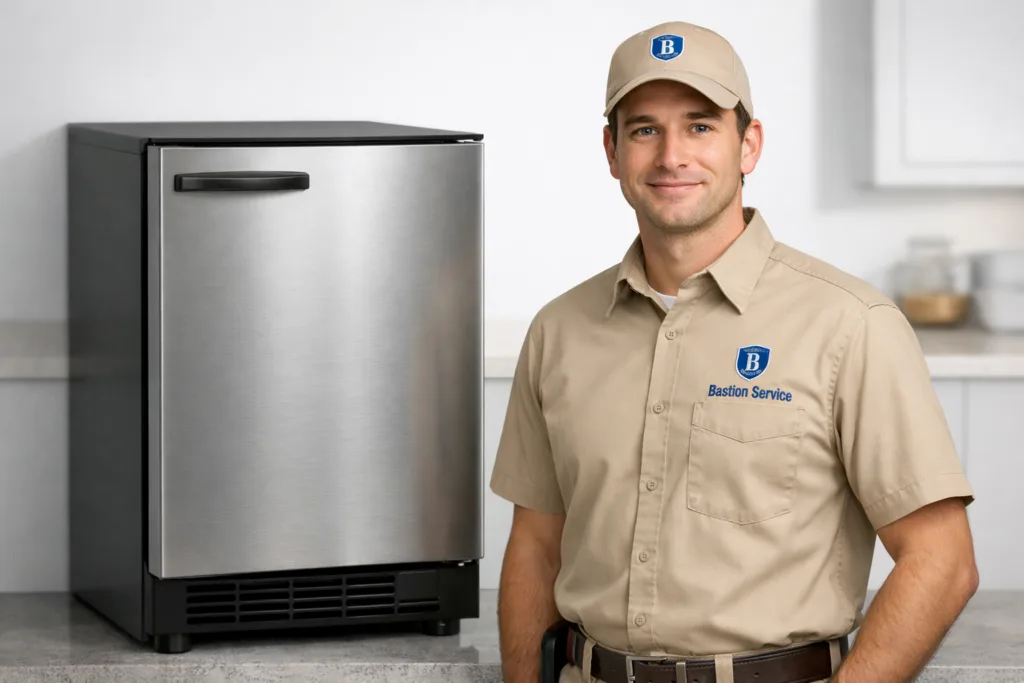
Ice makers tend to show a small set of symptoms, but those symptoms can come from very different failures. A U-Line unit that stops making ice, produces slow batches, leaks, or drops clumped cubes may be dealing with a water supply problem, a temperature issue, a restricted drain, a faulty valve, or a control-related fault. For homeowners in Inglewood, the most useful next step is to match the symptom to the likely system involved before deciding on repair.
Common U-Line ice maker problems in Inglewood homes
Residential ice makers work through a repeating sequence: fill, freeze, harvest, and drain as designed by the model. When any part of that sequence is interrupted, the machine may still power on but fail to produce normal ice.
No ice production
If the bin stays empty, the unit may not be filling with water, may not be reaching the correct freezing temperature, or may be failing during harvest. In some cases, the machine appears to run normally while never completing a full cycle. This is one of the most common reasons homeowners schedule service, because the problem can involve several components rather than one obvious failed part.
Slow ice production
Slow output usually means the machine is working, but not efficiently. Low water flow, weak cooling performance, scale buildup, partial restrictions, or timing problems can all stretch out the cycle. If your household depends on regular ice throughout the day, reduced production often becomes noticeable before the unit stops completely.
Small, hollow, or uneven cubes
Cube quality often points back to water fill accuracy. When the mold does not receive the proper amount of water, the ice may form as thin, incomplete, or misshapen cubes. Low inlet pressure, a sticking valve, or fill timing issues are common causes. Temperature irregularities can also affect how the cubes freeze before release.
Clumped ice in the bin
Clumped ice usually means the cubes are partially melting and refreezing together, or that water is entering the bin when it should not. This can happen when the unit is not maintaining temperature correctly, when cubes are not harvesting cleanly, or when excess moisture remains inside the cabinet. Clumping may look like a storage issue at first, but it often signals an operating problem that needs attention.
Leaks or water around the appliance
Water on the floor should be addressed early. A U-Line ice maker may leak because of a loose connection, cracked line, blocked drain path, overflow during fill, or internal ice buildup that redirects water outside its normal path. Even a small recurring leak can damage flooring, nearby cabinetry, and trim if it continues unnoticed.
Buzzing, clicking, or repeated cycling
Unusual sounds can mean the machine is trying to start a cycle and failing, or that a valve, motor, or harvest component is under strain. A repeated buzzing noise may point to water inlet trouble, while persistent clicking can suggest a control or cycle interruption. When the unit keeps attempting the same action without making ice, it usually needs more than basic cleaning.
What these symptoms often mean
Ice makers depend on three things working together: correct water delivery, stable cold temperatures, and proper cycle control. When one of those areas slips out of range, the symptom you see may not reveal the actual cause.
- Fill issues can lead to no ice, small cubes, or hollow cubes.
- Temperature problems can cause slow production, clumping, or failure to harvest.
- Drain restrictions can contribute to leaks, standing water, and internal ice buildup.
- Valve faults may cause underfilling, overfilling, or continuous water-related problems.
- Control and sensor problems can interrupt the sequence even when the unit still has power.
That is why a symptom-based inspection matters. Replacing a part based on guesswork can leave the real issue unresolved and lead to repeat service.
When repair makes sense
Many U-Line ice maker problems are worth repairing when the issue is isolated and the rest of the appliance is in good condition. A failed inlet valve, drain blockage, sensor problem, or harvest-related fault may be repairable without replacing the entire unit. This is especially true when the cabinet, cooling system, and overall performance history are otherwise solid.
Repair is often a good fit when:
- the problem started recently and has a specific symptom pattern
- the unit has been producing normally until this issue
- water damage has not spread beyond the appliance area
- the fault appears limited to one system rather than multiple worn components
When replacement may be the better option
Replacement becomes more reasonable when the machine has several failing systems, recurring leaks tied to broader wear, severe corrosion, or repeated breakdowns that affect normal household use. If a unit needs extensive parts and has a long history of inconsistent performance, investing in another major repair may not be the best value.
A homeowner in Inglewood is usually deciding between two practical outcomes: restore reliable day-to-day ice production, or avoid putting more money into a unit that is already declining. Age, condition, repair scope, and how often the appliance is used all matter in that decision.
Signs you should stop using the ice maker until it is checked
Some problems are more than an inconvenience. Continuing to run the appliance can increase the damage or create a mess in the kitchen or bar area.
- Water is leaking onto the floor or into surrounding cabinetry.
- The unit is overfilling or continuously trying to fill.
- The machine makes repeated failed cycles without producing ice.
- Ice is forming in the wrong place inside the cabinet.
- The appliance is running constantly but output remains poor.
In these cases, shutting the unit down early can help limit additional wear and reduce the chance of water-related damage.
What a service visit should focus on
A well-planned U-Line Ice Maker Repair in Inglewood visit should verify the exact complaint, review fill and drain behavior, check freezing performance, and determine where the cycle is breaking down. That process helps separate a simple supply issue from a deeper mechanical or control problem.
The goal is not just to get the machine running for a day or two. It is to identify whether the problem is isolated, whether repair is practical, and whether the unit is likely to return to stable household use after the repair is completed.
Choosing the right next step for your home
If your ice maker is making less ice than usual, leaking, producing poor-quality cubes, or failing to finish cycles, waiting rarely improves the situation. Early attention can prevent wasted water, reduce the chance of secondary damage, and make it easier to decide whether repair is the sensible path.
For many households in Inglewood, the best outcome starts with a clear look at what the machine is actually doing in real use. Once the symptom pattern is confirmed, the repair decision becomes much easier and more cost-aware.