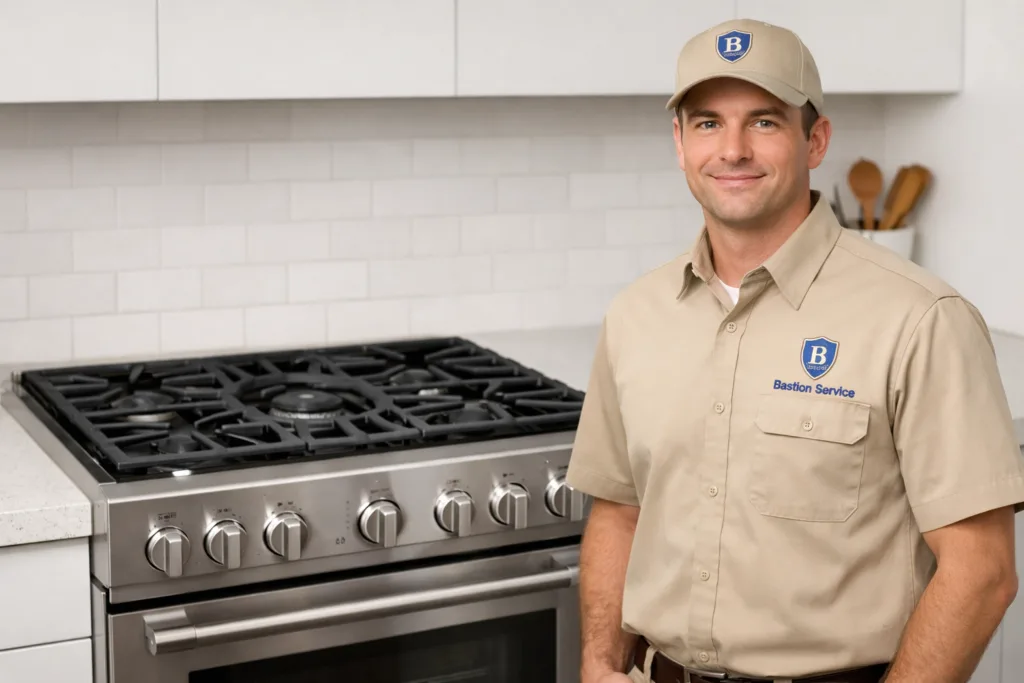
Cooktop problems rarely stay minor for long. A burner that takes three tries to light, a control that no longer changes flame level correctly, or a surface crack that seemed cosmetic at first can quickly turn normal cooking into a daily frustration. With Thermador units, the most useful approach is symptom-based testing so the repair targets the actual failed part instead of guessing between ignition, burner, control, or wiring issues.
Common Thermador cooktop problems and what they usually mean
Burner clicks but will not light
This is one of the most common service calls. On a Thermador cooktop, repeated clicking without ignition can be caused by a misaligned burner cap, blocked burner ports, moisture around the igniter, a worn electrode, or a spark system problem. If the clicking continues after the burner area has been cleaned and fully dried, the issue usually needs hands-on inspection.
Homeowners often notice this problem becomes worse after boil-overs or deep cleaning. In some cases the burner lights eventually, but delayed ignition is still a sign that the ignition system is not working as it should.
Burner lights, then clicks continuously
If the flame is already on but the cooktop keeps sparking, that usually points to moisture, residue, switch trouble, or an electrical fault in the ignition circuit. Continuous clicking is more than an annoyance. It can wear out ignition components faster and may indicate that the system is not sensing normal operation properly.
Weak, uneven, or unstable flame
When a burner produces a low flame, heats unevenly, or flickers instead of burning steadily, the cause may be restricted gas flow through the burner head, clogged openings, valve wear, or burner assembly problems. In everyday use, this often shows up as longer cook times, pans heating unevenly, or one burner performing noticeably worse than the others.
If the issue affects only one burner, the repair path is often different from a whole-cooktop performance problem. That distinction matters because it helps narrow the likely failed components more quickly.
Burner does not respond to knob changes
A burner that stays too high, drops too low, or does not adjust smoothly can make routine cooking difficult. This type of symptom may involve the valve, control switch behavior, internal wear, or related burner-side components. Because flame control affects both cooking performance and safe operation, this is not a symptom to ignore.
One burner works and others do not
When only one burner fails, the issue is often localized to that position, such as the igniter, electrode, wiring, or burner parts. When several burners stop working at the same time, diagnosis usually shifts toward shared components such as the spark module, power-related issues, or other common connections within the cooktop.
Cracked glass or damaged cooking surface
If your Thermador cooktop has a cracked glass surface, stop using it until it has been evaluated. Even a small crack can worsen with heat, cleaning, or normal cookware movement. Depending on the extent and location of the damage, repair may involve replacing major surface components rather than a small cosmetic fix.
What to check before scheduling repair
There are a few simple things a homeowner in Culver City can check before arranging service:
- Make sure burner caps are seated correctly.
- Clean visible food debris from burner ports and around the ignition area.
- Allow recently cleaned burners to dry fully before testing again.
- Compare the problem burner with a working burner to see whether the flame shape or clicking pattern is different.
- Note whether the symptom is constant or only happens occasionally.
These basic checks can help rule out simple alignment or cleaning issues, but they do not replace proper testing when the problem keeps coming back.
Signs the problem should not wait
Some cooktop issues are inconvenient. Others are a reason to stop using the appliance right away. You should pause use and arrange service if:
- Ignition is delayed or inconsistent on a regular basis.
- The flame looks unusually low, erratic, or uneven.
- A burner cannot be controlled normally.
- The cooktop keeps sparking after the burner is lit.
- The glass is cracked or the cooking surface is damaged.
If you notice a strong or persistent gas smell, treat that as a safety issue first rather than a standard appliance repair matter. Stop using the cooktop and follow the appropriate emergency steps before arranging appliance service.
Repair versus replacement
Many Thermador cooktop problems are worth repairing when the fault is limited to ignition parts, switches, burner assemblies, or serviceable electrical components. Repair becomes less attractive when the unit has multiple major failures, repeated breakdowns, or part availability problems that drive up cost and downtime.
For homeowners in Culver City, the decision usually comes down to a few practical factors: the age of the cooktop, how many systems are affected, whether performance has been declining over time, and whether the needed repair is isolated or part of a larger pattern. A good diagnosis should help clarify whether the appliance is a strong candidate for repair or whether replacement deserves serious consideration.
Why symptom details matter on a Thermador cooktop
Two cooktops can show the same outward symptom and still need completely different repairs. For example, a burner that will not ignite may have a clogged burner head, a failed electrode, a switch issue, or a problem in the spark module. A burner with weak heat may be dealing with flame distribution problems rather than ignition trouble at all.
That is why it helps to pay attention to the pattern before service is scheduled. Useful details include whether the problem affects one burner or all of them, whether it started suddenly or gradually, whether cleaning changed anything, and whether the cooktop fails only during ignition or also during normal cooking. Those details make troubleshooting more accurate and help avoid wasted time on the wrong repair path.
What homeowners usually want to know first
Most people are trying to answer the same few questions: Is it safe to keep using the cooktop for now? Is the problem likely limited to one component or part of a larger failure? Is the repair likely to make sense compared with replacement?
The answer depends on the symptom pattern more than the brand label alone. Intermittent clicking, burner-specific ignition failure, unstable flame, and control problems each point in different directions. When those symptoms are identified clearly, it becomes much easier to decide the next step for your Thermador cooktop in Culver City.