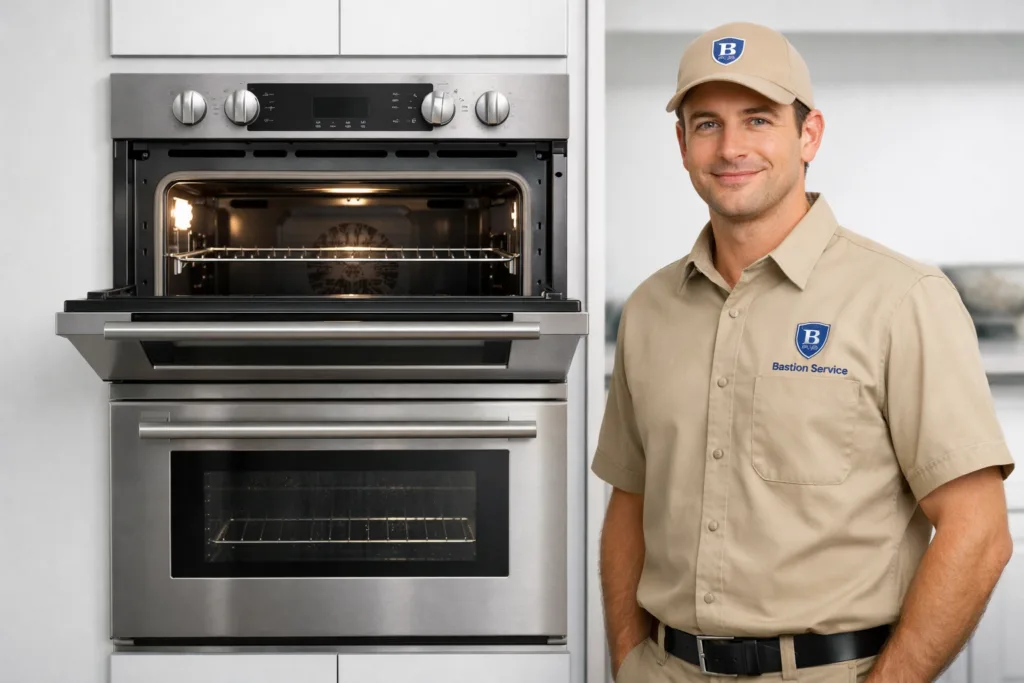
Common Thermador oven symptoms and what they usually point to

Thermador ovens are built for consistent cooking, so small performance changes tend to stand out quickly. A batch of cookies that browns unevenly, a roast that takes much longer than expected, or an oven that seems hot one day and cool the next usually means something in the heating, sensing, or control system is no longer working as intended.
Several different faults can create similar cooking results. That is why symptom patterns matter. The way the oven preheats, cycles, displays errors, or holds temperature often reveals whether the issue is more likely tied to the sensor, igniter, bake or broil circuit, control board, convection system, or door seal.
Uneven baking and inconsistent results
If food is overdone on one side, pale on another, or requires extra time despite using familiar settings, the oven may not be distributing heat correctly. In a Thermador oven, this can be caused by a weak heating component, a sensor that is drifting out of range, a convection fan problem, or heat loss around the door.
Homeowners in Culver City often notice this problem first when recipes stop behaving normally. Cakes may rise unevenly, sheet-pan meals may cook at different rates front to back, and casseroles may look done on top while remaining undercooked in the center.
Slow preheat
A slow preheat is often an early warning sign rather than a total breakdown. Electric models may have a heating circuit that is no longer reaching full output. Gas models may have an igniter that still works, but takes longer to open the gas valve and establish proper heat. In both cases, the oven may eventually reach temperature, but not within a normal timeframe.
When preheat times keep getting longer, the problem usually does not resolve on its own. It often develops into weak heating, large temperature swings, or a no-heat condition.
Oven not heating at all
If the display appears normal but the oven cavity stays cold, the fault may involve incoming power, a failed element, a bad igniter, a blown thermal protection component, a sensor issue, or an electronic control failure. On some units, broil may still function while bake does not, or the opposite may happen. That difference can be useful when narrowing down the source of the problem.
Temperature swings
All ovens cycle heat on and off, but wide swings that affect cooking results are not normal. If the oven runs much hotter than the set temperature, then drops too low, the cause may be a faulty sensor, calibration issue, sticking relay, or control problem. This symptom can be especially frustrating because the oven may seem usable while still producing unreliable meals.
Error codes and display problems
Thermador control systems can report faults related to temperature sensing, communication errors, door lock issues, and overheating. An error code is helpful, but it is only part of the picture. A panel that freezes, resets, ignores input, or stops a cycle midway may indicate a deeper issue than the displayed code alone suggests.
Problems that should not be ignored
Some oven issues are mostly inconvenient. Others can interrupt cooking without warning or place extra strain on other components. It makes sense to stop putting off service when you notice any of the following:
- Preheat taking noticeably longer than it used to
- Food repeatedly coming out undercooked or overcooked
- Recurring fault codes
- The oven shutting off before the cycle is complete
- Broil and bake behaving differently than usual
- A door that will not close or seal properly
- Burning electrical smells, sparking, or unusual ignition behavior
Continued use can sometimes turn a single-part repair into a broader problem. A weak igniter can affect heating consistency, a bad seal can force longer heating cycles, and unstable controls can create unpredictable operation from one use to the next.
How door and sealing issues affect performance
Door problems are easy to underestimate because the oven may still turn on and heat. But if the gasket is worn, the hinges are misaligned, or the door does not close tightly, heat escapes during preheat and cooking. That can lead to slow baking, poor browning, and temperature instability.
In households that use the oven regularly, even modest heat loss can become obvious. You may find yourself adding extra cook time to nearly every recipe, rotating pans more often, or struggling to get consistent results on multiple racks.
What makes Thermador oven diagnosis different
Premium ovens often have more than one system affecting temperature performance, including sensors, relays, convection components, user interface controls, and safety circuits. Because of that, the failed part is not always the most obvious one. A no-heat complaint may start with the igniter on one model, while a similar complaint on another may trace back to the control or temperature feedback system.
A useful service visit focuses on how the appliance actually behaves during operation. That includes checking whether the oven reaches temperature, how steadily it cycles, whether the controls respond correctly, and whether the fault is isolated to one function or shared across multiple cooking modes.
Repair or replace?
For many Culver City homeowners, repair is the better choice when the issue is limited to one identifiable failure and the oven is otherwise in good condition. Problems involving a sensor, igniter, heating element, fan, door hardware, or a specific control-related component are often the kinds of issues that make repair worthwhile.
Replacement becomes more likely when several major systems are failing at once, when previous repairs have not restored stable operation, or when the appliance has moved beyond a single-fault situation into repeated performance problems. The real question is whether the repair is likely to restore dependable everyday cooking, not just whether the oven can be made to turn on again.
When service makes sense for a household in Culver City
If your Thermador oven has become unpredictable, it is usually better to have the problem evaluated before it disrupts a meal completely. Intermittent issues are especially important to address early because they can be harder to trace once they become constant or begin affecting additional functions.
For Thermador oven repair in Culver City, the most helpful outcome is a symptom-based diagnosis that explains what has failed, what that fault is affecting, and whether the repair path is sensible for the condition of the appliance. That gives homeowners a better basis for deciding how to restore reliable cooking at home.