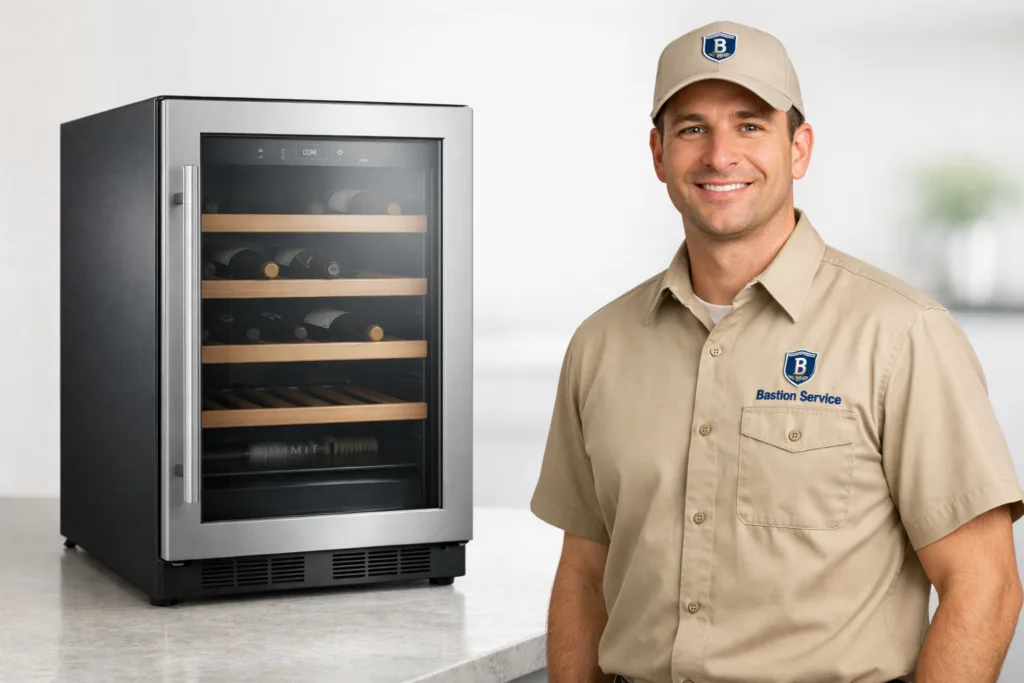
A Summit wine cooler that runs warm, frosts up, leaks, or suddenly sounds different usually has more than one possible cause. What matters most is matching the symptom pattern to the right system inside the unit, whether that turns out to be airflow, temperature sensing, door sealing, drainage, fan operation, or the cooling system itself. For homeowners in Pico-Robertson, that approach helps prevent unnecessary part changes and reduces the risk of spoiled bottles.
What homeowners usually notice first
Most problems show up as a change in performance before there is a complete breakdown. The display may still light up, interior lights may work, and the cooler may appear to be running, yet bottle temperature starts drifting. In other cases, the cabinet gets too cold, moisture collects inside, or the unit seems to run almost nonstop. Those signs can look simple from the outside, but different failures can create nearly identical symptoms.
Temperature drift and uneven cooling
If the cooler no longer holds the set temperature, cools inconsistently from top to bottom, or needs frequent adjustments, likely causes include restricted airflow, a weak or failed fan, sensor errors, thermostat or control issues, dirty condenser components, or a sealed-system problem. Built-in units can also struggle when ventilation is compromised, which can make a healthy cooling system appear weak.
Overcooling or freezing bottles
When a wine cooler starts dropping below the intended range, the issue often points toward a control problem rather than simple maintenance. A misreading sensor, faulty thermostat, or control board issue can keep the cooling cycle running longer than it should. Airflow imbalance can also create cold spots that affect certain shelves more than others.
Condensation, water, and damp interior surfaces
Water under the unit or moisture collecting around the door is commonly tied to a blocked drain path, heavy condensation, poor door sealing, or leveling issues. If warm room air keeps entering the cabinet, the cooler has to work harder while also producing more moisture. Left alone, this can lead to odor, shelf damage, and wear on nearby cabinetry or flooring.
Noise, vibration, and constant running
A louder hum, repeated clicking, rattling shelves, or a fan-like scraping sound can signal several different issues. Some noises come from something simple, such as leveling or vibration, while others point to fan wear, compressor strain, or heat not being released properly. If the sound change happens at the same time as poor cooling, it is usually a sign that service should not wait.
Common Summit wine cooler problems and what they may indicate
The cooler has power but is not cooling
If lights and controls respond but the cabinet stays warm, the problem is usually deeper than an outlet or power issue. The unit may have fan trouble, dirty condenser buildup, faulty temperature sensing, control failure, or a sealed-system issue. This is one of the most common situations where guessing leads to the wrong repair.
The cooler runs all the time
Continuous running often means the appliance is struggling to reach or maintain the target temperature. Door gasket leaks, blocked airflow, dirty heat-dissipating surfaces, fan problems, inaccurate sensor readings, and low cooling efficiency can all produce this pattern. A unit that runs constantly not only uses more energy but can also wear out major components faster.
Frost keeps returning
Frost on interior walls or around vents can happen when humid air enters through a poor door seal, when airflow is disrupted, or when controls are not regulating temperature correctly. Wiping the frost away may improve appearance for a day or two, but it does not solve the reason it formed.
Water appears under the cabinet
Pooling water can come from drainage blockage, condensation overflow, or a cabinet that is not sitting level enough to move moisture where it should go. Even when cooling still seems normal, a leak should be addressed promptly to avoid damage around the appliance.
The unit cycles on and off too often
Short cycling can be caused by control faults, sensor issues, airflow restrictions, or cooling-system inefficiency. Frequent starts and stops are hard on the compressor and often show up before total cooling loss.
Why diagnosis matters before any repair decision
Wine cooler problems are easy to misread. A homeowner may suspect the compressor because the cabinet is warm, when the real problem is fan failure or a sensor sending the wrong information. In another case, moisture near the door may look like a leak from inside the system when the actual cause is a gasket that no longer seals tightly.
That is especially important with under-counter and built-in Summit models. Tight installation spaces, blocked ventilation, and door alignment issues can all affect cooling performance. Unless the full operating condition is checked, a repair may address only part of the problem.
Symptoms that should not be ignored
- Bottle temperature rises even though the display appears normal.
- The cabinet starts freezing contents or creating frost in unusual areas.
- Water shows up repeatedly inside or beneath the unit.
- The fan, compressor, or cabinet becomes noticeably louder.
- The cooler runs nearly nonstop or exterior surfaces feel unusually hot.
- Temperature swings return soon after manual adjustment.
These patterns usually mean the cooler is compensating for a fault rather than operating normally. Continued use can make a small issue more expensive if key parts are forced to work under strain.
Repair versus replacement
Many Summit wine cooler issues are worth repairing, particularly when the problem involves a fan, sensor, thermostat, control component, drain blockage, gasket, or maintenance-related airflow issue. If the cabinet and insulation are in good shape and the repair restores stable cooling, repair is often the sensible option.
Replacement becomes more likely when there is major sealed-system failure, repeated cooling loss, extensive age-related wear, or repair cost that comes too close to the value of a reliable new unit. The best decision depends on what failed, how the cooler has been performing overall, and whether the repair path is likely to provide stable long-term operation in your Pico-Robertson home.
What helpful service should accomplish
Useful service should do more than confirm that the cooler is warm. It should identify which system is failing, explain why that failure creates the symptoms you are seeing, and clarify whether repair is practical. That includes checking actual cooling performance, airflow, fan operation, control response, door sealing, moisture patterns, and any signs of stress in the cooling system.
When that evaluation is done properly, homeowners can make a confident decision instead of trying to manage temperature swings, condensation, or repeated shutdowns while the appliance continues to struggle.
When to schedule Summit wine cooler repair in Pico-Robertson
If your cooler is no longer holding temperature, is developing recurring condensation, is making new mechanical noises, or has started leaking, it is smart to schedule service before the problem spreads. Wine storage depends on stability, and even short periods of warming and recooling can affect both the appliance and what is stored inside it.
For Summit wine cooler repair in Pico-Robertson, the most effective next step is a symptom-based inspection that determines whether the issue is straightforward, developing, or serious enough to change the repair decision. That keeps the process focused on the condition of your specific unit rather than assumptions based on one visible symptom.