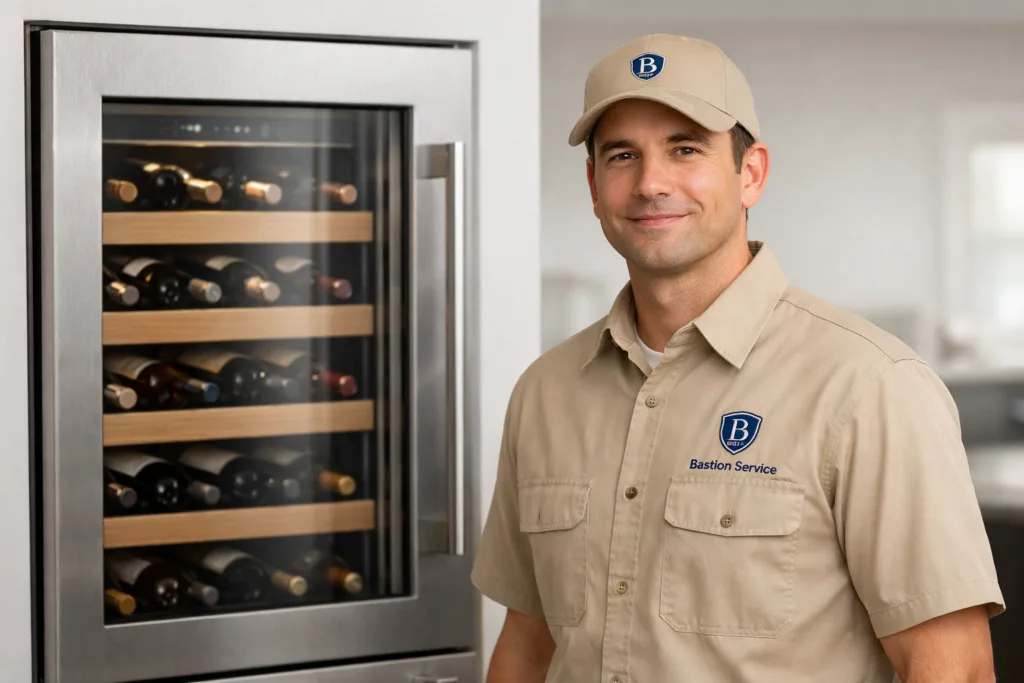
Temperature stability is the whole point of a wine cooler, so small changes in performance should not be dismissed. A Monogram unit that powers on but struggles to hold its set temperature may be dealing with anything from restricted airflow and sensor problems to fan failure, gasket leaks, or a more serious sealed-system issue. Looking at the exact symptom pattern first helps determine whether the repair is simple, urgent, or no longer cost-effective.
What homeowners usually notice first
Many problems begin with a subtle change rather than a total breakdown. Bottles may feel warmer than expected, the cabinet temperature may drift during the day, or the cooler may seem to run longer than usual. In other homes, the first sign is moisture on the glass, water near the base, or a new humming or rattling sound.
These early symptoms matter because wine storage depends on consistency. A unit can appear to be working while still exposing bottles to repeated temperature swings that are not ideal for short-term or longer-term storage.
Common Monogram wine cooler symptoms and what they can mean
Not cooling enough
If the cabinet is too warm, common causes include dirty condenser surfaces, weak internal airflow, an evaporator fan problem, a faulty temperature sensor, or an issue with the control system. In some cases, poor cooling points to compressor or sealed-system trouble. When the temperature is only slightly off, timely repair may prevent added strain on major components.
Temperature swings
A cooler that alternates between acceptable and warm conditions often has trouble reading or regulating temperature correctly. Thermistors, controls, airflow restrictions, and intermittent fan operation are all possible causes. This type of problem is easy to overlook because the unit may seem normal for part of the day, then drift again later.
Too cold or freezing in certain areas
Overcooling can be just as important as undercooling. If some shelves are unusually cold or bottles near one section are freezing, the problem may involve the thermostat, sensor feedback, circulation, or electronic controls. Uneven temperatures usually mean the cooler is not distributing air the way it should.
Running constantly
When a Monogram wine cooler rarely cycles off, it may be struggling to reach its target temperature. Causes can include poor door sealing, dirty condenser coils, warm ambient conditions, a control issue, or a failing cooling component. Constant operation increases wear and can push a manageable repair into a more expensive one if left alone.
Fan noise, buzzing, or rattling
New noises often help narrow down the problem. A rattling sound may come from vibration or loose panels, while a persistent fan noise can suggest a worn motor or obstruction. Buzzing or clicking may point toward compressor stress or electrical control issues. Noise paired with weak cooling deserves faster attention than noise alone.
Condensation, water, or interior moisture
Moisture around the door or inside the cabinet may be caused by a worn gasket, drainage blockage, humidity entering the unit, or cooling conditions that create excess condensation. Water near the appliance should be checked promptly to avoid damage to surrounding cabinetry or flooring.
Display or control problems
If the panel stops responding, shows incorrect temperatures, resets unexpectedly, or will not hold settings, the issue may involve the interface, wiring, control board, or sensor system. These faults can mimic a cooling problem even when the refrigeration components themselves are still functional.
Why symptom-based diagnosis matters
On Monogram wine coolers, different failures can create very similar symptoms. A unit that seems to have a major cooling problem may actually have a sensor issue, airflow restriction, or door-seal leak. The reverse can also happen, where an appliance that looks like it only needs an adjustment is actually showing early signs of compressor or sealed-system trouble.
That is why a symptom-based inspection is more useful than replacing parts based on guesswork. It helps identify the failed component, confirms whether continued use could cause additional damage, and gives the homeowner a realistic repair path.
Built-in installation issues that affect performance
Many wine coolers in Pico-Robertson homes are installed under counters or inside finished cabinetry. That layout looks clean, but it can make service symptoms less obvious at first. Restricted ventilation, heat buildup around the cabinet, and hidden moisture problems can all affect how the unit performs.
Built-in placement also means vibration, noise, or minor leakage may go unnoticed until cooling has already become unstable. Checking both the appliance and the surrounding installation helps separate a true internal failure from a ventilation or fit issue.
When to schedule repair instead of waiting
It makes sense to schedule service when the cooler is consistently warm, temperatures keep changing, the unit runs nonstop, or water starts appearing around the appliance. These are not usually problems that improve with time. Continued operation can increase strain on fans, controls, and the compressor while putting stored bottles at risk.
Service should move up in priority if the unit has stopped cooling completely, is tripping power, has an erratic display, or keeps losing its settings. Intermittent faults are still faults, and they often become more disruptive the longer they are ignored.
Repair or replacement?
Many Monogram wine cooler issues are repairable, especially when the problem involves sensors, fan motors, control components, drainage parts, lighting, or door seals. If the cabinet is in good condition and the repair restores stable temperature control, repair is often the better value.
Replacement becomes more likely when the cooler has major sealed-system failure, repeated expensive breakdowns, or overall wear that makes another repair hard to justify. The most informed decision comes after the actual fault is identified, not before.
What to do before service arrives
- Check whether the displayed temperature matches how the cabinet actually feels.
- Listen for new sounds such as clicking, buzzing, or fan scraping.
- Look for moisture around the door, under the unit, or inside the cabinet.
- Make sure the door is closing fully and not being blocked by bottle placement.
- Note whether the problem is constant or happens at certain times of day.
These observations can make the service visit more efficient and help narrow down whether the problem is related to airflow, controls, sealing, or cooling performance.
A useful next step for Pico-Robertson homeowners
If your Monogram wine cooler is no longer holding temperature, is making unusual noise, or is showing signs of condensation or control trouble, the next step is to have the issue checked before the symptom spreads into a larger repair. For households in Pico-Robertson, the goal is simple: restore stable wine storage conditions and make a sound decision about whether repair is the right investment.