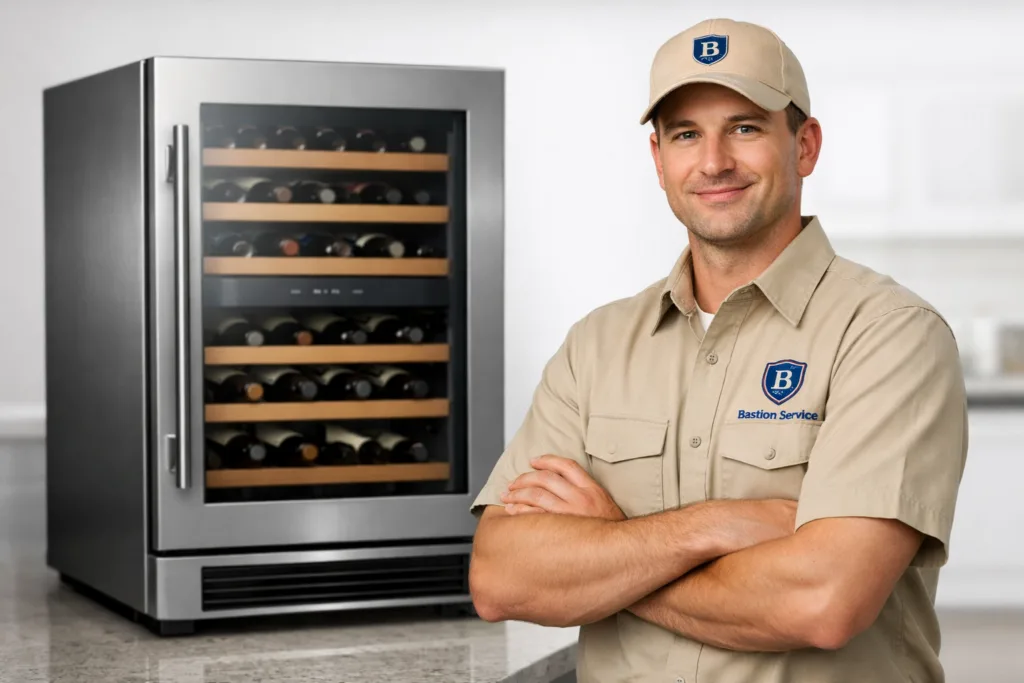
Stable storage matters more than a cold cabinet alone. If a True wine cooler is drifting above its set temperature, developing moisture, or making new noise, the next step is to identify whether the fault is tied to airflow, controls, door sealing, or the refrigeration system itself. Symptom patterns often overlap, so the most cost-effective repair usually starts with testing rather than assumptions.
Common True wine cooler issues in Pico-Robertson homes
Most residential wine cooler problems show up in a few recognizable ways. The important part is understanding what each symptom may point to before deciding whether the unit needs a minor component repair or a more involved fix.
Temperature swings or a cabinet that runs warm
If bottles are not staying consistently cool, several causes are possible. A blocked airflow path, weak fan motor, faulty thermistor, control issue, or poor condenser performance can all reduce cooling stability. In some cases, the cooler still produces some cold air, which can make the problem seem less urgent than it is. For wine storage, partial cooling is still a problem because repeated temperature drift can affect long-term storage conditions.
Uneven cooling from one section of the cabinet to another is also important. That can suggest circulation trouble inside the unit, which is different from a true loss of refrigerating capacity. The repair path depends on which system is falling behind.
Constant running or frequent cycling
A True wine cooler that runs for very long periods may be struggling to maintain its target temperature. Common reasons include warm air entering through a weak gasket, dirty heat-transfer surfaces, sensor or control errors, or an early-stage cooling-system problem. If the unit starts and stops too often instead, that may point to electrical control trouble, a failing start device, or an issue with how the compressor is being commanded to run.
Either pattern deserves attention. Long run times can increase wear, while short cycling can place repeated stress on startup components.
Condensation, interior moisture, or water buildup
Moisture around the door, on shelves, or beneath the unit usually means humid air is getting in or water is not leaving the cabinet as intended. A worn door gasket, slight door misalignment, drainage issue, or repeated incomplete door closure can all contribute. In a wine cooler, this is more than a housekeeping issue. Moisture can affect labels, shelving, and overall temperature consistency.
Buzzing, rattling, clicking, or fan noise
Some sound is normal during operation, but a change in sound pattern is a useful clue. Rattling can come from a loose panel or mounting point. Buzzing may relate to a fan motor or compressor operation. Repetitive clicking can indicate a startup problem. Because wine coolers are meant to operate with limited vibration, unusual sound should not be dismissed as cosmetic.
Display or control problems
If the display goes blank, settings do not hold, lights fail, or the unit behaves unpredictably, the issue may be electrical rather than mechanical. Control board faults, sensor errors, switch problems, or incoming power issues can affect cooling performance indirectly, even when the refrigerator system itself is still capable of working.
How symptom-based diagnosis helps avoid the wrong repair
Two units can look identical from the outside and still need completely different repairs. A wine cooler that seems warm might need a fan motor, a sensor, a door-seal correction, or major sealed-system work. Replacing parts based on guesswork often leads to extra cost without solving the root cause.
A useful service visit should confirm actual cabinet temperature, compare that reading to the control setting, check airflow and fan operation, inspect the door seal, and verify whether the cooling system is performing normally. That kind of methodical testing helps determine whether repair is straightforward or whether the problem points to a larger decline in the appliance.
Signs you should schedule service soon
It is wise to schedule service if you notice any of the following:
- The cabinet temperature no longer matches the setting
- Bottles feel warmer than usual or cooling is inconsistent
- The unit runs almost constantly
- The cooler starts and stops more often than before
- Condensation keeps returning after you wipe it away
- A new buzzing, clicking, or fan noise develops
- The controls stop responding normally
- The interior light or display behaves erratically along with cooling issues
Small issues can expand into larger ones. A weak gasket may force longer run times. A failing fan can lead to uneven cooling. A startup issue can increase strain on the compressor. If the cooler is still operating but no longer acting normally, delaying service may make the eventual repair less favorable.
Repair or replacement: what usually makes sense
For many Pico-Robertson homeowners, the decision comes down to the type of failure more than the symptom alone. Repairs are often reasonable when the problem involves sensors, controls, switches, fans, lighting, or sealing components and the cabinet itself is otherwise in good shape. Replacement becomes a more serious consideration when the unit has major cooling-system failure, repeated breakdowns, or broader age-related wear that limits the value of further investment.
The key is to decide after diagnosis, not before it. A premium wine cooler may still be well worth repairing when the fault is isolated and the cabinet remains structurally sound.
What a residential service visit should focus on
In a home setting, wine cooler repair should stay centered on performance and storage protection. That means verifying actual operating temperature, checking recovery after the door opens, inspecting gasket condition and door alignment, listening for fan or compressor irregularities, and confirming that the controls are reading and responding correctly.
That approach gives you a practical repair plan based on the exact fault rather than broad part swapping. For homeowners in Pico-Robertson, the most helpful outcome is knowing what failed, whether continued use is safe for stored wine, and whether the repair is a sensible next step for the condition of the unit.