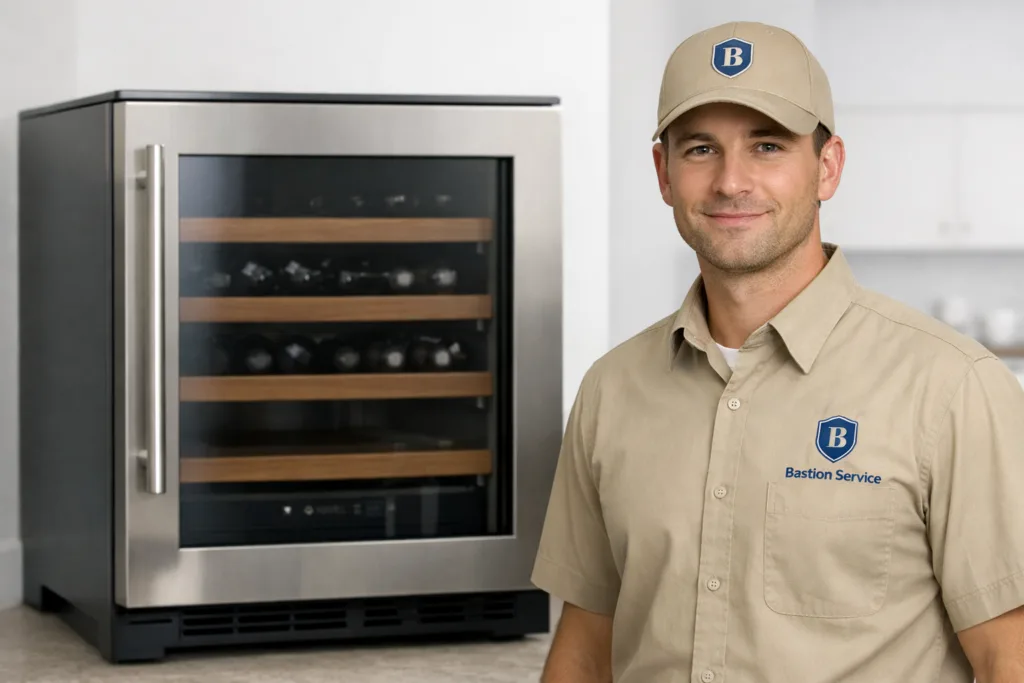
Small changes in wine cooler performance usually show up before a full failure. A Marvel unit may start running a little warmer, cycle longer than usual, develop moisture around the door, or make a new vibration sound. Those early clues matter because wine storage depends on steady temperature and airflow, not just whether the cabinet feels cold at a glance.
In Pico-Robertson homes, it helps to look at the full symptom pattern rather than one isolated sign. A cooler that seems warm after loading bottles may only need airflow correction, while a cabinet that stays warm overnight, clicks repeatedly, or builds frost is more likely dealing with a component problem that should be checked before the unit is pushed harder.
Common Marvel wine cooler symptoms and what they can mean
Cabinet temperature is too warm
If the displayed setting looks normal but bottles are not staying at the expected temperature, the issue may involve restricted condenser airflow, a weak fan, a sensor problem, control failure, or a sealed system fault. Warm operation can also happen when the door gasket is not sealing evenly and the unit keeps pulling in room air.
This symptom becomes more important when the cooler runs for long stretches without recovering, or when the upper and lower shelves feel noticeably different. Uneven cooling often points to airflow or sensing trouble before it points to a major refrigeration failure.
Temperature swings from day to day
Inconsistent cooling is one of the more frustrating problems because the unit may seem fine for part of the day and then drift off target. Causes can include an inaccurate thermistor, intermittent fan operation, control board issues, or a door that is not closing as firmly as it should.
Frequent temperature swings are worth addressing early. Even if the cooler starts again on its own, repeated fluctuation can mean the appliance is struggling to regulate properly under normal household use.
Unit runs constantly or starts too often
A Marvel wine cooler that rarely shuts off may be compensating for heat entering through a bad seal, poor ventilation around the cabinet, dirty condenser surfaces, or a developing refrigeration issue. Short cycling, where it starts and stops too frequently, can point to sensor, control, relay, or compressor-related problems.
Neither pattern should be ignored. Long run times increase wear, and rapid cycling can create extra stress on electrical and cooling components.
Condensation, water, or frost appears inside
Moisture on shelves, around the frame, or beneath the appliance may come from a clogged drain path, a misaligned door, a worn gasket, or cooling behavior that is causing abnormal frost. If condensation keeps returning after the door is wiped dry, there is usually an underlying reason beyond normal humidity.
Frost buildup is especially useful as a diagnostic clue. Light, isolated moisture can be a sealing issue, while recurring frost often suggests airflow, sensor, or evaporator-related trouble that needs more than a quick cleanup.
Fan noise, rattling, buzzing, or clicking
Wine coolers are not silent, but the sound pattern should be familiar and fairly steady. A new buzzing sound may come from vibration or compressor strain. Rattling can happen when panels, shelves, or tubing resonate during operation. Repeated clicking may point to a start problem, control issue, or a compressor that is having trouble engaging.
If noise is accompanied by weak cooling or higher cabinet temperature, that combination is more significant than sound alone.
What homeowners can check before scheduling repair
There are a few simple things worth checking first:
- Confirm the door closes fully and the gasket is not twisted, torn, or loose.
- Make sure bottles or shelves are not blocking interior airflow.
- Check that the cabinet has proper ventilation clearance for heat to escape.
- Look for obvious moisture trails, frost patches, or debris near the lower areas of the unit.
- Notice whether the display matches the actual cooling behavior.
These observations do not replace service, but they help narrow down whether the issue is likely related to use conditions, airflow, sealing, controls, or the refrigeration system itself.
When the problem points to a repair need
Service is usually the right next step when the cabinet cannot maintain its set temperature, the fan grows noticeably louder, condensation keeps returning, the control panel behaves unpredictably, or the compressor seems to run almost nonstop. Those symptoms suggest more than a temporary fluctuation.
You should also stop relying on the unit for proper wine storage if bottles feel warmer than expected for more than a short period, frost keeps forming after removal, or water starts pooling under the cabinet. Continued operation in that condition can turn a limited repair into a broader one.
Why diagnosis matters with Marvel wine coolers
Different faults can create similar symptoms. A warm cabinet does not automatically mean compressor failure, and moisture around the door does not always mean a drain problem. Sensor errors, fan failures, control issues, and sealing problems can overlap in ways that make guesswork expensive.
For that reason, Marvel Wine Cooler Repair in Pico-Robertson should focus on actual testing of temperature response, airflow, electrical function, and component behavior. That process helps determine whether the issue is isolated and repairable or part of a bigger wear pattern affecting the appliance overall.
Repair or replace: how to make the call
Many wine cooler problems are repairable when the failure is limited to a fan motor, temperature sensor, door gasket, drain issue, control component, or another accessible part. Repair tends to make the most sense when the unit has been otherwise stable and the diagnosis points to one clear cause.
Replacement becomes more likely when there is major sealed system trouble, repeated breakdown history, advanced age-related wear, or multiple failing systems at once. The key question is not just whether the cooler can be fixed, but whether the repair is likely to restore reliable storage conditions without leading to a chain of additional problems.
What a service visit should evaluate
A useful service visit should not stop at the obvious complaint. It should verify actual cabinet temperature, compare the displayed reading to performance, inspect airflow, check fan operation, review door sealing, assess moisture patterns, and test the electrical side of the unit where needed.
Installation conditions inside the home matter too. Tight clearances, uneven flooring, overloaded shelving, and frequent door openings can all affect how a wine cooler behaves. Looking at both the machine and its use conditions gives homeowners in Pico-Robertson a better basis for deciding what to repair and what to monitor going forward.
Protecting stored wine while the unit is acting up
If your Marvel cooler is not holding temperature consistently, try to reduce door openings until the issue is identified. Avoid overloading the cabinet, and pay attention to any bottles stored near the warmest area of the unit. If the interior is clearly above normal storage range or rising quickly, it is best not to assume the problem will correct itself.
Wine coolers often fail gradually before they fail completely. Acting when symptoms first appear usually gives you more repair options and a better chance of preventing unnecessary stress on the appliance.