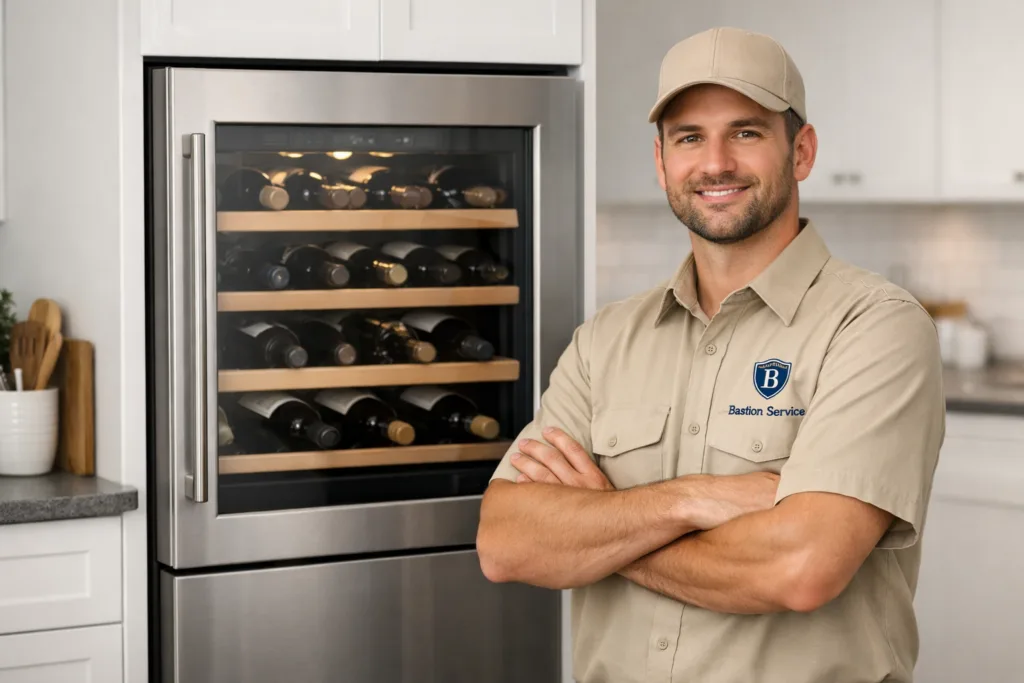
Temperature instability is one of the fastest ways a wine cooler starts putting a collection at risk. A cabinet that feels warmer than the display reading may be dealing with a faulty sensor, a thermostat problem, restricted airflow, dirty condenser coils, or a door that is not sealing tightly. When cooling varies from shelf to shelf, circulation is often part of the diagnosis, especially in units that depend on steady internal fan movement to keep conditions even.
Common wine cooler problems and what they can mean
A wine cooler that runs constantly without reaching the set temperature can point to anything from poor ventilation to compressor-related trouble. Short cycling, where the unit starts and stops too often, may suggest a control issue, overheating, or an electrical component that is no longer operating within range. If the cabinet powers on but does not cool, that usually means the problem is beyond a simple outlet issue and needs closer inspection of the cooling system and controls.
Excess condensation, water around the door, or moisture collecting inside the cabinet often comes from warm air intrusion. That can happen because of a worn gasket, a door that is slightly misaligned, or a drainage problem that allows water to remain in the unit instead of exiting properly. Frost buildup can also interfere with airflow and create a chain reaction where temperatures become less stable over time.
Noise changes matter too. Buzzing, rattling, clicking, or a fan sound that suddenly becomes much louder can come from loose mounting parts, an evaporator fan, a condenser fan, or compressor strain. A new sound does not always mean the repair will be major, but it is often an early signal that a component is wearing down or operating under stress.
When a wine cooler issue should not be ignored
Some problems seem minor at first, but they tend to worsen with continued use. A unit that struggles to recover temperature after the door is opened may be overworking the compressor. A poor seal can force longer run times, which raises internal moisture and increases wear on both fans and electrical components. If frost is concentrated in a separate low-temperature compartment, Freezer Repair in Pico-Robertson may be the more relevant service path.
It is usually time to schedule service when the displayed temperature no longer matches the actual cabinet temperature, when bottles are warming despite normal settings, or when condensation and frost return soon after being wiped away. Homeowners in Pico-Robertson should also take recurring tripped breakers, flickering display behavior, or unusually hot exterior cabinet panels seriously, because those symptoms can point to electrical or cooling-system stress.
How wine cooler diagnosis typically works
A useful diagnosis starts with the basics: actual interior temperature, door sealing, control response, fan operation, airflow, drainage, and visible signs of electrical wear. From there, the inspection often moves toward temperature sensors, thermostatic controls, and the condition of cooling components. This matters because two coolers with the same symptom on the surface can have very different repair needs underneath.
For example, a cabinet that seems completely dead may have a control board, start device, or power supply issue rather than a failed sealed system. On the other hand, a cooler that still lights up and runs may still have a more serious cooling fault if the compressor is weak or refrigerant performance has dropped. Pinpointing the failed part before approving work helps avoid replacing components based on guesswork.
Repair versus replacement for homeowners in Pico-Robertson
Whether repair makes sense usually depends on the age of the unit, the condition of the cabinet, and the type of failure involved. Door gaskets, fan motors, drainage components, thermostats, and some electronic controls are often reasonable repairs when the rest of the appliance is in solid shape. Replacement becomes more likely when the unit has repeated cooling failures, severe sealed-system problems, or a repair cost that is too close to the value of the appliance.
Performance history matters as much as the current symptom. If the cooler has had growing temperature swings, longer run times, and increasing noise over several months, that trend may suggest broader wear rather than one isolated part failure. If similar cooling loss is showing up in the main kitchen appliance instead of the wine cabinet, Refrigerator Repair in Pico-Robertson may be a better fit for that separate issue.
Related symptoms that may point to a different appliance
Not every cold-storage complaint belongs to a wine cooler. If the main problem is limited to ice production, slow filling, leaking near the ice area, or a dispenser that stops working while the rest of the appliance cools normally, Ice Maker Repair in Pico-Robertson may be the more useful service to consider. Separating those symptoms early can save time and keep the repair focused on the appliance that is actually failing.
That distinction is especially helpful in homes where more than one refrigeration appliance is acting up at once. A wine cooler is designed for stable, controlled storage rather than the heavier temperature swings expected in a refrigerator or freezer, so the repair approach is not always the same. Looking at where the symptom begins, how often it happens, and whether it involves temperature, moisture, airflow, or ice helps narrow the next step.
What homeowners can do before service
Before scheduling repair, it helps to note the set temperature, the actual feel inside the cabinet, any recent noise changes, and whether the issue is constant or intermittent. Check that the door closes evenly, the surrounding ventilation space is not blocked, and the cooler is not overloaded in a way that restricts internal airflow. If moisture is present, pay attention to whether it is collecting around the door, under the unit, or on the back wall inside the cabinet.
These observations can make diagnosis faster and help separate a maintenance issue from a part failure. For homeowners in Pico-Robertson, the goal is not just to get the unit running again, but to restore stable storage conditions that protect the bottles inside and reduce the risk of further component damage.