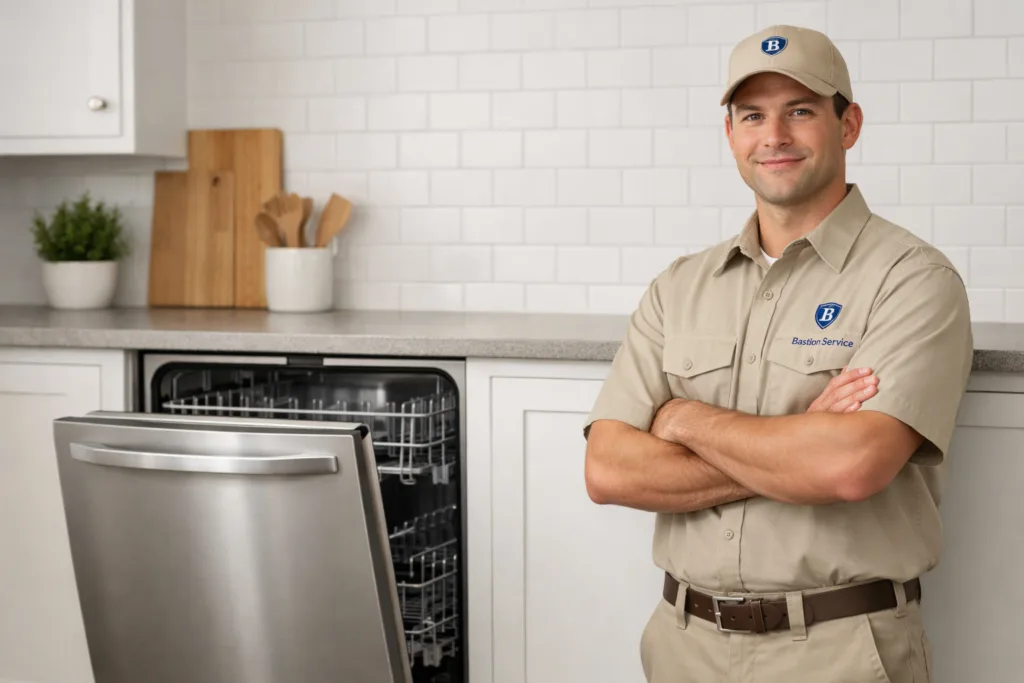
Common Summit dishwasher problems in Pico-Robertson homes
Dishwasher problems usually show up as a handful of repeat symptoms, but the underlying cause is not always obvious from the outside. A Summit unit that leaves residue on dishes, stops mid-cycle, or pools water in the tub may be dealing with a pump issue, restricted water flow, a sensor problem, a latch fault, or a worn seal. Looking at the pattern of the failure is what separates a simple correction from unnecessary parts replacement.
Standing water after the cycle
If water is still sitting at the bottom after the dishwasher finishes, the problem may involve the filter area, drain hose, drain pump, or the connection where the machine sends water out. In some cases, the dishwasher sounds normal but is not actually moving water efficiently. In others, you may hear a hum or repeated attempts to drain with little result.
This issue should not be ignored for long. Leftover water can lead to odor, residue buildup, and extra strain on the drain system.
Dishes are still dirty, gritty, or cloudy
Poor wash results do not always mean the detergent is the problem. Summit dishwashers can leave dishes dirty when spray arms are restricted, water fill is too low, circulation is weak, or rinse temperature is not reaching the level the cycle expects. Cloudiness can also appear when dishes are not being rinsed thoroughly or when the machine is not heating water properly during the cycle.
If cleaning performance has gradually declined, that often points to buildup, partial blockage, or a component that is weakening rather than failing all at once.
Leaks from the door or underneath
A leak may come from a damaged door gasket, a loose hose connection, a cracked internal part, oversudsing, or a drainage problem that causes water to escape in the wrong place. The location of the water matters. Moisture near the front edge can suggest a door-related issue, while water under the unit may point to a hose, pump, or sump area problem.
Even a small recurring leak is worth addressing early because repeated moisture can damage flooring, kick plates, and nearby cabinetry.
Dishwasher will not start
When a Summit dishwasher does not respond at all, the problem may involve incoming power, the door latch, control panel inputs, or an internal electrical fault. If lights come on but the cycle will not begin, that narrows the issue differently than a unit that appears completely dead.
It also helps to notice whether the problem is constant or intermittent. A dishwasher that works sometimes but not others often points to a different repair path than one that has fully stopped operating.
Cycle stops mid-wash
If the cycle begins normally and then pauses, stalls, or shuts down before completion, possible causes include heating faults, sensor issues, latch interruptions, drain problems, or control-related failures. Homeowners often describe this as a machine that gets “stuck” at the same point every time.
That repeated timing pattern is useful because it helps identify which part of the wash sequence is failing.
Humming, grinding, or unusual vibration
New noise is one of the clearest signs that a dishwasher needs attention. A humming sound may indicate a pump that is trying to run under strain. Grinding can suggest debris in the pump area or wear in moving parts. Vibration may come from poor leveling, loose mounting, or internal circulation trouble.
When a Summit dishwasher starts making noises it never made before, continuing to run it can turn a contained issue into a more expensive repair.
Why symptom-based diagnosis matters
Many dishwasher complaints overlap. A machine that seems to have a cleaning problem may actually be filling with too little water. A unit that appears to have a drain problem may be stopping early because of a different fault in the cycle. A leak may look like a bad seal when the real issue starts with oversudsing or improper draining.
That is why the most useful service approach is to test the specific functions involved: fill, wash action, heating, draining, and control response. For homeowners in Pico-Robertson, this makes it easier to understand what failed, what the repair would involve, and whether the appliance is worth fixing.
Signs the dishwasher should be serviced soon
Some dishwasher problems can wait a short time for scheduling, but others should be addressed promptly. Delaying service is more risky when water is escaping the unit, the machine is making sharp mechanical noise, or the cycle repeatedly stops before finishing.
- Water remains in the tub after each use
- The dishwasher leaks during wash or drain
- Dishes come out consistently dirty despite normal loading
- The unit trips the same failure on nearly every cycle
- There is a burning smell, harsh humming, or grinding noise
- The controls respond inconsistently or the dishwasher will not start
Using the appliance in these conditions can sometimes worsen pump wear, increase water damage, or make the final repair more involved.
Repair or replace a Summit dishwasher?
In many cases, repair makes sense when the issue is isolated to one serviceable component and the rest of the dishwasher is still in good shape. That is often true with problems involving drains, pumps, latches, seals, fill components, or certain control-related faults.
Replacement becomes a more serious consideration when the dishwasher has multiple failing systems, repeated service history, extensive internal wear, or a repair cost that no longer fits the condition of the appliance. Age matters, but condition matters just as much. A well-kept unit with one clear failure is different from a machine showing problems in several areas at once.
A straightforward assessment helps clarify the decision: what is failing, whether the repair is likely to restore normal use, and whether continued operation could cause additional damage.
What to note before a service visit
A few observations from the household can make diagnosis faster and more accurate. Before scheduling Summit dishwasher repair in Pico-Robertson, try to note what the machine is doing rather than only the final symptom.
- Does it fill with water at the beginning of the cycle?
- Does it wash normally before the problem starts?
- Does the issue happen on every cycle or only certain settings?
- Is the water leaking from the front, the side, or underneath?
- Does the unit stop at the same point each time?
- When does the noise begin: fill, wash, drain, or dry?
These details often help narrow the issue more quickly than a general description like “not working right.”
Focused help for Summit dishwasher issues at home
Residential dishwasher problems are easiest to solve when the symptom pattern is matched to the system that is actually failing. Whether the issue involves poor cleaning, drain trouble, leaking, low rinse temperature, pump performance, or cycle failure, the goal is to identify the fault and recommend the repair path that makes sense for the appliance in your kitchen.
For Pico-Robertson homeowners, that means less guesswork, fewer repeat problems, and a better understanding of whether the next step should be repair now or replacement later.