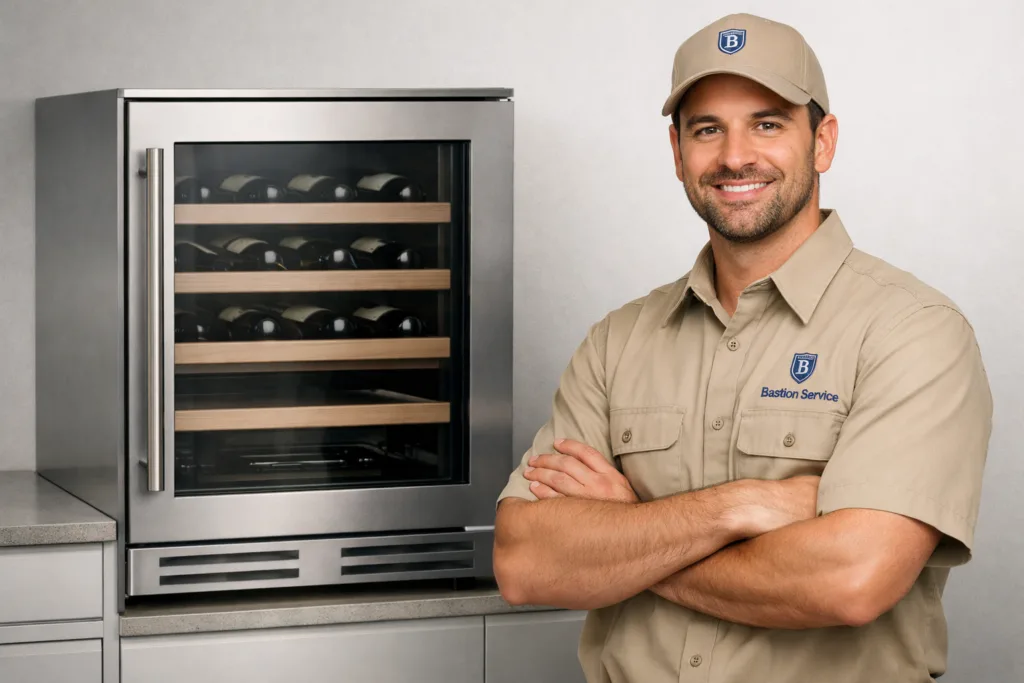
Temperature instability, excess moisture, and new operating noises are usually the first signs that a Perlick wine cooler needs attention. What makes these problems frustrating is that one symptom can have several possible causes. A cabinet that feels warm may point to weak airflow, a fan issue, a sensor problem, dirty condenser components, or a more serious cooling-system fault. That is why the most useful next step is to identify the failure pattern before assuming which part is bad.
What homeowners usually notice first
Many wine cooler problems begin subtly. You might see bottles losing their usual chill, hear a fan that sounds rougher than normal, or notice moisture collecting along the door gasket. In some homes, the cooler seems to recover after a reset, only to drift out of range again later. That kind of intermittent behavior often means a component is weakening rather than failing all at once.
Pay attention to changes in how the unit cycles. A cooler that runs longer than it used to, shuts off too quickly, or starts and stops repeatedly is telling you something has changed. Even if the cabinet still feels somewhat cool, unstable cycling can be an early warning that performance is slipping.
Common Perlick wine cooler symptom groups
Not cooling enough
If the cabinet no longer holds a steady storage temperature, possible causes include restricted airflow, an evaporator fan problem, condenser trouble, a faulty sensor, or control issues that keep the system from cycling correctly. In some cases, reduced cooling can also point to compressor or sealed-system wear. When bottles are consistently warmer than expected, it is best not to keep forcing the unit to run nonstop.
Too cold or freezing near the back
Overcooling is often tied to sensor errors, thermostat faults, or control problems that prevent proper shutoff. Homeowners sometimes assume colder means the unit is working harder in a good way, but freezing inside a wine cooler usually means temperature regulation is off. That can affect storage conditions and may lead to uneven performance throughout the cabinet.
Condensation, fogging, or water buildup
Moisture inside the cabinet can come from a worn door gasket, frequent warm-air intrusion, a blocked drain path, or uneven cooling that causes excess condensation. Water around the bottom of the unit may be small at first, but repeated moisture can turn into odor, surface damage, or ongoing efficiency problems if left alone.
Buzzing, rattling, or fan noise
Some sound is normal during cooling cycles, but a noticeable change in tone or volume deserves attention. Rattling can come from vibration or loose components. Buzzing may relate to compressor strain. A scraping or loud whirring sound often points to fan wear or obstruction. When noise appears together with weak cooling, the problem is usually more than cosmetic.
Running constantly or short cycling
A Perlick wine cooler that rarely shuts off may be struggling to reach the target temperature. Short cycling, where the unit starts and stops too often, can signal a control, sensor, or electrical issue. Both patterns put added wear on internal parts and usually get worse rather than better with time.
Why symptom-based diagnosis matters
Wine cooler repairs are most effective when the actual cause is matched to the symptom pattern. Replacing a door gasket will not solve a failing fan motor, and swapping a sensor will not correct a mechanical cooling problem. Because Perlick units are built for stable storage performance, the repair path should be based on testing and observed behavior instead of guesswork.
That matters even more when the unit still works part of the time. A cooler that cools well in the morning but warms up by evening could have an airflow issue, a control fault, or a component that fails after heating up during operation. Looking at the timing and pattern of the problem often tells more than the headline symptom alone.
Simple checks you can make before service
Before scheduling repair, a few basic checks may help rule out easy causes:
- Make sure the door closes fully and the gasket is not folded, cracked, or loose.
- Confirm bottles or shelving are not blocking internal air circulation.
- Verify the temperature setting was not changed accidentally.
- Check that exterior ventilation areas are not obstructed.
- Listen for whether the fan and compressor sounds are normal or noticeably different.
If the issue continues after these checks, the problem is likely internal and should be evaluated further.
When to stop waiting and schedule repair
Service is a smart idea when the cooler cannot maintain temperature, develops persistent condensation, leaks water, makes new noises, or begins running much longer than usual. Repeated clicking without reliable cooling is another sign that the unit should not be left to keep trying indefinitely.
You should also schedule service if the problem comes and goes. Intermittent operation is easy to ignore because the unit sometimes seems fine, but that pattern often means a part is failing under load. Catching it earlier can help prevent a larger repair later.
When continued use can make the problem worse
If the cabinet is warming, the compressor area feels unusually hot, or the cooler is running nearly all the time, continued operation can add stress to already weak components. Ongoing condensation can also create secondary issues around seals, trim, and interior surfaces. In a household setting, that often turns a manageable wine cooler problem into a broader appliance headache.
Repeatedly unplugging and restarting the unit is rarely a lasting fix. If resets temporarily restore operation, that usually suggests an underlying control or component issue that still needs to be addressed.
Repair or replacement?
The right choice depends on the age of the cooler, the condition of the cabinet and door, the type of failure, and the expected cost of repair. If the issue involves a sensor, fan motor, gasket, drain problem, or control-related component, repair is often a reasonable option. If the unit has major sealed-system trouble, extensive wear, or a pattern of repeat breakdowns, replacement may make more sense.
For homeowners in Pico-Robertson, the most practical decision usually comes down to whether the repair is likely to restore stable, everyday performance without turning into an ongoing cycle of new problems. A good evaluation should make that decision clearer.
What a focused repair visit should accomplish
A worthwhile service call should do more than name a symptom. It should narrow down whether the issue is related to airflow, controls, fan operation, door sealing, drainage, or the cooling system itself. From there, you can weigh the fix against the condition of the unit and decide on the next step with confidence.
For a Perlick wine cooler in Pico-Robertson, that kind of straightforward assessment helps protect both the appliance and the contents inside it. When cooling becomes unreliable, acting early is usually the best way to limit added wear and avoid more disruptive failure later.