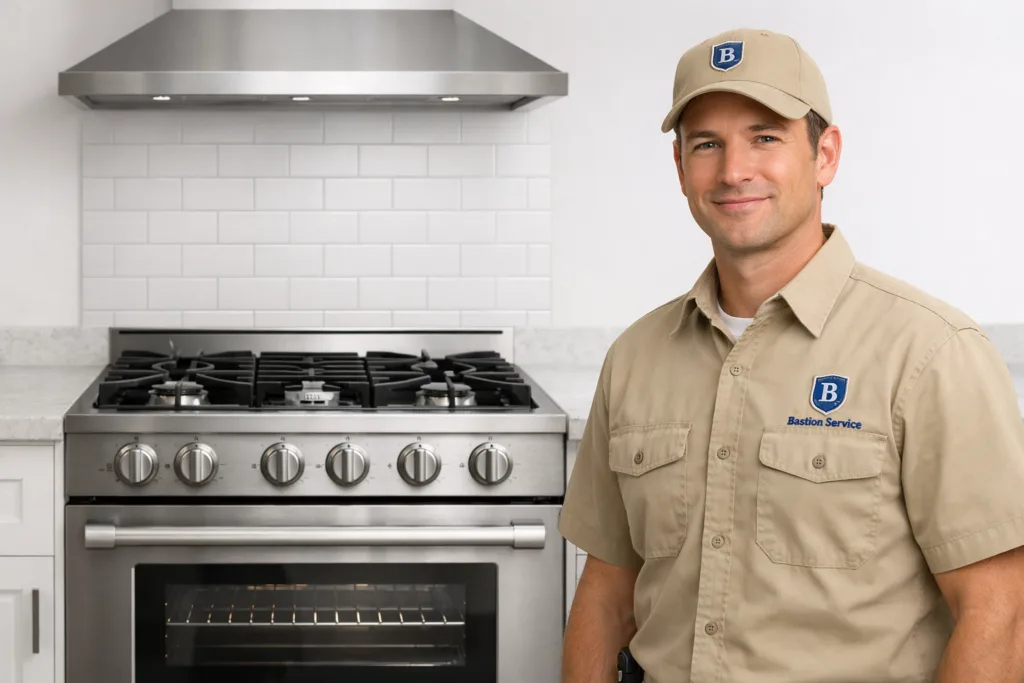
Range problems tend to interfere with the most routine parts of the day: boiling water takes too long, the oven misses temperature, or a burner keeps clicking long after it should have lit. With Summit models, the same kitchen complaint can come from different parts of the appliance, so the most useful starting point is to match the symptom to the system that is actually failing.
Common Summit range symptoms in Pico-Robertson homes
Most service calls fall into a few recognizable patterns. Some affect the cooktop only, some affect the oven cavity, and some point to a control or power issue that changes how the whole range behaves.
Burner clicking that does not stop
Continuous clicking usually means the ignition system is trying to light a burner but is not completing the process normally. That can happen because of moisture after cleaning, food debris around the burner head, a cap that is slightly out of position, or an ignition component that is no longer working as it should. If the burner eventually lights but keeps clicking, that is still a sign the ignition system should be checked.
Burners that light slowly or not at all
When a gas burner takes several tries to ignite, the cause may be restricted flame ports, weak spark performance, or a problem in the ignition circuit. On electric ranges, a surface element that stays cool, heats unevenly, or cuts in and out may point to the element, switch, or wiring connection. If only one burner is affected, that detail often helps narrow the issue faster.
Oven not heating properly
An oven that will not preheat, stalls at a low temperature, or takes far longer than expected to cook often has a fault in the heating system rather than a simple setting mistake. Depending on the configuration of the Summit range, the issue may involve the bake element, broil element, igniter, temperature sensor, relay, or electronic control.
Food baking unevenly
If cookies brown on one side, casseroles stay cold in the center, or the bottom of dishes burns before the top is done, uneven heat is usually the real complaint. The cause may be a weak heating component, inaccurate sensing, a worn door gasket, or airflow problems inside the oven cavity. This is one of the easiest symptoms to live with for too long, but it usually gets more frustrating over time rather than better.
Display or control problems
A blank panel, flashing display, unresponsive keypad, or oven cycle that will not start can point to a control-side failure. Sometimes the range appears to have power but does not respond normally to temperature selections or cooking modes. In other cases, the unit may reset during use or behave inconsistently from one day to the next.
What different symptoms usually suggest
Symptom patterns matter because they help separate a single failed part from a larger system problem.
- One burner affected: often a localized burner, switch, igniter, or connection issue
- All burners or oven functions acting oddly: more likely a power, control, or shared component problem
- Oven heats but misses temperature: often tied to sensing, calibration, or a weakening heating component
- Clicking after cleaning: sometimes moisture or burner cap alignment
- Intermittent shutdowns: often electrical and worth addressing sooner rather than later
That is why part replacement based on guesswork can waste time. A burner that will not light is not always an igniter issue, and an oven that seems “weak” is not always a bad bake element.
Signs the problem is getting worse
Some range issues stay inconvenient for a while before becoming more serious. Others should prompt homeowners to stop using the appliance until it is evaluated.
It is smart to schedule service if you notice:
- Repeated ignition failures
- Burners that click continuously
- Oven temperatures that swing too high or too low
- Preheat times that are much longer than normal
- Controls that stop responding during cooking
- Electrical smells, sparking, or visible scorching
- The range losing power unexpectedly
Intermittent problems are especially worth attention. A range that works “most of the time” often has a component weakening in a way that can lead to full failure with little warning.
How Summit oven heating issues affect everyday cooking
Oven problems are not always obvious at first. Many households in Pico-Robertson first notice them through results rather than through the appliance itself. Roast times stretch longer, baked goods come out uneven, or recipes that used to be reliable stop turning out consistently.
Those clues often mean the oven is no longer regulating heat correctly. If the set temperature and the actual cavity temperature do not match, the appliance may still appear to run normally while producing poor results meal after meal. When that pattern continues, it becomes much easier to mistake a mechanical problem for a recipe issue.
Cooktop issues that should not be ignored
Surface burner trouble can feel easier to work around because the oven may still function, but cooktop problems can worsen with continued use. Repeated failed ignition can put extra strain on ignition components. Uneven electric heating can make pans perform unpredictably. A burner that works only on certain settings may indicate a control issue instead of just normal wear.
If a burner flame looks unusually weak, uneven, or delayed, that behavior is useful diagnostic information. If an electric element cycles erratically, glows inconsistently, or remains too hot, that also helps identify whether the fault is in the element itself or the control feeding it.
Repair or replace: what usually makes sense
Many Summit range problems are repairable when the appliance is otherwise in solid condition and the failure is limited to ignition, heating, sensing, or controls. Replacement becomes a more serious consideration when several systems are failing at once, the range has recurring electrical issues, or wear is widespread enough that one repair is unlikely to restore reliable daily use.
A helpful decision usually comes down to a few basic questions:
- Is the failure isolated or are multiple functions showing problems?
- Has the issue been recurring after previous repairs?
- Is the appliance in good overall condition apart from the current symptom?
- Will the repair likely return the range to normal household use?
For many homeowners, the right answer is less about the single broken part and more about whether the full appliance still makes sense to keep in service.
What to note before scheduling service
If you are arranging Summit range repair in Pico-Robertson, a few details can make the visit more productive. Try to note whether the problem affects the oven, the cooktop, or both; whether it happens every time or only occasionally; and whether the issue began suddenly or gradually. Even simple observations like “front right burner only” or “oven preheats but never reaches temperature” can help narrow the likely cause.
It also helps to mention any recent cleaning, power interruption, unusual smell, or change in noise. Those details often point to whether the problem is mechanical, electrical, or related to ignition performance.
Focused help for Summit range problems in Pico-Robertson
When a range starts acting unpredictably, the goal is not just to make it turn on again. The goal is to restore safe, consistent cooking performance in a way that makes sense for the condition of the appliance. Whether the issue involves clicking burners, temperature drift, failed preheat, or controls that no longer respond normally, the next step should be based on the actual symptom pattern and the repair path it supports.