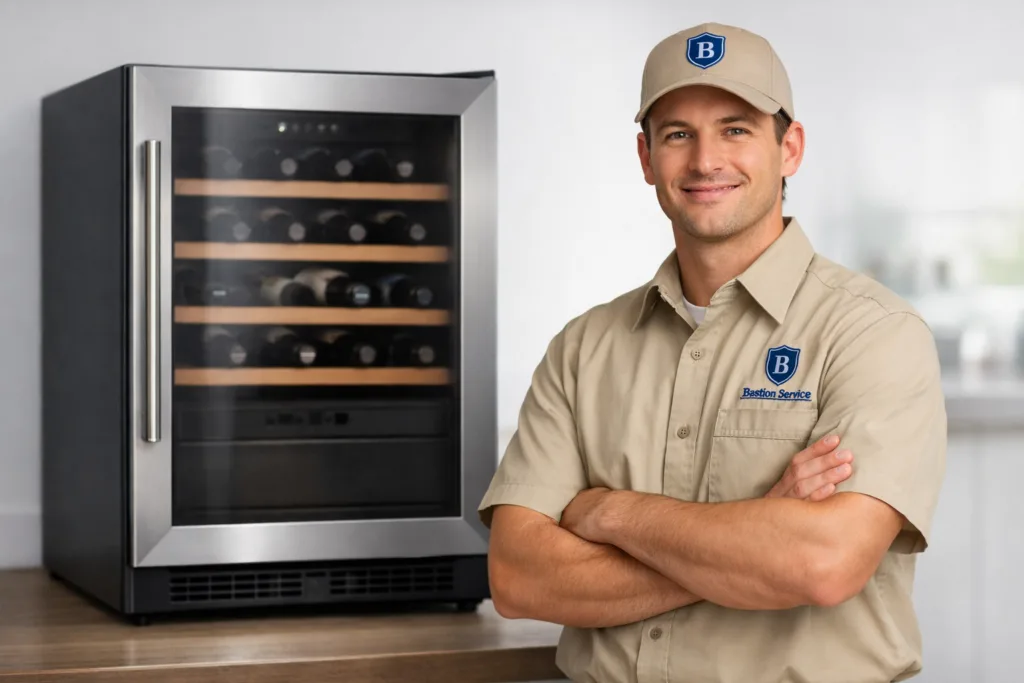
Temperature drift is usually the first sign that something is off, but it is rarely the whole story. An EdgeStar wine cooler may look like it is running normally while the interior slowly warms, one zone falls out of range, or bottles near the back cool differently than bottles near the door. The real cause can involve airflow, controls, sensors, door sealing, or the cooling system itself, so the symptom pattern matters.
Common EdgeStar wine cooler symptoms in Pico-Robertson homes
Most household wine cooler problems start with a change that is easy to notice during daily use. Paying attention to what changed first often helps narrow the repair path.
Wine cooler not cooling enough
If the display is on and the cabinet seems active but the interior will not reach the selected temperature, the problem may involve a weak fan, inaccurate temperature sensing, control failure, dirty heat-dissipating surfaces, poor ventilation, or a compressor-related issue. In some cases, the cooler still gets somewhat cold, just not cold enough to keep a stable storage environment.
On dual-zone models, one side working better than the other is an especially useful clue. That can point toward airflow or control issues rather than a simple power problem.
Cabinet getting too cold or freezing bottles
Overcooling is often tied to sensor or control problems. When the cooler keeps running past the target temperature, the unit may be receiving bad temperature information or failing to cycle correctly. Homeowners sometimes first notice this when whites become too cold, reds feel much colder than expected, or bottle labels start showing moisture from sudden temperature imbalance.
Condensation, water, or frost buildup
Moisture inside or around the cabinet can come from repeated warm air entering through a loose seal, a drainage issue, or cooling behavior that is not staying consistent. Frost along interior panels can block airflow and reduce performance, which then makes the cooler run longer and less efficiently.
If water keeps returning after wiping it up, it is worth having the cause checked rather than treating it as a one-time spill or humidity issue.
Fan noise, buzzing, clicking, or constant running
Wine coolers are not silent, but the sound pattern should be fairly consistent. New rattling, louder fan noise, repeated clicking, or a unit that seems to run almost nonstop can mean a component is struggling. Sometimes the noise is minor, such as shelf vibration or a panel resonance. Other times it is the early sign of a failing fan motor, relay issue, or compressor strain.
Controls not responding normally
If settings change on their own, the display behaves erratically, or the cooler does not respond correctly to temperature adjustments, the issue may involve the control board, user interface, or sensor feedback. This can create confusing symptoms because the cabinet may cool sometimes, then drift out of range without a simple pattern.
What these symptoms usually point to
Several EdgeStar wine cooler problems overlap, which is why symptom-based testing matters more than guessing from one visible issue. For example, a warm interior does not automatically mean the compressor has failed. The same complaint can come from restricted airflow, a fan problem, a control issue, a door gasket leak, or a sensor that is reading incorrectly.
- Uneven temperatures often suggest airflow or fan-related trouble.
- Short cycling or nonstop running can point to controls, sensors, ventilation problems, or sealed-system stress.
- Moisture and frost commonly involve sealing, airflow, or temperature regulation problems.
- Noises paired with weak cooling usually deserve quicker attention than noise alone.
A proper diagnosis helps separate a manageable repair from a major cooling-system failure before the wrong parts are replaced.
Simple checks homeowners can make first
Before scheduling service, a few basic observations can help rule out easy causes and make the problem easier to describe.
- Confirm the temperature setting was not changed accidentally.
- Make sure the door is closing fully and not being blocked by bottle placement or shelf position.
- Check for visible gasket gaps, tears, or areas that do not sit flush.
- Look for heavy frost, standing water, or unusual condensation patterns.
- Notice whether the fan sound has changed or become louder than normal.
- Check whether the cabinet exterior has enough breathing room and is not packed too tightly into surrounding cabinetry.
These checks do not replace service, but they can help identify whether the problem is likely tied to usage conditions, airflow, or a failing component.
When service is a good idea
It makes sense to schedule repair when the cooler cannot hold the selected temperature, one zone is not matching the other, water or frost keeps returning, or the unit begins making unfamiliar sounds. Service is also worth scheduling when performance declines gradually, since slow changes often indicate a developing component issue rather than a harmless quirk.
In Pico-Robertson households, early service can be especially helpful when the cooler is still operating but no longer stable. A unit that is only partly cooling today may be fully warm soon after, and continued operation under strain can expand the repair scope.
Signs continued use may cause more trouble
Some wine cooler issues are inconvenient but not immediately harmful. Others can place extra stress on the appliance if ignored. Running an EdgeStar unit with persistent frost, constant cycling, poor airflow, or repeated restart attempts can increase wear on the cooling system and fans.
If the cabinet is clearly warming, shutting off unexpectedly, tripping power, or struggling to restart, it is better not to keep forcing normal use. Protecting the wine is important, but preventing additional appliance damage matters too.
Repair or replacement depends on the actual failure
For many homeowners in Pico-Robertson, the decision is less about the symptom itself and more about what testing finds behind it. Repairs are often more straightforward when the issue involves a fan motor, temperature sensor, gasket, switch, or control-related component. Those problems can often be evaluated clearly and compared against the condition of the rest of the unit.
If testing points to a major sealed-system or compressor problem, the conversation changes. On an older cooler, replacement may be more sensible than a large repair. On a newer or otherwise well-kept unit, repair may still make sense depending on the exact failure and parts situation.
What a helpful service visit should clarify
A useful appointment should explain why the cooler is misbehaving, whether it is safe to keep using in the short term, and whether the repair path is sensible for that specific unit. That gives homeowners something more useful than a vague guess: a clear diagnosis, realistic expectations, and a next step based on the actual condition of the appliance.
For EdgeStar wine cooler repair in Pico-Robertson, that kind of focused evaluation is what helps separate a minor fix from a larger decision.