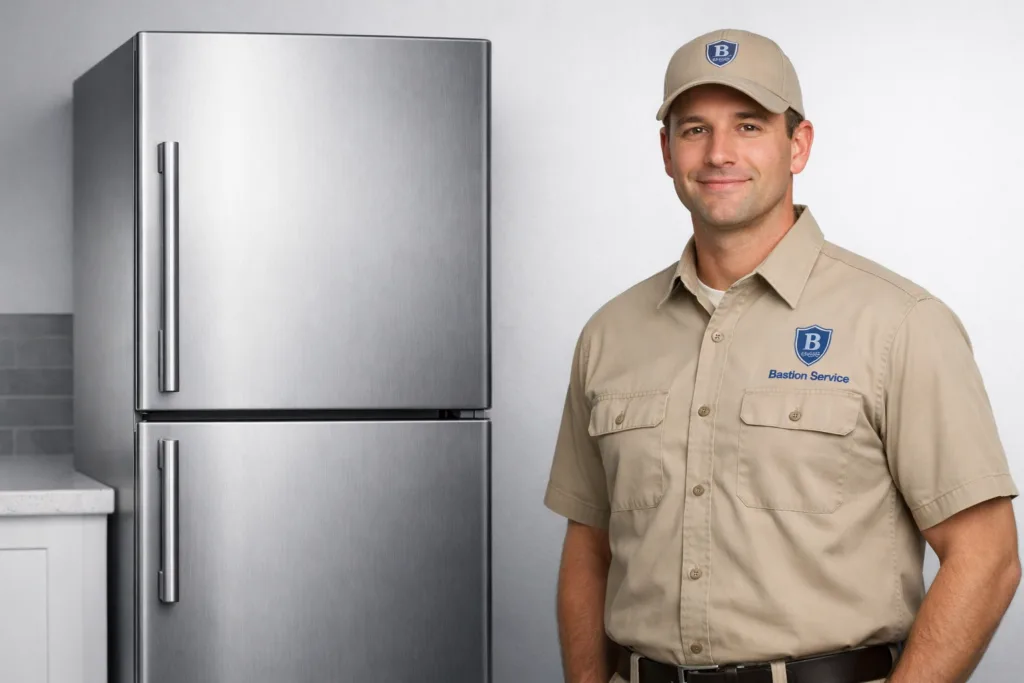
Small refrigerator issues rarely stay small for long. If your Summit unit is warming up, collecting frost, leaking, or sounding different than usual, the symptom pattern usually points to a specific system inside the appliance. Finding that cause early can help protect food, prevent moisture damage, and avoid extra strain on parts that are still working properly.
What Summit refrigerator problems usually point to
Many homeowners notice the result before they notice the cause: soft ice cream, produce spoiling early, a puddle near the door, or a refrigerator that seems to run all day. On Summit refrigerators, these problems are often tied to airflow restrictions, defrost failures, fan problems, door seal wear, control issues, drain blockages, or sealed-system trouble.
That is why the same symptom does not always lead to the same repair. A warm fresh-food section could come from a failed evaporator fan, blocked vents, heavy frost around the evaporator, or a control problem. A leaking refrigerator may have a clogged drain rather than a broken water line. Looking at the full symptom pattern matters more than guessing from one visible sign.
Common symptoms in Pico-Robertson homes
Refrigerator not cooling enough
If the refrigerator side is not staying cold, start by noting whether the freezer is also warming up or still seems normal. When both sections are warm, the issue may involve the compressor circuit, condenser cooling, controls, or power-related components. When only the refrigerator section is affected, the problem is often airflow or defrost related.
Typical warning signs include:
- Milk or leftovers warming before their usual shelf life
- Interior temperature changing throughout the day
- The refrigerator running longer than normal
- Cold spots in one area and warmth in another
Freezer cold, refrigerator section warm
This is one of the most common complaint patterns. It often means the freezer is still producing cold air, but that air is not reaching the fresh-food compartment the way it should. Frost buildup around evaporator components, a failing fan motor, blocked vents, or a damper issue can all create this split-temperature problem.
If left alone, airflow restrictions can worsen until the refrigerator compartment becomes unusable even though the freezer still appears to work.
Frost buildup on shelves, walls, or around vents
Heavy frost is more than a cosmetic issue. It can reduce usable space, block airflow, and make temperature control unreliable. In Summit refrigerators, repeated frost buildup may be caused by a worn gasket, a door not closing fully, humidity entering the cabinet, or a failure in the defrost system.
If frost comes back soon after being cleared, the appliance usually needs repair rather than repeated manual defrosting.
Water leaking onto the floor
Water under the refrigerator does not always mean a major component failure. A blocked defrost drain is a common cause, especially when water appears intermittently or after ice buildup. Condensation issues, drain pan problems, and door seal leaks can also lead to moisture around the unit.
Leaking should be addressed quickly because ongoing moisture can affect flooring, baseboards, and nearby cabinets.
Clicking, buzzing, rattling, or constant running
Every refrigerator makes some normal operating sound, but a new noise pattern deserves attention. Buzzing may point to vibration or a struggling motor component. Clicking can be related to start components or control operation. A loud fan noise may indicate ice interference or fan wear. If the refrigerator is running almost nonstop, it may be trying to compensate for poor airflow, a temperature control issue, or declining cooling performance.
Why temperature swings happen
Temperature swings can be especially frustrating because the refrigerator may seem fine for part of the day and then drift warm later. This often happens when the appliance can still cool, but cannot manage airflow or cycling correctly. A fan may work intermittently, a sensor may misread cabinet temperature, or frost may slowly block circulation until the compartment warms up.
In real use, this can look like:
- Food near the back freezing while food near the door feels too warm
- Morning temperatures seeming normal but afternoon temperatures rising
- Items spoiling inconsistently instead of all at once
- The control setting being lowered more and more without solving the problem
These patterns are useful because they help narrow down whether the issue is control related, airflow related, or tied to the cooling system itself.
When frost or condensation means more than a door left open
A single episode of condensation after frequent opening is not unusual, but recurring moisture usually means something else is happening. If the gasket is not sealing evenly, warm air can keep entering the cabinet. If the defrost system is not working, frost can accumulate until airflow drops and moisture starts collecting in the wrong places. If the drain line is restricted, defrost water may back up inside the unit or spill onto the floor.
Signs the problem is more than normal kitchen use include moisture returning every few days, frost concentrated around vents or the back panel, or a refrigerator door that needs extra force to shut fully.
When to stop waiting and schedule service
Some refrigerator issues give a short window before food loss or further damage becomes likely. It makes sense to arrange service when the symptoms are active and repeatable rather than waiting for a complete shutdown.
Prompt attention is usually the right move when:
- Food is no longer staying at a safe temperature
- The refrigerator section is warm while the freezer still works
- Frost keeps returning after you clear it
- Water is reaching the floor or collecting under drawers
- The unit clicks repeatedly but struggles to start
- Noise and cooling changes are happening at the same time
Repair versus replacement
Many Summit refrigerator problems are repairable, especially when the issue is limited to defrost parts, fans, controls, drain components, door sealing, or other serviceable failures. If the cabinet is in good shape and the unit otherwise fits the household well, repair is often the more sensible option.
Replacement becomes more likely when the refrigerator has a major sealed-system problem, repeated expensive failures, or broader wear that makes further investment hard to justify. The most useful decision comes from matching the actual fault to the overall condition of the appliance rather than assuming every cooling issue means the refrigerator is finished.
How refrigerator trouble affects day-to-day life
Refrigerator problems create disruption fast. Groceries may need to be moved, meal plans change, and leaks can spread beyond the appliance footprint. In many Pico-Robertson homes, kitchen space is limited enough that a refrigerator issue quickly affects the whole room, especially when doors do not close properly, drawers freeze in place, or towels have to stay on the floor to catch water.
Addressing the issue while it is still symptom-based instead of failure-based usually gives homeowners more options and a better chance of avoiding spoiled food or repeat breakdowns.
What to pay attention to before a service visit
If possible, note which section is warming, whether frost is visible, where water appears, and whether the sound changes come and go or stay constant. Also notice whether opening the door triggers the interior lights normally and whether the appliance has been running continuously. These details can make the problem easier to identify and help separate an airflow issue from a drainage, control, or sealed-system concern.
For Summit refrigerator repair in Pico-Robertson, the most useful first step is to match the repair plan to the exact behavior of the appliance. That helps homeowners make an informed choice based on the fault, the condition of the refrigerator, and the likely result of the repair.