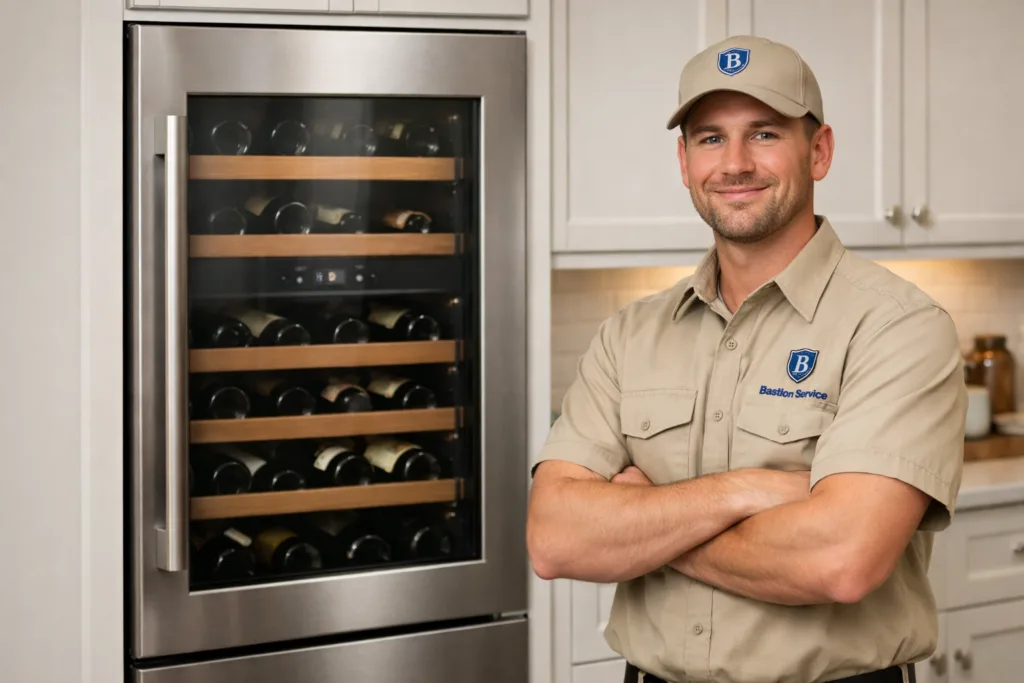
Temperature problems in a household wine cooler usually start with subtle changes: bottles no longer feel consistently chilled, the cabinet runs longer than usual, or the display setting no longer matches the actual interior temperature. In Fairfax homes, these symptoms often trace back to airflow restrictions, dirty coils, fan problems, sensor faults, door-gasket wear, or a control issue that interrupts normal cooling cycles. Because several different failures can produce the same outward symptom, it helps to diagnose the cause before continuing to adjust settings and hope the problem resolves on its own.
Common wine cooler problems homeowners notice
A wine cooler that has power but will not cool properly is one of the most frequent service calls. Sometimes the issue is as simple as blocked ventilation around the cabinet or dust buildup affecting heat release. In other cases, the unit may have a weak evaporator fan, inconsistent thermostat response, or a control board problem that prevents proper cycling. When the cooler runs but cannot reach the set temperature, it often places extra strain on the system without protecting what is stored inside.
Uneven cooling from top to bottom or between zones is another common complaint. That can point to a sensor reading problem, poor internal air circulation, or a door that is not sealing tightly enough to keep warm room air out. If one section is too cold while another remains too warm, the issue is usually more than a simple setting adjustment. Stable storage depends on consistent airflow and accurate temperature response throughout the cabinet.
Noise changes are also worth paying attention to. A new buzzing, clicking, rattling, or vibrating sound may come from a fan obstruction, loose mounting hardware, compressor strain, or leveling issues that cause the cabinet to resonate. Some noises are minor, but a noticeable change combined with weak cooling is a sign that a component may be starting to fail.
What leaks, frost, and condensation can mean
Water inside the cabinet or on the floor nearby often points to a drainage problem, excess condensation, or warm air entering through a worn gasket. Moisture issues are easy to underestimate, but they can affect shelving, labels, flooring, and temperature consistency. If condensation keeps returning after wiping it away, the unit may need more than basic cleaning.
Frost buildup can indicate restricted airflow, a door left slightly open, or a defrost-related issue depending on the design of the appliance. When frost forms repeatedly, the wine cooler may struggle to recover temperature after the door is opened, and cooling performance can become less reliable over time. Similar frost and airflow symptoms can show up in other cold-storage appliances, which is why some homeowners also compare what they are seeing with Freezer Repair in Fairfax.
Door seal problems are especially common in daily household use. A gasket does not need to be visibly torn to cause trouble; even a slight gap can allow enough warm, humid air into the cabinet to create sweating, longer run times, and unstable storage conditions. If the cooler seems to work harder than before but still fails to hold temperature, the seal and door alignment are worth checking closely.
When to schedule service
It makes sense to schedule repair when the unit will not power on, cannot maintain a stable temperature, leaks, trips a breaker, or starts making persistent new sounds. The same is true if the display is flashing an error, the interior light works but cooling does not, or the compressor seems to run almost nonstop. Early attention can keep a fan, sensor, or control problem from turning into a larger cooling-system failure.
Gradual decline matters too. Many homeowners get used to a cooler that takes longer to chill, needs frequent setting changes, or seems a little inconsistent from week to week. Those are often early warning signs rather than harmless quirks. If performance is drifting, a service call is usually more practical than extended trial and error.
Repair or replacement considerations
Whether repair is worthwhile depends on the age of the wine cooler, the condition of the cabinet and door, the availability of parts, and the kind of failure involved. Problems involving fans, controls, sensors, thermostats, switches, drainage, or seals are often more practical to address than major sealed-system or compressor failures in an older unit. If the appliance has a history of repeated cooling trouble or broad internal wear, replacement may be the better long-term decision.
Households sometimes notice related symptoms in other kitchen cooling equipment at the same time. For example, poor temperature control in a main fresh-food unit may look unrelated at first, but it can help to compare symptoms with Refrigerator Repair in Fairfax if another appliance is also struggling to hold temperature. If the issue involves low ice production, slow filling, or water-related cooling concerns elsewhere, Ice Maker Repair in Fairfax may be relevant for a separate appliance diagnosis.
What a useful diagnosis should include
A thorough service visit should focus on confirming the complaint, checking actual temperature performance, inspecting airflow and fan operation, reviewing control response, and looking for signs of seal, moisture, or electrical problems. That process matters because many wine cooler complaints sound similar from the outside but come from very different failures internally.
For specialty cooling appliances, temperature accuracy is the main goal. A good diagnosis helps determine whether the problem is a straightforward part replacement, a maintenance-related airflow issue, or a more serious cooling-system fault. With the right assessment, Fairfax homeowners can make a better decision about repair timing, expected performance, and whether continued use risks more damage to the unit or its contents.