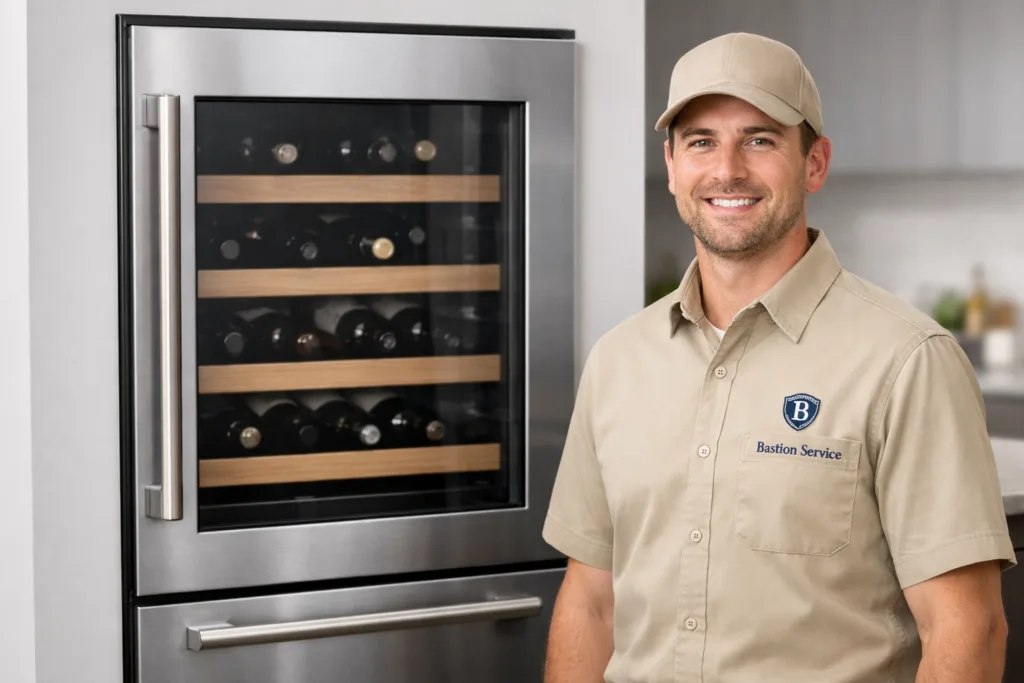
How symptom patterns help pinpoint the problem

Wine coolers rarely fail in only one obvious way. A cabinet that feels slightly warm, a glass door that sweats, or a fan that suddenly gets louder can all point to different parts of the system. With KitchenAid units, the most useful approach is to look at what the cooler is doing consistently: whether temperatures drift all day, rise only after the door is opened, vary from shelf to shelf, or change along with noise or moisture.
That matters in Fairfax homes where many wine coolers are installed under counters or into finished cabinetry. Tight installation, dusty condenser areas, frequent opening, and worn door seals can all affect performance. The visible symptom is only the starting point; the real cause may be airflow, controls, a fan motor, a starting component, or a more serious cooling-system failure.
Cooling, but not holding the set temperature
If the cooler still runs and feels somewhat cold but never reaches the selected setting, the issue may be less dramatic than a complete no-cool failure. Common possibilities include restricted airflow, inaccurate temperature sensing, a weak evaporator fan, dirty condenser surfaces, or a control problem that prevents proper cycling.
Homeowners often notice this first when bottles near one section feel cooler than others, or when the display reads correctly but the actual cabinet temperature seems off. Even mild temperature drift is worth addressing because wine storage is affected more by repeated fluctuations than by a single brief change.
Power is on, but the cabinet is warming up
When lights or controls still work but the interior is no longer cooling, attention usually turns to the parts that start and support the cooling process. A failed start device, faulty thermostat or control board, non-working fan, or sealed-system problem can all produce this symptom.
If you hear clicking followed by silence, or the unit seems to try to start without actually cooling, it is best not to assume the compressor itself has failed. Several smaller components can create the same pattern. On the other hand, if the compressor runs continuously and the cabinet keeps warming, that may suggest a deeper cooling-system issue.
Condensation, sweating, or frost inside
Moisture inside a wine cooler usually means warm, humid air is getting in or cold air is not circulating correctly. A damaged gasket, misaligned door, repeated partial closure, blocked internal vents, or a drain-related issue can all contribute.
Signs to watch for include:
- Water droplets on shelving or bottle surfaces
- Fogging or sweating on the glass
- Frost buildup along an interior panel
- Damp odor from trapped moisture
- Condensation that returns shortly after wiping it away
These problems are not just cosmetic. Moisture usually appears when the cooler is no longer maintaining the stable environment it was designed to hold.
Buzzing, rattling, or unusual fan noise
Some sound is normal, especially during startup and cycling, but changes in noise level often tell you something useful. A rattle may come from vibration against surrounding cabinetry. A buzzing sound can point to a struggling start component. A scraping or uneven whir may suggest a fan blade or motor issue.
If the sound is paired with poor cooling, that combination is more important than the noise alone. A louder-than-normal unit that also runs longer cycles often indicates airflow restriction or stress on the cooling system.
Common KitchenAid wine cooler issues seen in Fairfax homes
Most residential calls involve a handful of recurring complaints. The exact cause varies, but the symptoms tend to fall into familiar categories:
- Cabinet temperature rising above the set point
- Uneven cooling from top to bottom or side to side
- Unit running constantly without reaching target temperature
- Interior light working while cooling performance drops
- Excess condensation on the door or interior walls
- Door not sealing tightly or popping open slightly
- Control panel not responding normally
- Compressor clicking, buzzing, or failing to start
- Evaporator fan noise or weak air circulation
One reason these calls need hands-on testing is that different failures can look almost identical at first. For example, a warmer cabinet could come from poor ventilation, a sensor reading issue, a fan problem, or a sealed-system fault. Replacing parts based on guesswork often adds cost without solving the underlying problem.
When waiting can make the problem worse
Small cooling problems tend to become larger ones when the unit continues running under strain. A fan motor that is slowing down, a condenser area that is heavily restricted, or a control problem that prevents proper cycling can put added stress on other components over time.
It is usually smart to schedule service promptly if you notice any of the following:
- The cabinet temperature is rising day by day
- The cooler runs almost nonstop
- There is repeated moisture or frost buildup
- The compressor clicks repeatedly without normal cooling
- The unit feels unusually hot near the lower or rear section
- The breaker trips when the cooler tries to start
If the cooler is no longer protecting the contents and seems to be laboring, shutting it down until it can be evaluated may help prevent additional wear.
Repair or replacement depends on the type of failure
Not every wine cooler problem leads to replacement, and not every repair is the best long-term investment. The right decision usually depends on the failed part, the age of the unit, how reliably it has been operating before this issue, and whether the repair is likely to restore stable temperature control.
Repair often makes sense when the issue involves components such as:
- Fan motors
- Temperature sensors
- Start devices and relays
- Door gaskets
- Switches or user interface components
- Certain control-related parts
Replacement becomes a more serious consideration when diagnosis points to major cooling-system work, repeat loss of cooling, or multiple age-related issues in the same appliance. For many households in Fairfax, the deciding factor is not simply whether the cooler can be repaired, but whether the repair is likely to bring back consistent, dependable operation.
What a service visit should answer
A productive appointment should narrow the issue quickly and answer the questions homeowners actually care about. Is the problem related to airflow, controls, sealing, or the cooling system itself? Is continued operation likely to make it worse? Is the unit a reasonable repair candidate, or is replacement the more practical path?
When those answers are clear, it becomes much easier to decide what to do next. That is especially important with wine coolers, where the goal is not simply to make the appliance turn on again, but to restore the stable storage conditions it was meant to provide.
Simple checks homeowners can make before service
Before scheduling repair, a few basic observations can help narrow the symptom. These checks do not replace diagnosis, but they can make the problem easier to describe:
- Confirm the door closes fully without resistance from bottle placement
- Look for gaps or tears in the gasket
- Check whether warm air seems to leak in around the door edge
- Listen for fan movement after the unit has been running
- Note whether the compressor is silent, clicking, or running continuously
- Make sure ventilation openings are not blocked by surrounding cabinetry or dust
If the cooler still performs poorly after these basic checks, the next step should be a practical repair plan based on the exact symptom pattern rather than trial-and-error part replacement.