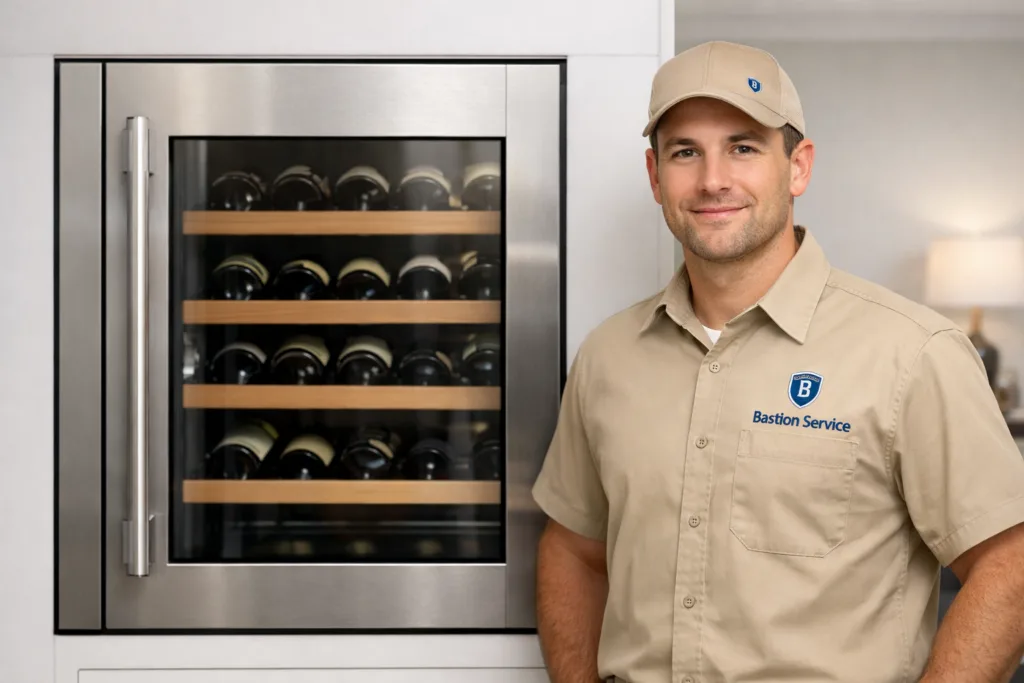
Common Perlick Wine Cooler Problems in Fairfax Homes

Perlick wine coolers are built to maintain stable storage conditions, so even a small change in performance can matter. In Fairfax homes, the issues homeowners notice most often are temperature swings, weak cooling, constant running, fan noise, interior condensation, and controls that do not respond the way they should. Those symptoms may look similar on the surface, but they can come from very different causes inside the appliance.
A wine cooler that feels only slightly cool may have an airflow restriction, sensor problem, dirty condenser area, fan issue, or a more serious refrigeration fault. A unit that runs all day without reaching the set temperature may be losing cold air through the door seal or struggling because one part of the cooling system is no longer working efficiently. Moisture inside the cabinet can point to drainage trouble, warm air entering through the gasket, or inconsistent evaporator performance.
That is why symptom-based troubleshooting matters. Instead of guessing from one visible problem, it helps to look at the full pattern: how the unit starts, how long it runs, whether the temperature is drifting, where moisture appears, and whether the noise changes during the cooling cycle.
What Different Symptoms Usually Indicate
Not Cooling Enough
If the cabinet is on but bottles are not staying at the selected temperature, the problem may be related to condenser airflow, evaporator fan operation, a sensor reading issue, electronic controls, or the sealed cooling system itself. In some cases the temperature climbs slowly over several days. In others, the cooler seems to stop doing much cooling at all.
This symptom is worth addressing quickly because wine storage depends on consistency, not just whether the interior feels somewhat cold. Repeated warming and cooling can be just as frustrating as a complete loss of cooling.
Temperature Swings
When the interior alternates between too warm and too cold, the issue often involves sensing or control rather than a simple on-or-off failure. A thermostat problem, sensor drift, board issue, or irregular fan operation can all cause uneven performance. Homeowners sometimes notice this first when one shelf feels colder than another or when the display setting no longer matches the actual cabinet temperature.
Freezing or Overcooling
A wine cooler that starts freezing contents or cooling far below the selected setting usually needs prompt attention. This can happen when the control system is not cycling properly, when a sensor is giving the board inaccurate feedback, or when a component remains engaged longer than it should. Beyond storage concerns, overcooling can add unnecessary wear to the unit.
Running Constantly
Perlick wine coolers normally cycle on and off. If yours seems to run almost nonstop, that usually means it is having trouble maintaining conditions. Common reasons include dirty condenser surfaces, weak airflow, door gasket leakage, warm air intrusion, sensor problems, or reduced cooling efficiency. Constant running is important because it often shows up before a full breakdown.
Fan Noise, Buzzing, or Rattling
Some operating noise is normal, but new or louder sounds deserve attention. A rattling panel, worn fan motor, vibration near the rear of the cabinet, or strain during compressor startup can all change the sound of the unit. The key is whether the noise is new, getting worse, or happening together with cooling problems.
- Buzzing can point to vibration or electrical strain.
- Clicking at startup may suggest a compressor or relay-related issue.
- Fan scraping or ticking often means the fan blade or motor needs inspection.
- Rattling may be as simple as loose mounting hardware, but it should still be checked.
Condensation or Water Inside
Moisture inside a wine cooler is a common complaint and does not always mean a major leak. It may be caused by a blocked drain path, a gasket that is letting humid air in, or cooling conditions that are creating excess condensation. Water near the base can also be related to how defrost moisture is being handled. Left alone, repeated moisture can affect labels, shelving, and interior surfaces.
Display or Control Problems
If the controls stop responding, the display flashes, or the settings will not hold, the issue may involve the user interface, control board, wiring, or sensor feedback. Electronic problems can appear intermittent at first, which makes them easy to dismiss until the unit becomes unreliable. Repeatedly resetting the appliance may temporarily hide the pattern without correcting the cause.
Why the Same Symptom Can Have Different Causes
Wine cooler repair is rarely about matching one symptom to one part. A cabinet that is too warm could be dealing with a fan problem, restricted airflow, a faulty sensor, a control issue, or a sealed-system cooling failure. Water inside the cabinet could come from condensation, drainage trouble, or door sealing problems. A noisy unit may need only a minor correction, or the sound may be an early warning that the cooling system is under stress.
That is why homeowners in Fairfax are usually best served by looking at the complete operating pattern rather than assuming the most expensive or most obvious explanation. A correct diagnosis helps avoid replacing parts that are still working while the real fault remains unresolved.
When to Stop Waiting and Schedule Service
It makes sense to arrange service when the wine cooler shows any of these signs for more than a short period:
- The interior will not hold the set temperature.
- The unit runs for very long stretches or never seems to shut off.
- There is repeated condensation or visible water inside or underneath.
- The controls are unresponsive or the display behaves erratically.
- You hear new mechanical noise, especially if cooling has also changed.
- The cooler is freezing contents or creating major temperature swings.
Waiting too long can make a smaller issue more expensive. A struggling fan, dirty condenser area, or poor gasket seal can place extra strain on the rest of the system. If the cooler is still operating but clearly not doing so normally, that is often the best time to have it checked.
Repair vs. Replacement for a Perlick Wine Cooler
Many Perlick wine cooler issues are sensible to repair, especially when the problem is limited to controls, sensors, fans, drainage components, or sealing parts. Those repairs can often restore normal operation without the cost of replacing the appliance. On the other hand, replacement becomes more relevant when there is a major sealed-system failure, repeated breakdown history, or multiple aging components failing close together.
The most useful question is not simply whether the cooler can be fixed. It is whether the repair is likely to restore stable performance without leading to another major issue right after. Age, condition, cooling history, and part availability all affect that decision.
What Fairfax Homeowners Can Watch for Between Visits
If your wine cooler has started acting up, a few observations can make the problem easier to identify. Pay attention to whether the display temperature matches how the cabinet actually feels, whether the sound changes during startup or shutoff, and whether moisture is collecting in the same area each time. It also helps to notice if the door closes firmly or if the gasket looks uneven, loose, or worn.
You do not need to disassemble anything to be helpful. A simple record of the symptom pattern often says more than a guess about which part failed. Knowing whether the unit is always warm, only warm at certain times, noisy during cooling, or wet inside after the door stays closed can speed up the repair path.
Focused Help for Residential Wine Cooler Issues
For homeowners in Fairfax, the goal is to protect the storage conditions your Perlick unit is supposed to provide. Whether the problem involves weak cooling, condensation, control trouble, fan noise, or nonstop operation, the next step should be based on what the cooler is actually doing day to day. That approach gives you a clearer picture of whether the problem is isolated and repairable or whether the unit is showing broader signs of decline.