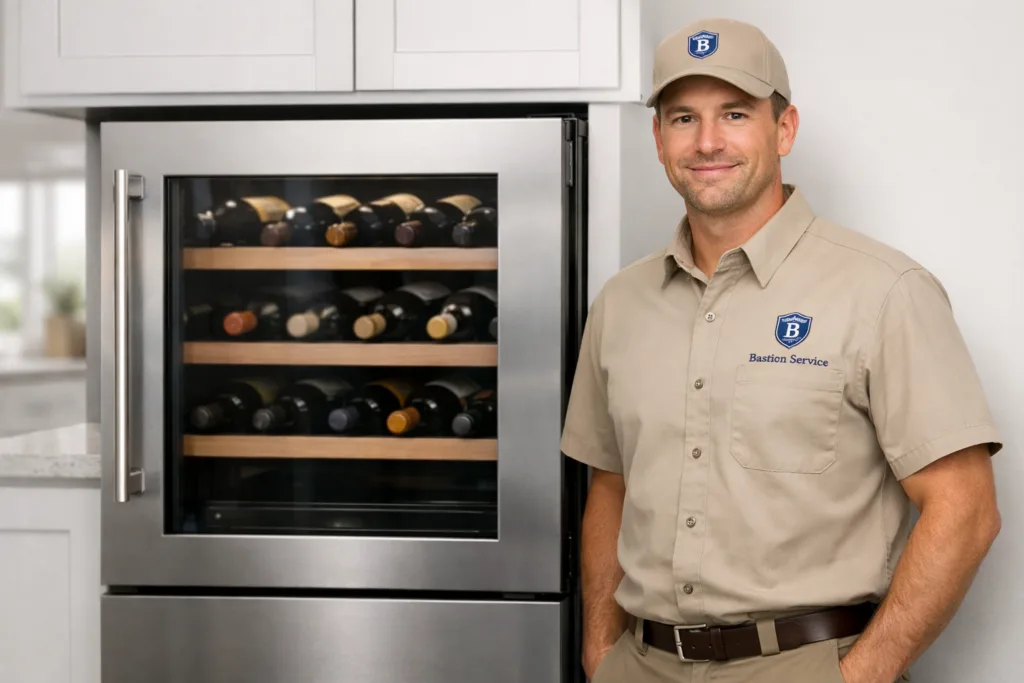
Warm bottles, heavy condensation, or a cabinet that suddenly sounds louder than usual usually point to a specific failure path rather than a generic cooling problem. On a U-Line wine cooler, the difference matters. A temperature drift caused by poor airflow is a very different repair from one caused by sensor error, fan trouble, or a compressor-related issue, and the symptoms often overlap in ways that are easy to misread at home.
Because wine storage is more sensitive than everyday food refrigeration, even a small change in performance can be worth attention. A unit that is only a few degrees off, cycles longer than normal, or develops moisture around the door may still be running, but it may no longer be protecting the contents the way it should.
Common U-Line wine cooler problems in Culver City homes
One of the most frequent complaints is inconsistent temperature. Homeowners may notice that the display appears normal while the cabinet feels warmer than expected, or that bottles are no longer staying at a stable serving or storage range. This can happen because of restricted ventilation, dirty condenser coils, a weak fan, a faulty thermistor, a control issue, or loss of cooling efficiency.
Noise is another common reason people schedule service. A low operating hum is expected, but new rattling, clicking, buzzing, or vibration often suggests a part is under strain. Fan motors can wear out, internal components can begin vibrating against surrounding surfaces, and leveling issues can amplify sounds that were previously minor.
Moisture-related complaints also show up often in built-in and undercounter installations. Water inside the cabinet, damp shelving, or condensation along the door area may come from a sealing problem, drain restriction, frequent warm-air intrusion, or an airflow imbalance that leaves parts of the interior too cold while others stay too warm.
Symptoms that usually point to repair needs
Not cooling enough
If the wine cooler runs but does not reach the set temperature, the issue may involve the control system, sensor readings, evaporator airflow, condenser performance, or the sealed cooling system itself. In some cases the unit cools a little but never fully recovers, which can create a slow temperature swing that is easy to ignore until wine quality starts to suffer.
Running constantly
A U-Line wine cooler that rarely shuts off is often trying to overcome a loss of efficiency. Dirty coils, blocked ventilation, gasket leaks, failing fans, or cooling-system weakness can all cause longer run times. Constant operation increases wear and can turn a manageable repair into a larger one if the problem is left alone.
Short cycling or starting and stopping
When the unit turns on and off too quickly, the cause may be tied to a control fault, inaccurate temperature feedback, compressor starting trouble, or electrical issues affecting normal operation. Short cycling is more than an annoyance; it can keep the cabinet from settling at a dependable temperature.
Display works but cabinet temperature rises
Power at the display or interior light does not mean the cooling side of the appliance is healthy. A wine cooler can still light up and accept settings while failing to circulate cold air or start the compressor correctly. That is why a “looks on, feels warm” complaint usually needs more than a simple reset.
Condensation, frost, or water buildup
Moisture often tells you that warm air is entering where it should not, or that cold air is not moving through the cabinet correctly. Door gasket wear, alignment issues, drain problems, and defrost-related faults are all possible causes. If water is reaching the surrounding cabinetry or floor, service should not wait.
Why built-in installation conditions matter
Many U-Line wine coolers are installed under counters, in bars, or within finished cabinetry. That placement looks clean, but it also means ventilation and access matter more. If the unit does not have the airflow it needs, heat can build up around the system and force longer run times. Even when the internal components are still functional, poor ventilation can create symptoms that look like part failure.
Leveling also matters more than many homeowners expect. A slightly uneven installation can affect door closure, increase vibration noise, and contribute to moisture issues over time. In Culver City homes, where wine coolers are often part of a finished kitchen or entertaining area, those installation factors are worth checking along with the appliance itself.
When a U-Line wine cooler should be checked sooner rather than later
Some symptoms deserve quick attention because they tend to worsen with continued use. Service is usually worth scheduling promptly when you notice:
- The cabinet is clearly warmer than the set temperature
- The unit runs almost nonstop
- There is repeated condensation on the door, shelves, or bottles
- New buzzing, clicking, or rattling starts suddenly
- The cooler leaks water onto nearby surfaces
- The display shows irregular behavior or the unit shuts down intermittently
These conditions do not usually correct themselves. Continued operation can add stress to the compressor, worsen fan wear, and create avoidable cabinet or flooring damage around the appliance.
Repair or replacement: what usually makes sense
Repair is often the better choice when the issue is isolated to a sensor, fan motor, control component, door gasket, drain problem, or another replaceable part, and the cabinet is otherwise in good shape. In those cases, restoring normal cooling can be straightforward once the failed component is identified.
Replacement becomes more likely when the wine cooler has multiple active problems, major cooling-system failure, repeated temperature instability, or repair costs that start approaching the value of a newer unit. Age alone does not decide it. Condition, symptom history, and repair scope together give a better answer than any single rule.
What to expect from a useful service visit
Most homeowners want the same practical information: what is failing, whether stored wine is currently at risk, and whether fixing the unit is a sensible investment. A useful appointment should sort out whether the problem is airflow-related, electronic, mechanical, or tied to the cooling system, and then explain the next step in plain terms.
For households in Culver City, that also means accounting for the way the wine cooler is installed in the home. Access panels, ventilation spacing, surrounding cabinetry, and usage patterns can all affect both diagnosis and repair planning.
How homeowners can respond before service
Before a repair visit, it helps to avoid repeatedly changing settings in an effort to force more cooling. That can make the symptom pattern harder to read. Instead, note whether the cabinet is steadily warming, whether the noise is constant or intermittent, and whether moisture appears in the same location each time.
You can also check for obvious airflow obstruction at the front grille area and make sure the door closes fully without resistance. If the unit is leaking, warming quickly, or making pronounced mechanical noise, limiting use until it is inspected is usually the safer choice.
Focused help for U-Line wine cooler issues in Culver City
U-Line wine coolers are specialized enough that guessing from the surface symptom can lead to the wrong repair path. Whether the problem shows up as unstable temperature, fan noise, condensation, or control irregularity, the most effective approach is to match the repair to the actual failure rather than the first visible sign.
For homeowners dealing with a wine cooler that is no longer performing the way it should, U-Line Wine Cooler Repair in Culver City is most useful when it stays centered on symptom-based troubleshooting, realistic repair options, and protecting the appliance space as well as the wine inside it.