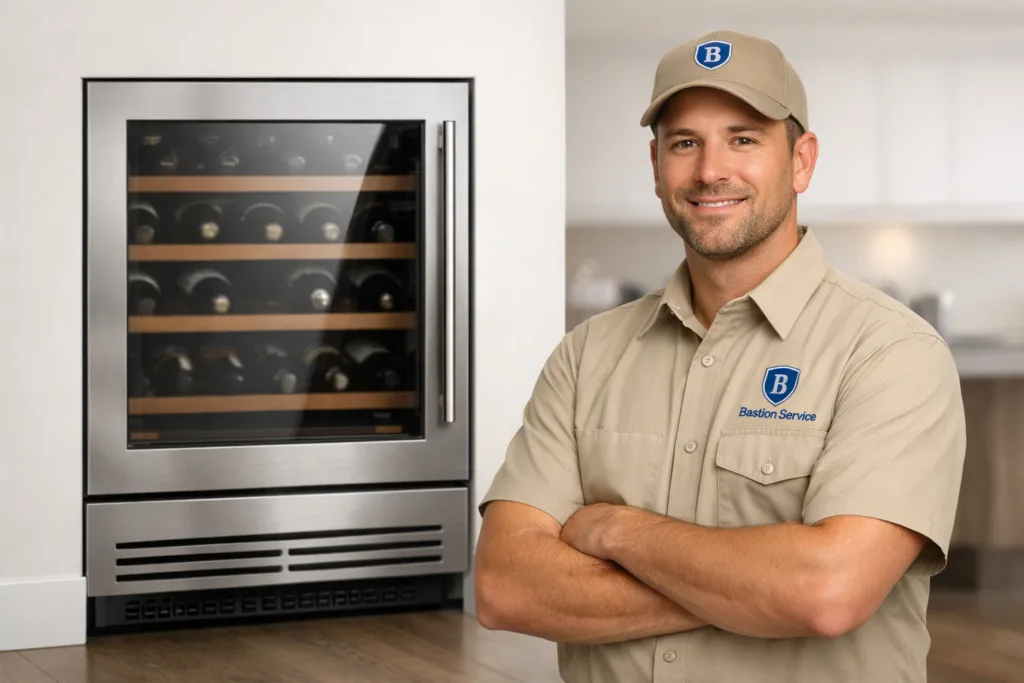
A Perlick wine cooler that starts drifting off temperature, making new noise, or collecting moisture usually gives clues before it stops working altogether. The most useful way to approach the problem is by matching the symptom to the likely system involved, since cooling, airflow, controls, and door sealing can all affect storage conditions in different ways.
Common Perlick wine cooler symptoms in Culver City homes
Most household wine cooler problems show up in a few familiar ways. The cabinet may feel warm even though the display looks normal, bottles may not stay at a consistent temperature, or the unit may seem to run far longer than it used to. Some homeowners first notice noise, while others notice dampness inside the cabinet, condensation on the door, or frost where it does not belong.
These symptoms are not all caused by the same failure. A temperature complaint can come from restricted airflow, a weak fan, sensor inaccuracy, a control issue, or heat entering through a worn gasket. Moisture can point to sealing problems, drainage trouble, or an imbalance in the cooling cycle. That is why symptom-based testing matters before any repair decision is made.
Not cooling enough or warming up
If the cooler is no longer keeping wine at the selected setting, start with the basics of cabinet performance. Warm storage can be tied to poor air circulation inside the unit, dust buildup affecting heat release, a door that is not sealing tightly, or a faulty sensor giving the control system the wrong reading. In some cases, the unit still cools somewhat but cannot recover properly after the door is opened, which often points to airflow or component weakness rather than a complete cooling failure.
Too cold or uneven from shelf to shelf
Overcooling can be just as concerning as running warm. When one section feels much colder than another, or bottles are getting colder than expected, the issue may involve sensor placement, control response, or uneven fan operation. A wine cooler should regulate temperature steadily rather than swing between warm and overly cold conditions.
Running constantly or cycling too often
A Perlick unit that seems to run all day may be trying to overcome warm air leaking into the cabinet, struggling to move air efficiently, or reacting to a control fault. Constant running puts more strain on mechanical components, especially if the original problem is ignored for too long. Frequent short cycling can also signal that the cooler is not reading or responding to cabinet conditions correctly.
Buzzing, rattling, or louder fan noise
Wine coolers are not silent, but a noticeable change in sound usually deserves attention. Rattling can come from vibration or loose mounting hardware. Buzzing may point to compressor stress or fan interference. Clicking that becomes frequent may indicate an electrical or control-related issue. If the sound appears at the same time as temperature instability, both symptoms should be evaluated together.
Condensation, water, or frost
Moisture problems often begin subtly. You may see droplets on the glass, damp shelving, or a small amount of water under the unit. Frost buildup in the wrong area can also signal an airflow or sealing issue. These problems matter because excess moisture can affect labels, create cleanup issues, and hint at larger cooling inefficiencies that may get worse over time.
What these symptoms often mean
Wine coolers rely on several systems working together. When one part begins to fail, the symptoms can overlap. That is why one complaint should not automatically be tied to one part.
- Warm cabinet: possible fan trouble, airflow restriction, bad gasket, sensor fault, or cooling-system weakness
- Uneven temperature: often linked to air circulation problems or inaccurate sensing
- Constant operation: may indicate heat infiltration, control issues, or reduced cooling efficiency
- Water or condensation: can be caused by sealing problems, drain issues, or humidity entering the cabinet
- New noise: frequently tied to fans, vibration, mounting, or compressor strain
Because these problems can overlap, replacing parts based on guesswork often leads to added cost without fully fixing the cooler.
Why early service helps
A partially working wine cooler is easy to put off, especially when it still cools some of the time. But intermittent performance often means the failure is developing. A fan motor that is weakening may still run occasionally. A door seal may leak just enough to cause long run times before the cabinet becomes obviously warm. A sensor problem may create temperature swings before the display shows anything unusual.
Addressing those symptoms sooner can help prevent heavier strain on the compressor and reduce the chance of secondary problems. It also protects the reason most homeowners have a wine cooler in the first place: stable storage.
Repair or replacement: how the decision is usually made
Repair is often reasonable when the issue is isolated to a fan, control component, sensor, gasket, or drainage-related part. Those faults can often be identified directly from the symptom pattern and tested during service. Replacement enters the conversation more often when the cooler has a major sealed-system problem, repeated expensive failures, or overall age-related decline affecting multiple components at once.
For homeowners in Culver City, the best decision usually comes after the unit’s actual condition is known. That avoids replacing an appliance over a manageable problem and avoids putting money into a cooler with a broader refrigeration failure.
Signs you should stop relying on the cooler
It is smart to schedule service promptly if you notice any of the following:
- The cabinet no longer holds the set temperature
- Bottles feel warmer than expected
- The unit runs almost constantly
- There is repeated clicking, buzzing, or rattling
- Condensation keeps returning
- Water appears inside or beneath the cooler
- Frost forms where it normally did not before
- The display or controls respond inconsistently
If storage conditions are no longer predictable, continued use can put both the appliance and the contents at risk.
What homeowners can expect from a practical repair approach
Useful service starts with the symptom, not the assumption. That means checking actual temperature behavior, inspecting airflow paths, looking at the condition of the door seal, evaluating fans and controls, and determining whether the problem is isolated or part of a larger refrigeration issue. That kind of practical repair guidance helps homeowners understand not just what failed, but whether the repair is likely to restore reliable performance.
For a household wine cooler, the goal is simple: stable storage, normal operation, and a repair path that makes sense for the condition of the unit. When a Perlick wine cooler in Culver City starts showing warning signs, acting early usually gives you the clearest and most cost-effective set of options.