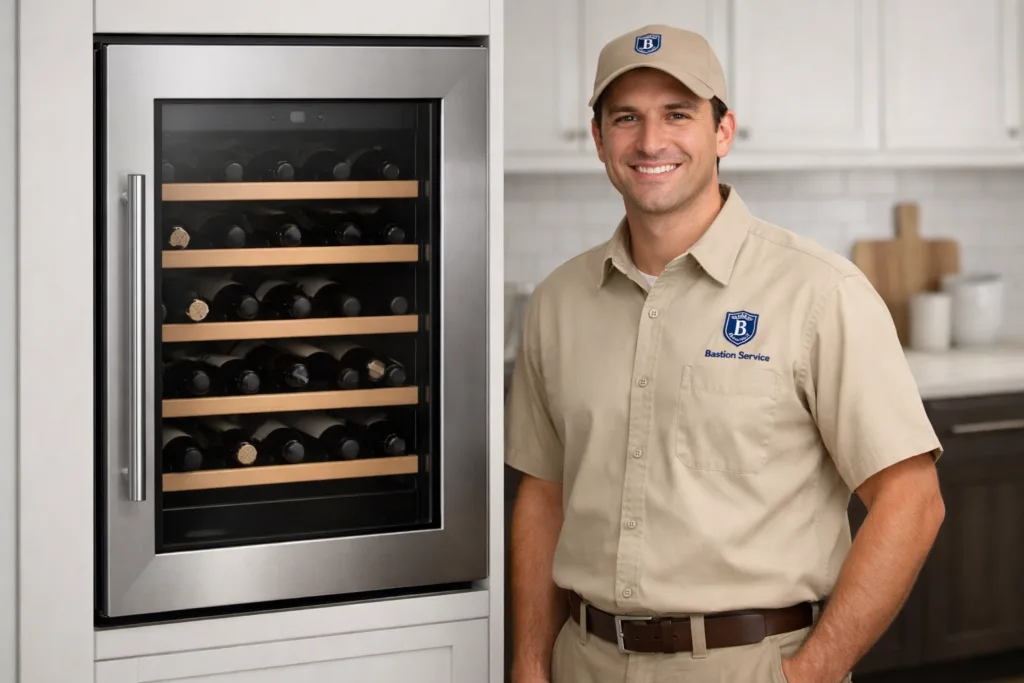
Temperature instability is usually the first sign that something is off. If a wine cooler feels warmer than the display suggests, runs for long stretches, or suddenly starts freezing bottles near one shelf, the cause is not always the same. Restricted airflow, dirty coils, a weak fan motor, a faulty temperature sensor, control board trouble, or a worn door gasket can all create similar symptoms while requiring very different repairs.
Common wine cooler problems homeowners notice
Not cooling properly is one of the most frequent complaints. In many homes, the issue starts gradually: bottles stop feeling consistently chilled, recovery after the door opens takes longer, or the cabinet never seems to settle at the selected setting. A unit may also swing between too warm and too cold, which often points to a control, sensor, or airflow problem rather than a total cooling loss.
Noise is another common warning sign. Buzzing, rattling, clicking, or a louder hum than usual can come from fan blades, loose panels, vibration against cabinetry, compressor strain, or components trying and failing to start correctly. Condensation on the glass, water collecting inside, or dampness around the base can also signal poor sealing, drainage issues, or warm air entering the cabinet more often than it should.
What specific symptoms can indicate
A wine cooler that short cycles may be struggling with ventilation, dirty condenser buildup, or inaccurate temperature readings. If the interior light works but cooling performance does not, the problem may involve the compressor circuit, thermostat, relay, or electronic controls. Uneven temperatures from top to bottom can suggest fan trouble or internal airflow obstruction.
Dual-zone models add another layer of diagnosis. When one zone works and the other does not, that can point to a sensor fault, fan issue, damper problem, or a more complex sealed-system concern. If frost appears where it should not, or a compartment takes too long to recover after being opened, similar airflow and temperature-control issues are often seen in freezer systems as well. Freezer Repair in Culver City
Why continued use can make the problem worse
It is common to keep adjusting settings and hoping the cabinet settles down, but that can mask the real issue. A struggling fan motor, a failing start device, or poor heat transfer at the coils may force the system to run harder than normal. Over time, that extra strain can affect other components and turn a smaller repair into a more expensive one.
Moisture problems can also spread beyond the appliance itself. Persistent condensation may affect surrounding cabinetry, flooring, or wall surfaces, especially if the wine cooler is built in. If the interior temperature is drifting, the appliance is no longer doing the job it was intended to do, even if it still powers on and seems partially functional.
Basic checks you can do before scheduling service
Before arranging repair, a few simple observations can help narrow the issue:
- Confirm the door closes fully and the gasket is not torn, loose, or dirty.
- Check whether bottles or shelves are blocking interior vents.
- Look for dust buildup on accessible condenser areas.
- Make sure the cabinet is level and not vibrating against nearby surfaces.
- Notice whether the fan sound, compressor sound, or display behavior has changed.
If the wine cooler still cannot hold temperature after those basic checks, a hands-on diagnosis is usually the most efficient next step.
When water, fill, or ice-related symptoms suggest a different cooling issue
Some homeowners have more than one cooling appliance in the kitchen and notice overlapping symptoms at the same time. Leaks near a cold-storage area, poor fill performance, or irregular ice production usually point away from the wine cooler itself and toward a separate ice system, water valve, line, or dispenser component. Ice Maker Repair in Culver City
That distinction matters because a damp floor or temperature complaint can be misread as one appliance problem when the actual source is another nearby unit. Separating airflow, water-supply, and cooling-system symptoms helps avoid replacing the wrong part.
Repair versus replacement considerations
Whether a repair makes sense depends on the age of the unit, overall cabinet condition, part availability, and the type of failure involved. Fan motors, thermostats, switches, sensors, and many control-related faults are often more manageable than major sealed-system problems. On the other hand, repeated cooling loss, significant corrosion, or expensive compressor-related failure may shift the conversation toward replacement.
In households comparing issues across multiple refrigeration appliances, some symptoms can sound very similar. A refrigerator with warm sections, poor temperature recovery, or control trouble can overlap with what people notice in a wine cooler, even though the internal layout and use patterns are different. Refrigerator Repair in Culver City
What to expect from a useful diagnosis
A solid diagnosis should go beyond “it is not cooling.” It should look at actual temperature behavior, airflow, fan operation, door sealing, control response, and compressor performance under load. That process helps determine whether the problem is electrical, mechanical, airflow-related, or part of the sealed system.
For homeowners in Culver City, the goal is to understand not only what failed, but whether the recommended repair is likely to restore stable day-to-day performance. That makes it easier to decide between fixing the current unit and moving on before the problem becomes more disruptive.