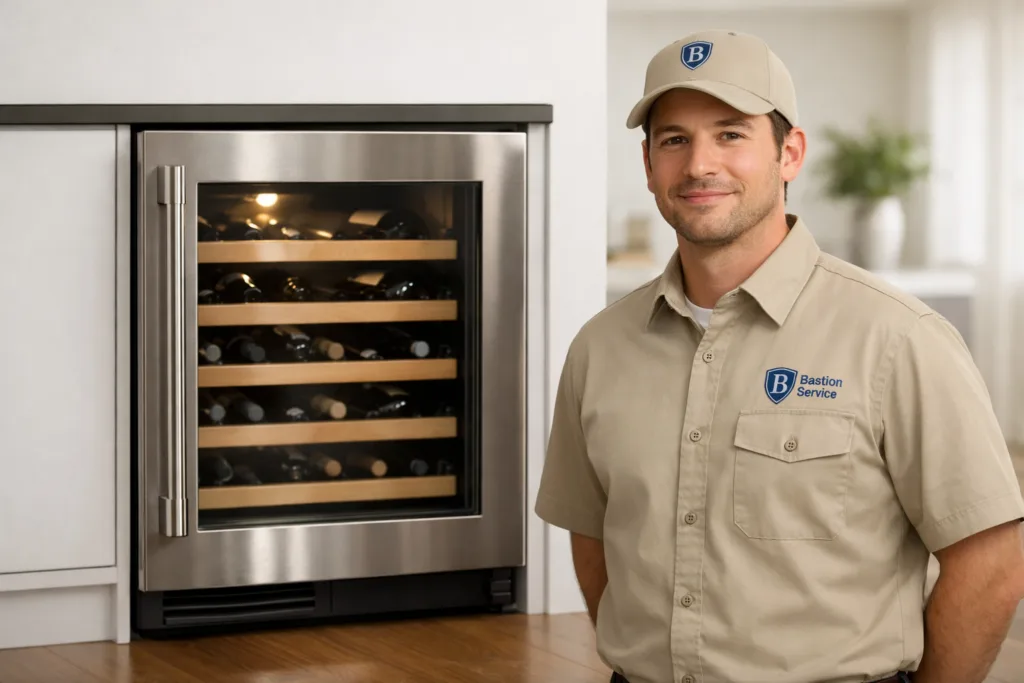
A Marvel wine cooler that starts drifting off temperature, running longer than usual, or collecting moisture can affect storage conditions faster than many homeowners expect. With wine storage, a small performance change often points to a larger regulation problem inside the unit, so it helps to look at the full symptom pattern before deciding on a repair.
What the symptom usually points to
Wine coolers are built to maintain a steady environment, not just to feel cold. When that stability changes, the cause may be airflow-related, electrical, mechanical, or tied to the sealed cooling system. The most useful clues are whether the problem is constant or intermittent, whether the display matches the actual cabinet temperature, and whether noise, moisture, or door-seal issues appeared at the same time.
Running warm or not cooling enough
If bottles are warmer than the set temperature, possible causes include dirty condenser coils, restricted ventilation, an evaporator fan problem, a failed temperature sensor, a control fault, or reduced sealed-system performance. A unit that still runs but cannot hold temperature should not be ignored, because extended operation under strain can increase wear on other components.
Overcooling or freezing
When a Marvel wine cooler becomes too cold, the issue is often related to temperature sensing, control regulation, or uneven airflow inside the cabinet. Freezing conditions can damage labels, affect cork integrity, and make the cooler unreliable for normal storage. If one shelf is much colder than another, that difference can help identify whether the issue is circulation-related or a broader control problem.
Condensation, moisture, or leaks
Water under the unit, droplets inside the cabinet, or ongoing condensation on the glass can come from a blocked drain path, a worn door gasket, misalignment at the door, or warm humid air entering through a poor seal. Occasional condensation may happen with frequent opening, but repeated moisture usually means something needs attention beyond routine cleaning.
Noise, constant running, or short cycling
Buzzing, clicking, fan rubbing, rattling, or a compressor that seems to start and stop too often can point to fan motor wear, vibration issues, start component trouble, condenser problems, or compressor strain. A new sound matters more when it appears together with weak cooling or temperature swings. Even if the cabinet still cools, unusual cycling can be an early warning sign.
Why built-in installation details matter
Many Marvel wine coolers in Culver City homes are installed under counters or in built-in spaces, which makes airflow and door fit especially important. If ventilation is restricted or the unit is not sitting correctly, the cooler may run hot, cool unevenly, or cycle longer than it should. What looks like a failed part can sometimes be tied to installation conditions, so the appliance should be evaluated as it is actually used in the home.
Door alignment also matters more than many people realize. A slight gap, a gasket that no longer seals evenly, or shelves that interfere with closing can let in enough warm air to create moisture and unstable temperatures without causing a complete cooling failure.
Signs the problem is getting more serious
Some issues can wait a little while for scheduling, but others should be addressed promptly. It is smart to stop putting the problem off when you notice:
- Temperature that keeps climbing above the setting
- Bottles feeling colder or warmer than the display suggests
- Persistent condensation after cleaning and basic door checks
- The compressor running almost constantly
- The unit clicking repeatedly without cooling normally
- Sharp new fan or compressor noise
- The cooler tripping power or shutting down unexpectedly
These symptoms do not all indicate the same repair, but they do suggest the unit is no longer regulating properly. Continued use in that condition can make the storage environment unreliable and may add stress to already struggling components.
Repair or replacement depends on the exact failure
Many wine cooler problems are repairable, especially when the fault involves fans, thermistors, control components, drains, door gaskets, switches, or start devices. A replacement discussion becomes more likely when the cooler has a major sealed-system issue, repeated expensive failures, or overall age-related wear across multiple systems.
For most homeowners, the decision comes down to more than whether the unit can technically be fixed. It also depends on whether the cabinet is in good condition, whether the repair restores stable operation, and whether the cost makes sense for the appliance’s remaining service life.
What to check before service
A few observations can make troubleshooting more precise. Before an appointment, it helps to note:
- The set temperature and the actual inside temperature, if measured
- Whether the problem affects the whole cabinet or one area
- Whether the unit is always running or cycling on and off unusually often
- Any recent change in noise level
- Whether the door closes fully without resistance
- Whether bottles or shelves are blocking internal airflow
- Whether moisture appears after the door stays closed for a while
These details can help distinguish between a circulation issue, a control problem, a sealing problem, or a more serious cooling-system fault.
Household-focused service for a wine cooler that is no longer stable
When a Marvel wine cooler in Culver City is no longer maintaining the conditions you expect, the main goal is restoring consistent temperature control rather than guessing at parts. A symptom-based evaluation helps determine whether the issue is relatively straightforward or whether a larger repair decision needs to be made. For homeowners, that means fewer assumptions and a better sense of what the next step should be.