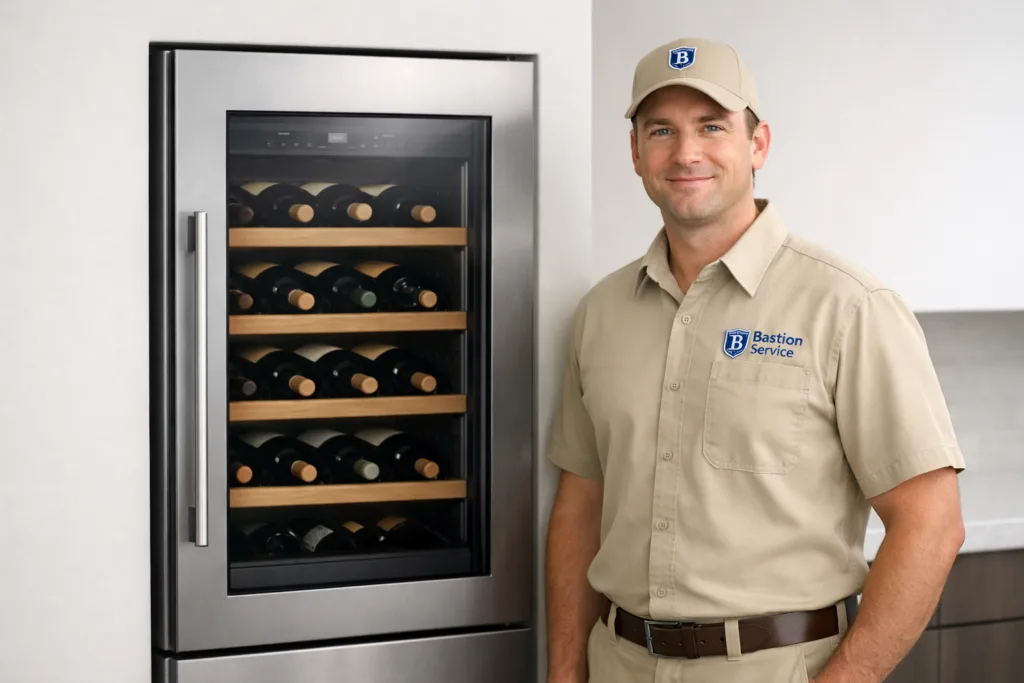




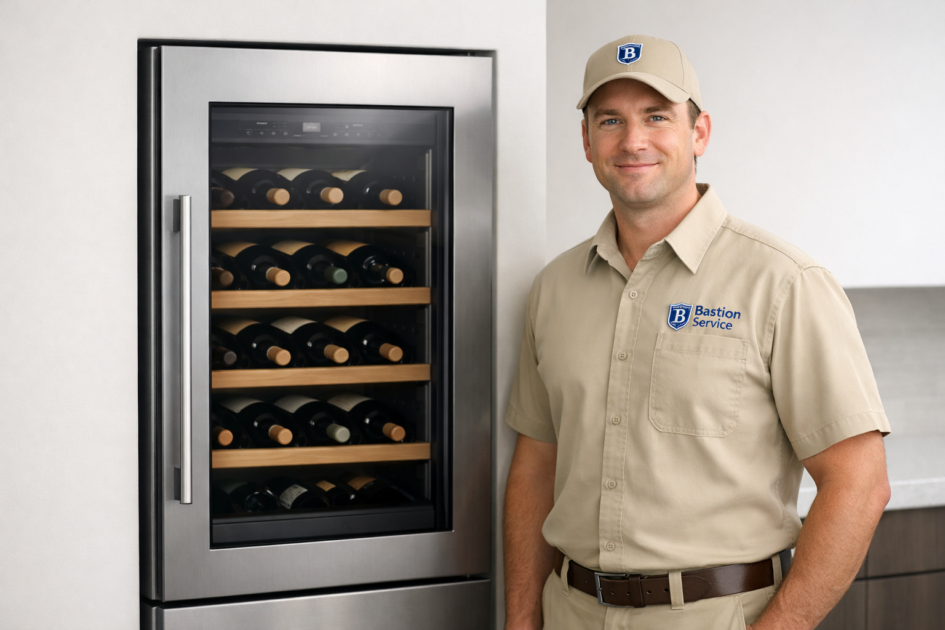
Stable temperature matters more in a wine cooler than in many other household appliances. When a Fisher & Paykel unit starts drifting warm, running too long, or collecting moisture, the symptom alone does not tell the whole story. Similar behavior can come from airflow problems, sensor errors, control faults, door sealing issues, fan failure, or a more serious cooling-system defect, so the next step should be based on how the appliance is actually behaving.
Related Fisher & Paykel and wine cooler service paths in Culver City include Fisher & Paykel Appliance Repair in Culver City, Wine Cooler Repair in Culver City, and Fisher & Paykel Refrigerator Repair in Culver City.
What homeowners usually notice first
Wine cooler problems often begin with small changes rather than a complete breakdown. In many Culver City homes, the first sign is that bottles no longer feel as consistently cool as before. Some households notice a display reading that seems normal even though the cabinet feels warmer. Others hear a fan or compressor more often, see moisture near the gasket, or find that the cooler seems to recover slowly after the door is opened.
These early changes are worth paying attention to because they often reveal whether the issue is tied to temperature sensing, air movement, door leakage, or actual cooling loss. Catching the pattern early can make the repair path simpler.
Common symptom groups and what they may mean
Not cooling enough
If the cabinet is not holding the set temperature, the cause may be relatively straightforward or more involved. A failing evaporator fan, blocked internal airflow, dirty condenser area, thermistor problem, control issue, or poor door seal can all reduce cooling performance. In other cases, weak cooling points to sealed-system trouble, especially if the unit runs heavily but still cannot pull temperatures down.
A wine cooler that is only slightly off temperature should not be dismissed. Mild warming can be an early stage of a larger issue, and continued operation may put more strain on the compressor as the unit tries to compensate.
Running constantly or cycling too often
Long run times usually mean the cooler is working harder than it should. Warm air may be entering around a worn gasket, the door may not be closing evenly, ventilation may be restricted, or the temperature sensor may be misreading cabinet conditions. Short, frequent cycles can suggest control board problems, compressor start issues, or overheating that interrupts normal operation.
If the appliance seems to run almost nonstop without reaching the target temperature, that is an important clue that the problem goes beyond normal seasonal variation inside the home.
Condensation, water, or frost
Moisture is often a sign that air is entering where it should not, or that cooling is becoming uneven. Condensation on shelves, dampness around the door, or frost in isolated areas can point to a bad gasket, humidity intrusion, drainage trouble, defrost issues, or evaporator performance problems. Even when cooling still seems acceptable, excess moisture can lead to unstable storage conditions and added wear on the unit.
Fan noise, buzzing, or clicking
Changes in sound are useful diagnostic clues. A rattling panel or leveling issue may be minor, while a persistent fan noise can indicate a worn motor, obstruction, or ice buildup affecting blade movement. Buzzing and repeated clicking may suggest trouble with compressor start components or electrical controls. If the new noise appears at the same time as poor cooling, that combination usually deserves prompt attention.
Display or control problems
When the control panel becomes unresponsive, the displayed temperature does not match actual cabinet conditions, or settings do not hold, the problem may be with the sensor circuit, interface, wiring, or main control. A wine cooler can appear to have a refrigeration failure when the actual issue is inaccurate sensing or poor communication between components.
Simple checks before service
Before scheduling repair, there are a few basic things a homeowner can look at safely:
- Make sure the door is closing fully and not being pushed open by bottle placement.
- Check the gasket for gaps, warping, or debris that can prevent a tight seal.
- Confirm the temperature setting has not been changed accidentally.
- Look for blocked vents inside the cabinet that could restrict air circulation.
- Notice whether the exterior ventilation area appears dusty or restricted.
- Pay attention to whether noise starts at startup, during cooling, or when the fan is running.
These checks do not replace diagnosis, but they can help narrow down whether the issue seems related to airflow, loading, sealing, or a mechanical fault.
When service makes sense
Service is usually the right next step when the cooler cannot maintain temperature, develops repeated condensation, starts making new mechanical sounds, or runs much longer than it used to. It is also worth scheduling service if the appliance appears to be operating but the storage conditions have clearly changed over several days.
Continued use can be hard on the system when the compressor struggles to start, the cabinet stays warm despite long run times, or moisture keeps building around the interior and door. In those situations, the appliance is no longer operating normally, and waiting can turn a manageable issue into a more expensive one.
Repair or replacement?
Not every Fisher & Paykel wine cooler problem leads to the same decision. Repair is often reasonable when the fault involves fans, sensors, controls, gaskets, drainage, or other accessible components and the cabinet itself remains in good overall condition. Replacement becomes a more serious consideration when there is major sealed-system failure, repeated breakdown history, or a repair cost that is hard to justify based on the age and condition of the unit.
For many households in Culver City, the main goal is to understand whether the unit can be restored to stable operation without guesswork. A proper inspection helps separate repairable problems from those that are likely to keep recurring or require disproportionate expense.
Why symptom patterns matter on wine coolers
With a standard refrigerator, a performance issue is often obvious because food warms quickly. Wine coolers can be more subtle. A cabinet may still feel somewhat cool while drifting enough to affect storage consistency. That is why details matter: whether the unit is slightly warm or completely warm, whether condensation is occasional or constant, whether the fan noise is intermittent or steady, and whether the display matches what you feel inside.
Those symptom patterns help identify the failed system more accurately and reduce the chance of replacing parts that are not actually causing the problem.
What a service visit should clarify
A focused repair visit should determine whether the fault is related to cooling performance, air circulation, sensing, controls, door sealing, drainage, or compressor startup. From there, the decision becomes much clearer: repair the unit, monitor a minor issue, or consider replacement if the problem is no longer practical to address.
For homeowners in Culver City, that kind of clear answer is often the most valuable part of the process. The goal is not just to swap a part, but to restore reliable wine storage conditions and understand whether the appliance is worth further investment.