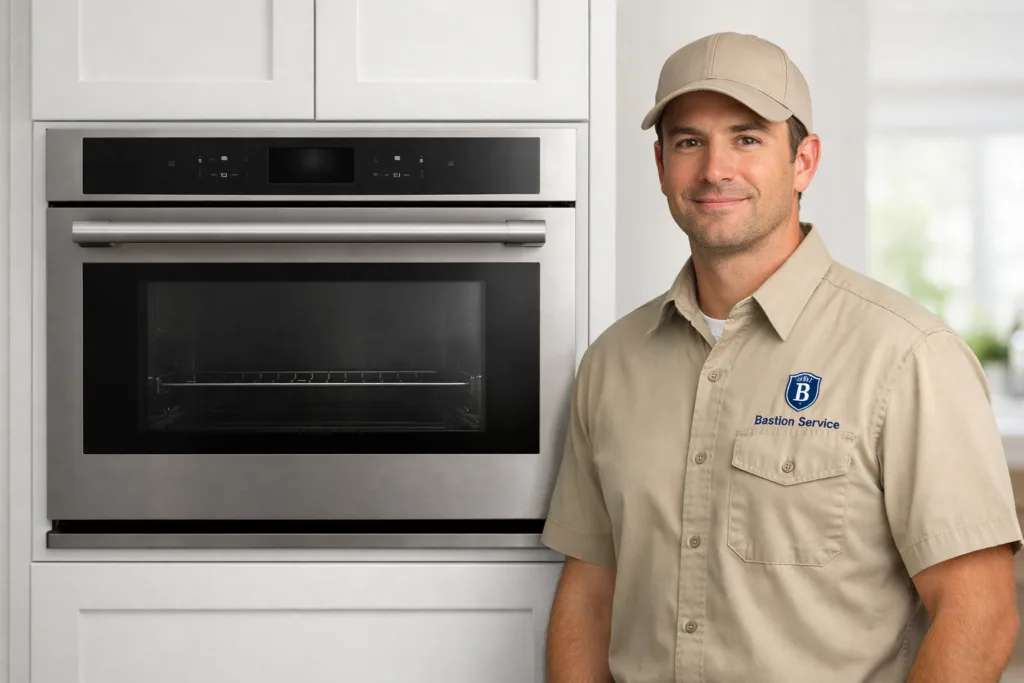
Dacor wall oven problems that deserve attention

Wall ovens often give warning signs before they fail completely. A longer preheat, food that suddenly needs extra time, a door that no longer seals tightly, or a control panel that acts unpredictably can all point to a repairable fault. On a Dacor wall oven, those symptoms may come from the heating system, temperature sensing circuit, electronic controls, door hardware, or power-related components.
For homeowners in Santa Monica, the most useful first step is to match the symptom to the way the oven is behaving in real use. That usually gives a better picture of what needs testing than relying on a single error message or assuming one part is always to blame.
Common symptoms and what they may mean
Oven will not heat
If the display turns on but the cavity stays cool, the problem may involve the bake element, broil element, temperature sensor, relay, thermal protection component, wiring, or the main control. In some cases, the oven may appear to have power while still lacking the full electrical supply needed for proper heating.
A no-heat condition is usually more than a cooking inconvenience. It can also point to a fault that should be checked before the oven is run repeatedly.
Slow preheat or weak heating
When preheat takes much longer than normal, the oven may still be producing heat but not enough of it. That can happen when an element is weakening, the sensor is reading inaccurately, or the control is not cycling heat correctly. Some households first notice this as recipes taking longer, pale baked goods, or roasts that never seem to finish on time.
If the issue has developed gradually, it is easy to work around for a while. The problem is that slow heating often becomes complete failure later, especially when one component is already underperforming.
Uneven baking and temperature swings
Cookies browning on one side, casseroles cooking faster at the back, or dishes that burn on top while staying underdone in the center can all suggest uneven heat distribution. On a Dacor wall oven, that may relate to sensor inaccuracy, element performance, convection fan issues on equipped models, or heat loss around the door.
Temperature swings are especially frustrating because they make cooking results inconsistent. If one meal turns out fine and the next does not, the oven may be cycling outside its normal range even though it still seems usable.
Broil works but bake does not, or the reverse
This symptom can narrow the diagnosis. If one cooking mode works and the other does not, the failure may be isolated to a specific heating element, relay path, or control output rather than the entire oven. That distinction matters because it often changes the repair scope.
Error codes, beeping, or unresponsive controls
Flashing displays, repeated beeping, frozen touch controls, and intermittent shutdowns usually point toward an electronic or communication issue. Sometimes the fault is tied to the sensor circuit or door lock system; in other cases, it comes from the user interface or main board.
Because the same code can have more than one cause, this is one area where trial-and-error part replacement tends to waste time and money.
Door problems during normal use or self-clean
A wall oven door that will not close fully, will not stay shut, or will not unlock after a cycle can affect both performance and safety. Hinges, gaskets, latch assemblies, and lock motors can all play a role. Even a small sealing problem may lead to heat loss, poor baking results, and extra stress on other components.
Why symptom patterns matter on a Dacor wall oven
Two ovens can show the same complaint and need completely different repairs. For example, “not reaching temperature” might come from a weak element, a sensor drifting out of range, a control issue, or a door seal leak. “Random shutoff” could point to overheating protection, loose wiring, or a failing board.
That is why paying attention to the pattern helps. Useful details include:
- whether the problem happens on every cycle or only sometimes
- whether bake, broil, and convection behave differently
- whether preheat completes normally but cooking remains inconsistent
- whether an error code appears before or after the failure
- whether the issue began suddenly or worsened over time
Those observations often make it easier to identify whether the repair is likely to be simple, moderate, or part of a larger control-related problem.
When to stop using the oven until it is checked
Some issues are mainly inconvenient, but others should not be ignored. It is wise to stop using the oven if it is overheating, shutting off unpredictably, tripping the breaker, showing repeated fault codes, or failing to unlock properly. Continued use under those conditions can increase wear on controls, heating parts, and door components.
An oven that runs much hotter than the selected setting can also damage cookware, ruin meals, and create a more serious safety concern than a simple no-heat failure. If the door does not seal or latch correctly, that is another good reason to have the unit evaluated before regular use continues.
Repair or replace: how homeowners usually make the call
Built-in wall ovens are different from freestanding appliances because replacement is not always simple. Fit, trim, electrical setup, and cabinet opening dimensions can all affect the decision. For that reason, repair is often worth considering when the fault is limited to one system and the rest of the oven is in solid condition.
Replacement may make more sense when there are multiple failures, recurring electronic problems, major control costs, or a long history of unreliable heating. Age matters, but condition matters just as much. An older oven with one straightforward issue may still be a better repair candidate than a newer one with repeated board-related faults.
What to note before scheduling service
If you are preparing for a service visit in Santa Monica, a few details can make diagnosis faster and more accurate:
- the exact symptom you see first
- whether the oven reaches the set temperature
- how long preheat takes compared with normal
- whether the problem affects one mode or all cooking modes
- any code, flashing light, or unusual sound
- whether the issue followed a self-clean cycle or power interruption
Even simple notes such as “broil still works” or “the door started sticking last week” can help narrow the likely cause.
Focused help for Dacor wall ovens in Santa Monica
When a Dacor wall oven starts baking unevenly, heating slowly, or acting erratically, the best next step is to identify the failed system rather than guessing at parts. A practical repair plan depends on the symptom, the condition of the oven, and whether the expected result justifies the work.
For Santa Monica households, that kind of diagnosis-based approach helps answer the most important question quickly: whether the oven is a good repair candidate and what it will take to restore normal cooking performance.