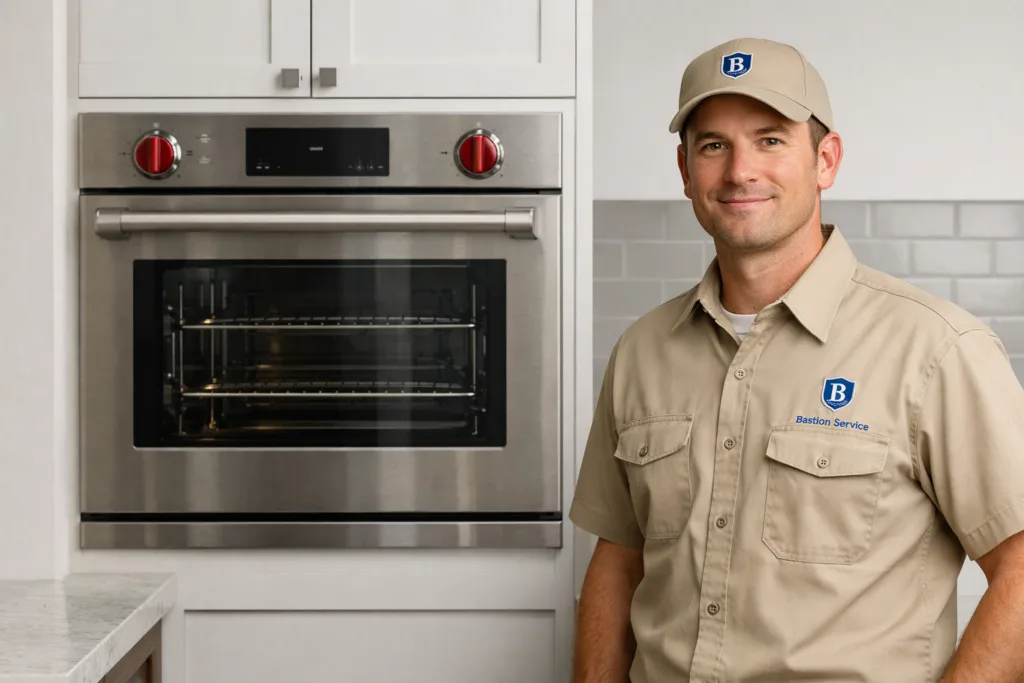
Oven problems rarely stay limited to a minor inconvenience. What starts as a long preheat, an off temperature, or a display issue can quickly affect everyday cooking, especially when a Wolf unit is expected to perform consistently. In many cases, the real issue is not obvious from the symptom alone, which is why testing the heating, sensing, ignition, and control systems matters before any repair decision is made.
Common Wolf oven symptoms and what they may mean
Wolf ovens are built for precise cooking, so even small changes in performance tend to show up in daily use. Homeowners in Santa Monica often notice a problem first through cooking results rather than a complete shutdown.
Oven will not heat
If the oven stays cold or barely warms up, the cause may differ depending on whether the model is gas or electric. Gas models often point to ignition trouble, while electric models may have a failed bake or broil circuit, sensor issue, or control problem. It is also possible for the oven to appear to start normally while never producing enough heat to cook properly.
Slow preheating
A Wolf oven that takes much longer than usual to reach temperature may still seem usable, but slow preheat is often an early warning sign. Weak ignition, a failing element, inaccurate sensor feedback, or a control board issue can all create that pattern. If preheat times keep getting worse, the underlying fault is usually progressing rather than resolving on its own.
Uneven baking or roasting
When one side browns faster, the center stays underdone, or results vary from one use to the next, the problem may involve airflow, temperature regulation, door sealing, or convection operation. These symptoms are especially frustrating because they can be mistaken for cookware or recipe issues when the oven itself is no longer maintaining stable heat.
Temperature swings during cooking
All ovens cycle to maintain temperature, but large swings can lead to scorched tops, underbaked centers, and inconsistent roasting. A faulty sensor, calibration drift, relay failure, or electronic control issue may be behind the fluctuation. This is one of the most common reasons a high-end oven no longer feels predictable.
Display, keypad, or control problems
Unresponsive buttons, partial displays, error codes, or settings that do not hold can interrupt normal operation even if the heating system still works part of the time. In some cases, a control fault affects how the oven heats; in others, it prevents proper mode selection, timing, or temperature input.
Door not closing or sealing correctly
A door that does not close tightly can let heat escape and stretch cook times. It may also cause the oven to work harder than necessary. Worn hinges, gasket problems, or alignment issues can all contribute, and those problems are worth addressing before they begin affecting other components.
Why the same symptom can have different causes
An oven that is not heating properly does not always need the same part. For example, poor heating could come from ignition failure, a sensor reading problem, a damaged element, a relay that is not sending power correctly, or a control board fault. Uneven cooking can be caused by airflow issues, heat loss, or temperature regulation errors rather than the heating source alone.
That is why symptom-based explanations are so helpful for homeowners. They make it easier to understand whether the issue points to a focused repair or to a broader condition problem within the appliance.
Signs the problem is getting worse
Some Wolf oven issues develop gradually. A model that still turns on may seem manageable, but these patterns usually mean service should not be delayed:
- Preheat times keep increasing from week to week.
- Temperature settings no longer match actual cooking results.
- The oven shuts off unexpectedly during use.
- Error codes appear repeatedly, even after resetting power.
- The broiler works but baking does not, or vice versa.
- The display flickers, dims, or loses responsiveness.
- The door seal looks worn, loose, or heat-damaged.
Intermittent problems are especially important to catch early. They often point to components that are beginning to fail under heat stress, and continued use can make diagnosis and repair more complicated later.
When to stop using the oven
Some issues are inconvenient. Others raise safety concerns and should be treated more seriously. Stop using the oven and have it checked if you notice any of the following:
- A strong or persistent gas smell around a gas oven
- Sparking, tripped breakers, or signs of electrical arcing
- Burning odors that do not clear after normal cooking residue burns off
- The unit overheating, locking up, or running beyond the set temperature
- A door that will not stay closed during operation
For gas-related odor concerns, safety comes first. If the smell is strong or does not go away, leave the area if needed and contact the gas utility or emergency service before arranging appliance repair.
Repair issues often seen with Wolf ovens
While every diagnosis depends on the model and symptom pattern, several categories of repair come up often with residential Wolf ovens in Santa Monica:
- Igniter or ignition-related failure on gas models
- Bake or broil heating problems on electric models
- Temperature sensor or calibration-related issues
- Convection fan or airflow problems
- Electronic control, relay, or keypad faults
- Door gasket, hinge, or latch wear
These problems can show up separately or in combination. An oven with both poor temperature control and a weak door seal, for example, may appear to have one issue when it actually has two contributing faults.
Repair versus replacement
Many Wolf oven problems are worth repairing, particularly when the issue is isolated to a heating, ignition, sensor, gasket, or control-related component. Replacement becomes more likely when there is severe internal damage, multiple major failures at once, or a repair would not restore reliable daily use.
For most households, the decision usually comes down to:
- The exact failed part or system
- The overall condition of the oven
- Whether the rest of the unit is operating as expected
- Parts availability and the likely repair path
A good service outcome should leave you with more than a part name. It should explain what failed, how that fault caused the cooking issue you noticed, and whether the repair makes sense for the condition of the appliance.
What Santa Monica homeowners should watch in daily use
If your oven is still working but results have become inconsistent, pay attention to patterns rather than one-off mistakes. A single underbaked tray may be a recipe issue. Repeatedly uneven cookies, slow roasting, longer preheats, or unreliable broiling usually point back to the oven. Noting when the problem appears, which mode you are using, and whether the behavior changes after preheat can make diagnosis easier.
That kind of detail is especially useful when the problem is intermittent. A Wolf oven that fails only after it has been hot for a while may have a different repair path than one that never heats correctly from the start.
Choosing the right repair approach
The most effective next step is one based on the actual symptom pattern, not guesswork. Whether the issue is no heat, poor temperature accuracy, erratic controls, or a door that no longer seals well, a practical repair plan should focus on restoring consistent, safe cooking performance for normal household use.
For homeowners in Santa Monica, that means looking closely at how the oven behaves, addressing problems before they spread, and making the repair-versus-replacement decision with a realistic understanding of the fault and the condition of the appliance.