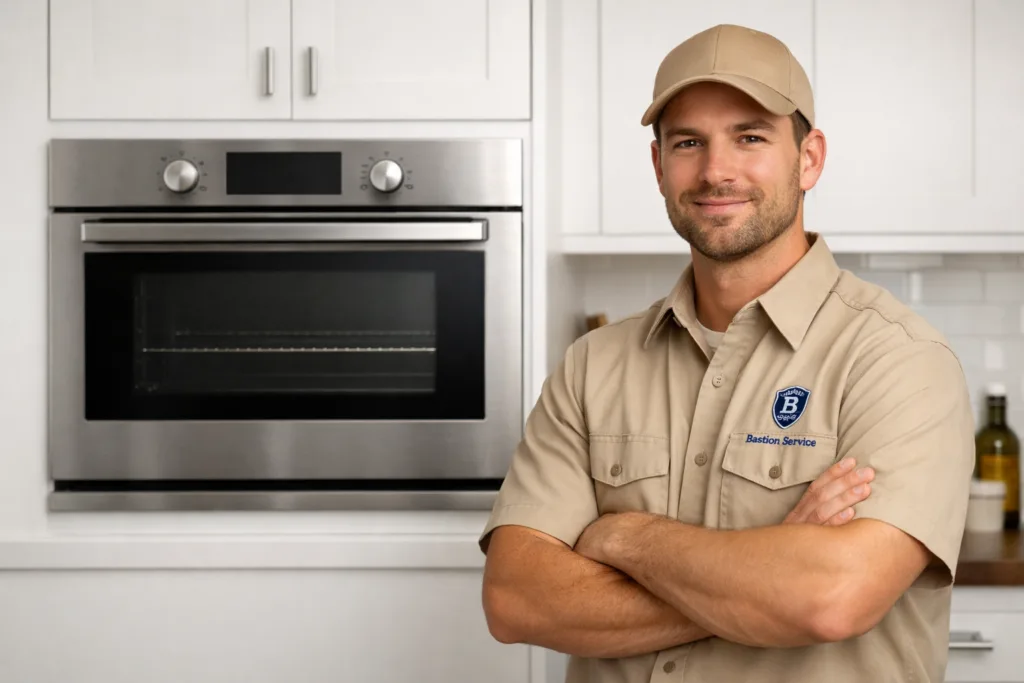
Cooking problems with a Blomberg oven rarely start with a completely dead appliance. More often, the warning signs begin with slow preheat, food browning unevenly, a display that behaves inconsistently, or an oven that seems to run at the wrong temperature. Looking at the exact symptom pattern usually tells more than the model number alone and helps narrow the issue to the heating system, temperature sensing, power supply, door fit, or electronic controls.
Common Blomberg oven problems in Santa Monica homes
Most oven failures fall into a few recognizable categories. The key is matching what you see in daily use with the components most likely involved, rather than assuming one part is always to blame.
Oven not heating or taking too long to preheat
If the display turns on but the oven stays cold, heats only slightly, or takes much longer than usual to preheat, the problem may involve the bake element, broil element, temperature sensor, wiring, relay failure, or incoming power. In some cases, a Blomberg oven can appear partly functional because the light or clock works while the heating circuit does not.
This symptom is especially noticeable in households that cook often, because recipes begin taking longer and results become less predictable. If preheat times suddenly change, it is a sign the oven should be checked before more components are stressed by repeated use.
Uneven baking, hot spots, or temperature swings
When cookies brown on one side, casseroles finish around the edges but stay cool in the center, or one rack cooks much faster than another, the oven may not be cycling heat correctly. A weak element, drifting temperature sensor, poor door seal, or control issue can all cause this kind of inconsistency.
Temperature swings are often mistaken for recipe problems, cookware problems, or normal appliance aging. If the same dishes that used to turn out well are suddenly unreliable, the oven itself is often the more likely cause.
Oven runs too hot and burns food
An oven that overheats can be just as frustrating as one that will not heat enough. If food scorches quickly, the outer surface of dishes darkens before the inside is done, or the kitchen smells unusually hot during normal baking, the thermostat circuit, sensor readings, or control board may be off.
Overheating should not be ignored. Besides ruining meals, it can place extra stress on internal components and make the appliance less safe to keep using until the cause is identified.
Display problems, error codes, or controls not responding
Some Blomberg oven problems show up through the interface rather than the heating performance. Buttons may stop responding, the display may reset, settings may not hold, or error codes may appear repeatedly. These signs can point to electronic control faults, communication issues, moisture intrusion, or unstable power reaching the appliance.
If the controls are unreliable, the oven may not follow the selected temperature or cooking mode correctly, even when it appears to start normally.
Oven shuts off during use or trips power
If the oven turns off in the middle of cooking, trips the breaker, or loses power after it begins heating, that usually suggests an electrical problem rather than a simple performance issue. Wiring damage, shorted components, overheating protection, or a failing board can all be involved.
When a breaker trips more than once, it is best to stop testing the oven. Repeated resets can mask a more serious fault and may increase damage inside the unit.
Door not closing properly or heat escaping
A door that will not seal tightly can make an otherwise functional oven perform poorly. Worn hinges, gasket damage, alignment issues, or latch problems allow heat to escape, which affects baking times and forces the oven to work harder to maintain temperature.
Homeowners often first notice this as a front edge that feels hotter than usual, longer preheat times, or food that needs extra time even though the controls appear normal.
Why symptom-based diagnosis matters
Several different faults can create almost the same complaint. For example, “not reaching temperature” might come from a weak bake element, inaccurate sensor, bad relay, loose connection, or leaking door gasket. That is why replacing parts based on guesswork often leads to extra cost without solving the real problem.
A better approach is to confirm how the oven starts, how it cycles heat, whether both heating functions respond correctly, and whether the controls, sensor inputs, and door condition all support normal operation. Once the cause is narrowed down, it becomes much easier to tell whether the repair is straightforward or whether the unit has multiple problems at the same time.
Signs the oven should not keep being used
Some issues are inconvenient but manageable for a short time. Others are a reason to stop using the appliance until it can be inspected. It is wise to hold off on regular cooking if your oven is showing any of these signs:
- It will not heat reliably or cannot hold temperature
- It overheats and burns food quickly
- It shuts off partway through a cycle
- It trips the breaker or loses power while heating
- Error codes appear repeatedly
- You notice an electrical smell, visible sparking, or signs of overheating
- The door does not close securely and heat escapes heavily
Stopping use at the right time can prevent a smaller repair from turning into a larger one.
Repair versus replacement: what usually makes sense
Many Blomberg oven problems are repairable when the failure is limited to parts such as elements, sensors, switches, gaskets, hinges, latches, or certain control-related components. In those cases, restoring normal cooking performance is often a reasonable path.
Replacement becomes a stronger consideration when the appliance has major wiring damage, multiple expensive failures, severe internal wear, or a repair cost that is difficult to justify compared with the condition of the oven overall. Age alone does not decide it. The more important questions are whether the failure is isolated, whether the repair will be reliable, and whether the appliance is otherwise in good shape for daily household use.
What Santa Monica homeowners can check before scheduling service
There are a few basic observations that can help describe the problem clearly. You do not need to disassemble anything, but it helps to note:
- Whether the oven fails in bake, broil, or both modes
- Whether preheat is slow or never completes
- Whether the display stays stable or resets
- Whether the breaker has tripped
- Whether the door feels loose, misaligned, or does not seal well
- Whether the problem started suddenly or gradually worsened over time
These details often make the next step more efficient and help separate a heating issue from a control or power issue.
What a focused repair visit should accomplish
For a household in Santa Monica, the goal of oven service is not just getting heat back for one cycle. It is confirming why the failure happened, which parts are actually involved, and whether the proposed fix is likely to hold up under normal cooking use. That may lead to a direct repair, a recommendation to stop using the oven until parts are replaced, or a candid explanation that replacement is the better choice.
When the problem is approached this way, homeowners get a more useful answer than a generic part swap. They get a repair path based on the symptoms the oven is actually showing and the condition of the appliance as a whole.