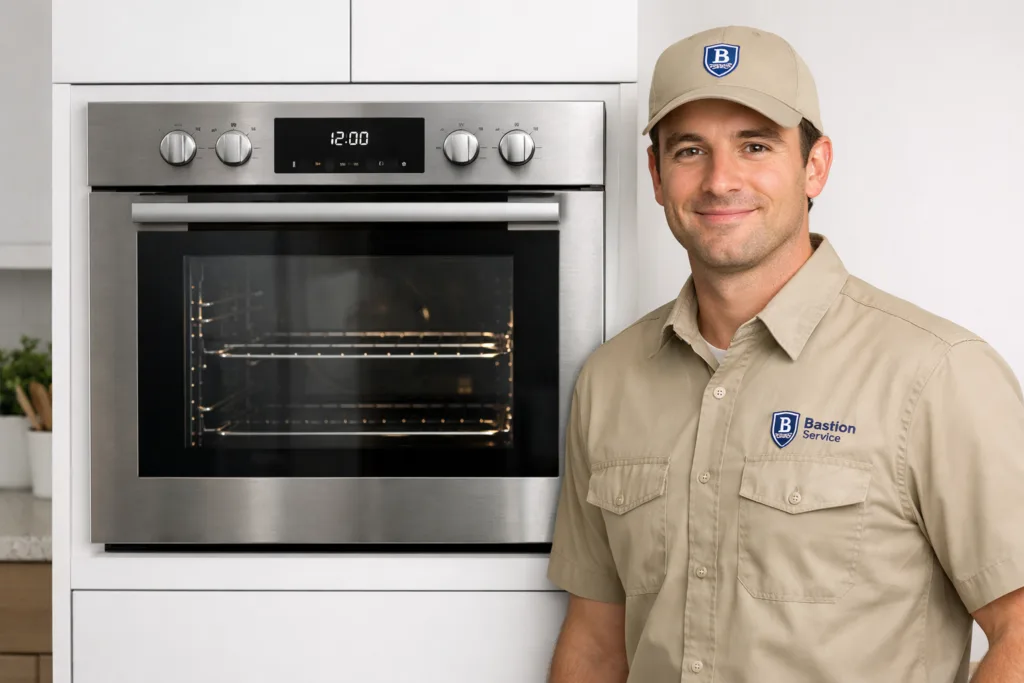
Cooking problems rarely start with a dramatic failure. More often, a Miele oven begins missing its target temperature, browning unevenly, or taking much longer than usual to preheat. Those early changes matter because they often point to a specific issue inside the heating, sensing, airflow, or control system.
For homeowners in Santa Monica, the most useful approach is to match the repair plan to the exact symptom pattern. An oven that runs cool is not the same problem as an oven that overheats, shuts off mid-cycle, or refuses to start at all. The right diagnosis helps avoid replacing parts based on guesswork.
Common Miele oven problems and what they can mean
Oven is not heating properly
If the oven turns on but does not get hot enough, several components may be involved. Depending on the model and symptom, the problem may come from a failed heating element, temperature sensor, relay, wiring issue, or electronic control fault. Sometimes the oven produces some heat, but not enough to cook normally, which can make the problem easy to miss at first.
Signs to watch for include:
- Food staying undercooked even after full cook time
- Very slow preheat
- The oven reaching only part of the selected temperature
- One heating function working while another does not
Uneven baking or hot and cold spots
When one tray browns faster than another, or one side of a dish cooks more quickly, the issue may involve temperature regulation or airflow. In convection models, fan-related problems can affect how heat moves through the cavity. In other cases, a sensor may be reading inaccurately, causing the control to cycle heat at the wrong times.
This type of issue often shows up as:
- Cookies darker in the back than the front
- Casseroles cooked on top but not through the middle
- Roasting times becoming unpredictable
- Recipes that suddenly need repeated adjustments
Temperature swings or overheating
Some cycling is normal in an oven, but sharp swings are not. If the cavity gets much hotter than the selected setting, burns food unexpectedly, or seems to surge in heat, the cause may be a sensor problem, control issue, or relay that is not cycling correctly. Overheating should be taken seriously because it can affect both cooking results and internal components.
You may notice this problem if:
- Food burns on normal settings
- The oven thermometer reads far above the set temperature
- The unit seems to keep heating without stabilizing
- The exterior becomes unusually warm during ordinary use
Oven will not start
A no-start condition can come from more than one source. If the display is active but the bake or broil cycle will not begin, the issue may be tied to the interface, latch system, door switch, or control board. If the oven is completely unresponsive, diagnosis may begin with power supply, internal fusing, and the main control path.
This is one reason symptom details are so helpful. An oven that clicks but does nothing, shows lights without heat, or briefly starts and then stops can point to different underlying failures.
Error codes, resets, or display trouble
Miele ovens can also develop faults that appear through the display rather than through cooking performance alone. Repeated error codes, random shutdowns, dim or failing display sections, or controls that respond inconsistently may indicate communication faults, temperature-related protection issues, or failing electronics.
If the issue is intermittent, it helps to note when it happens. For example, the failure may appear only during preheat, after longer baking cycles, or when using a specific cooking mode.
Symptoms that should not be ignored
Some oven problems are more than just inconvenient. It is best to stop using the appliance and arrange service if you notice any of the following:
- The oven overheats or burns food far faster than expected
- The unit shuts off in the middle of cooking
- The breaker trips during operation
- The door will not close securely or the latch does not release correctly
- Fault codes keep returning after resets
- The oven gives off unusual smells, sparks, or visible signs of electrical trouble
For gas-related concerns, safety comes first. If there is a strong or persistent gas smell, stop using the appliance and follow appropriate gas safety steps before arranging appliance service.
Why symptom-based diagnosis matters with a Miele oven
Two ovens can show the same cooking complaint for very different reasons. Slow preheat may come from a weak heating circuit, a sensor problem, or a control issue. Uneven baking may involve calibration, convection airflow, or inconsistent heat cycling. A proper diagnosis separates these possibilities so the repair addresses the actual fault rather than the most obvious guess.
That matters even more when the problem seems inconsistent. Intermittent electronic issues can appear one day and disappear the next, while temperature problems may only show up during longer baking or roasting cycles. The more clearly the symptom is identified, the easier it is to determine whether the issue is isolated or part of a broader failure.
When repair makes sense
Many Miele ovens are worth repairing when the problem is limited to a specific component and the rest of the appliance is in good condition. Heating issues, sensor faults, fan problems, latch failures, and some control-related problems can often be resolved without replacing the unit.
Replacement may become the better option when there are multiple major failures, repeated electronic breakdowns, or repair costs that no longer make sense for the oven’s condition and expected lifespan. The best decision usually depends on:
- The exact failed system
- Whether the problem is isolated or recurring
- The overall condition of the oven
- How reliably it has been performing before this issue
How to describe the problem before service
A few simple notes can make diagnosis faster and more accurate. Before scheduling service, it helps to pay attention to:
- Whether the oven fails during preheat or during cooking
- Whether bake, broil, and convection modes behave differently
- Any fault codes shown on the display
- Whether the issue happens every time or only occasionally
- Whether the oven runs too cool, too hot, or shuts off unexpectedly
Even basic observations like “takes twice as long to preheat” or “burns food on the left side only” can help narrow the likely cause.
What homeowners in Santa Monica should expect from oven repair
A worthwhile service visit should identify the failing system, explain how it is affecting performance, and make it clear whether repair is the sensible next step. That is especially important when daily cooking has become unreliable but the oven still appears to function part of the time.
If your Miele oven has started showing slow preheat, uneven baking, temperature swings, control trouble, or repeated shutdowns, addressing it early can help limit added wear and prevent a smaller fault from becoming a larger repair.