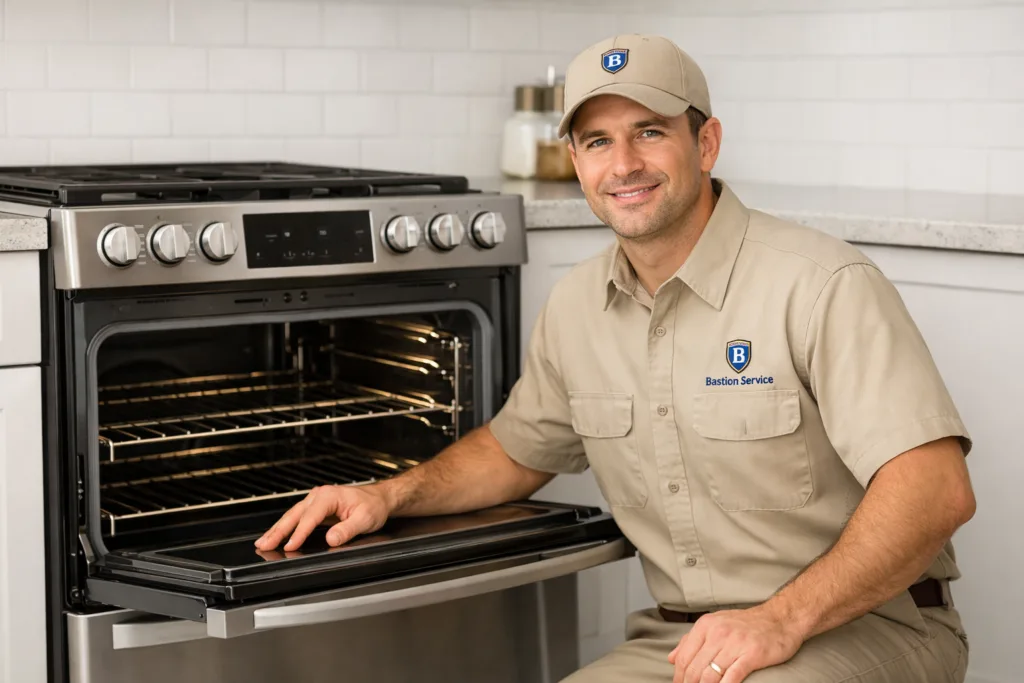
Common LG oven problems in Los Angeles homes

LG ovens can fail in a few recognizable ways. Some problems show up slowly, such as longer preheat times or baked dishes finishing unevenly. Others are more abrupt, including a dead display, an oven that will not start, or a door that stays locked after self-clean. Looking at the exact symptom pattern usually says more than the label on the problem.
Not heating or heating too weakly
If the oven powers on but does not get hot enough, the cause may involve a bake element, broil element, igniter, temperature sensor, relay, or electronic control. In some cases the cavity warms slightly, which can make the problem seem minor at first, but that usually means one part of the heating system is no longer working as it should. Meals take longer, preheat drags on, and recipes become unreliable.
For households that use the oven several times a week, weak heat often becomes noticeable before a complete no-heat failure. If the top browns but the center stays undercooked, or if food needs extra time again and again, the oven may already be operating outside normal temperature range.
Uneven baking and temperature swings
An LG oven that runs hot one day and cool the next may have a sensor issue, airflow problem, convection fan fault, or control-related error. Uneven baking can also happen when the oven cycles poorly and cannot maintain a steady temperature. This is especially frustrating for baking, roasting, and any recipe that depends on consistent heat over time.
Typical signs include:
- One rack browning faster than another
- Food that burns on top while remaining pale underneath
- Recipes finishing far earlier or later than expected
- A noticeable gap between the set temperature and actual cooking results
Slow preheating
Slow preheat is often treated like a minor annoyance, but it can point to a heating component that is weakening under load or a control issue that prevents full heat output. On electric models, one failed element can leave the oven technically running without giving it enough heat to preheat normally. On gas models, ignition-related trouble may delay the heat-up cycle and affect cooking performance even when the oven eventually turns on.
Oven will not start
If the display lights up but the oven will not begin a bake cycle, attention usually turns to the control interface, latch system, safety circuit, or heating circuit. If the unit is completely unresponsive, the issue may be tied to incoming power, wiring, terminal connections, fuses, or the main control board. Because ovens operate on high voltage and can have more than one control component involved, part-swapping without testing often wastes time and money.
Error codes, beeping, or display trouble
Error codes can help narrow a problem, but they rarely tell the whole story by themselves. An LG oven may display a fault for temperature sensing, overheating, communication errors, or door lock trouble, while the underlying cause is still a failed sensor circuit, a stuck latch assembly, or a board problem. Repeated beeping, a blank display, flickering numbers, or settings that reset unexpectedly can all point to an electronic fault that needs proper diagnosis.
Door lock and self-clean issues
Some service calls begin after a self-clean cycle. The door may remain locked, the oven may stop responding, or a control issue may appear after the high-heat cycle ends. These cases can involve the lock motor, latch mechanism, thermal stress on the electronics, or a related sensor failure. If the door will not open normally, forcing it can damage the latch or trim and create a bigger repair.
What these symptoms often point to
The same complaint can come from several different parts, which is why symptom details matter. For example, an oven that never reaches temperature could have a bad sensor, a weak element, a relay failure, or a calibration problem. An oven that shuts off mid-cycle might have an overheating condition, a loose electrical connection, or a control fault rather than a simple heating issue.
Useful details include:
- Whether the oven is electric or gas
- Whether the problem happens on bake, broil, or both
- If preheat completes normally or takes much longer than before
- Whether an error code appears every time or only occasionally
- If the problem started after self-clean, a power outage, or a recent move
Why accurate diagnosis matters on LG ovens
LG ovens often combine sensors, relays, safety features, electronic controls, and model-specific parts that interact with each other. A temperature complaint does not always mean the temperature sensor is bad, and a no-heat complaint does not automatically mean the heating element or igniter has failed. Testing the full circuit matters because one failed component can mimic another.
This is where a clear diagnosis is valuable. It helps confirm whether the issue is isolated and repairable, whether related parts have been affected, and whether the repair path makes sense for the oven’s condition. That avoids trial-and-error parts replacement and reduces the chance of a repeat problem shortly after service.
When to stop using the oven
Some symptoms are more than inconvenient and should not be ignored. Stop using the oven if you notice sparking, visible wiring damage, overheating, repeated tripped breakers, or a door that will not latch or unlock correctly. Continued use under those conditions can lead to further damage to controls, wiring, or safety components.
For gas LG ovens, a persistent gas smell is a separate safety concern and should be addressed immediately before any repair decision. If the appliance smells hot in an electrical way, produces smoke, or shuts off unpredictably during cooking, it is better to have it checked before using it again.
When continued use can make the repair bigger
An oven that runs with unstable temperature or partial heating can put extra stress on other components. A weak igniter may strain the gas heating cycle. A failing relay can overheat a board. A door lock problem after self-clean can turn into a damaged latch assembly if the mechanism is repeatedly forced. What starts as poor baking performance can become a complete loss of function if the appliance keeps operating in a fault condition.
That is why symptom-based service early in the process is often the more economical choice. It is easier to deal with one failed part than with a chain of damage caused by continued use.
Repair or replacement?
Many LG oven problems are worth repairing when the fault is limited to a sensor, igniter, bake element, broil element, latch part, fan motor, or a specific control-related issue. In those cases, the appliance can often return to normal daily cooking once the failed component is confirmed and replaced.
Replacement becomes a more serious consideration when there are multiple major failures, extensive wiring damage, repeated electronic board issues, or overall wear that makes further repair hard to justify. The right decision usually depends on:
- The exact symptom and failed part
- The age and condition of the oven
- Whether the repair restores reliable everyday use
- Part availability for the specific LG model
For most homeowners, the real question is not simply whether the oven can be repaired, but whether repairing it is the sensible long-term option.
What homeowners in Los Angeles should expect from service
Good LG oven service should be centered on what the appliance is actually doing in the home: not heating, baking unevenly, taking too long to preheat, throwing error codes, or failing to start. That means checking the heating system, temperature sensing, control response, latch operation, and relevant electrical connections instead of assuming the cause from one symptom alone.
For Los Angeles households, the goal is straightforward: restore safe, predictable cooking performance or give a realistic repair recommendation if that is no longer practical. When the findings are specific, it becomes much easier to decide on the next step without guesswork.
Signs your LG oven likely needs professional attention
- The oven takes much longer than normal to preheat
- Food is regularly undercooked or overcooked at the same setting
- The oven heats on broil but not on bake, or vice versa
- Error codes keep returning after resetting power
- The control panel works intermittently or goes blank
- The oven shuts off in the middle of cooking
- The door remains locked after self-clean
If your LG oven is no longer producing consistent results, the next step should be based on the actual fault rather than guesswork. That is the best way to protect the appliance, avoid unnecessary parts replacement, and determine whether repair makes sense for your Los Angeles home.