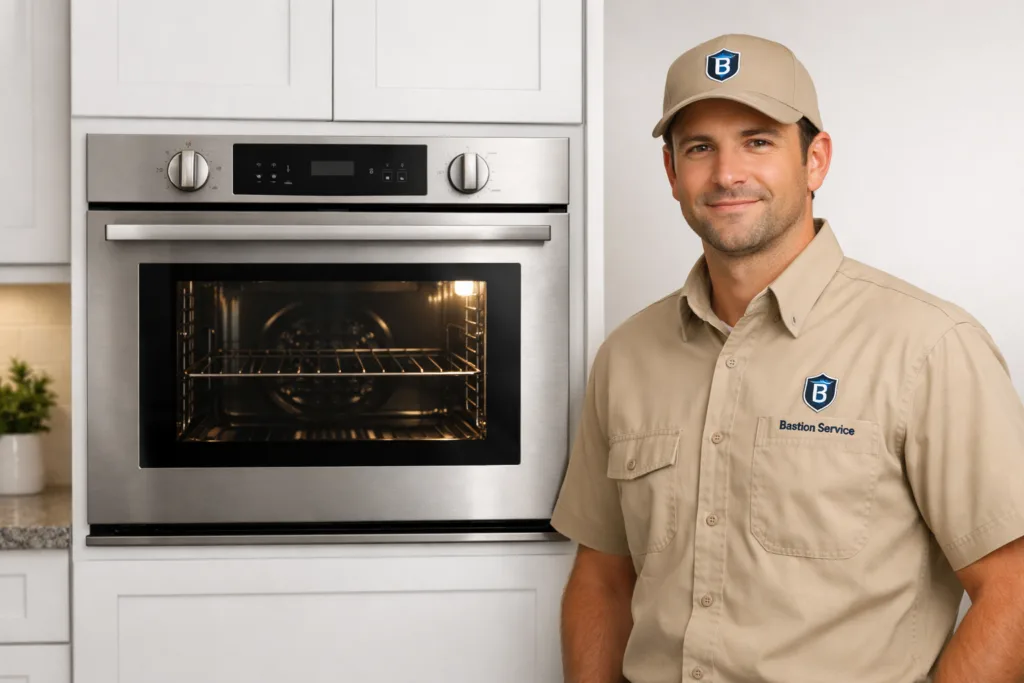
Electrolux ovens are designed for precise cooking, so even a small component failure can show up quickly in everyday use. A slow preheat, uneven baking pattern, or control issue may seem minor at first, but these symptoms often point to a specific part or system that needs attention before the problem spreads.
In Los Angeles homes, oven trouble is usually noticed during normal routines: dinner takes longer than expected, baked foods come out inconsistent, or the display starts flashing errors. The most useful approach is to match the symptom pattern to the likely cause rather than assuming every heating problem needs the same repair.
Common Electrolux Oven Problems in Los Angeles Homes
Several issues appear frequently with household Electrolux ovens, especially when the unit is used often for baking, roasting, and everyday family meals.
Oven not heating
If the oven turns on but stays cold, the cause may involve a failed bake element, a weak broil element, a bad igniter on gas models, a temperature sensor problem, or a relay/control failure. In some cases, the display and lights still work normally, which can make the problem look less serious than it is.
When only one cooking mode works, that detail matters. For example, if broil heats but bake does not, the fault is often narrower than a full control failure.
Slow preheating
An oven that eventually reaches temperature but takes far too long often has a weakening heating component, sensor inaccuracy, or reduced control response. This can lead to undercooked food, delayed meal timing, and inconsistent results from one cycle to the next.
Slow preheat is easy to ignore because the appliance still runs, but it is often an early sign that a part is drifting out of specification.
Uneven baking or roasting
If one side browns faster, the center stays underdone, or cookie sheets produce inconsistent results from front to back, the issue may be tied to poor heat circulation, sensor misreading, weakened elements, or a door seal that is no longer holding heat evenly.
Convection-equipped models can also develop fan or airflow-related issues that affect how heat moves through the cavity.
Temperature swings
Some Electrolux ovens appear to heat normally but cycle too high or too low around the set temperature. Homeowners usually notice this as food burning sooner than expected, baked goods falling flat, or recipes requiring unusual time adjustments.
Temperature fluctuation can be caused by a faulty sensor, calibration issue, control board problem, or an element that is not responding consistently during the heating cycle.
Controls not responding
If the keypad does not respond, the display goes blank, or settings are difficult to select, the problem may involve the user interface, electronic control, power supply issue, or a failed connection within the appliance. Some ovens show intermittent behavior at first, working one day and failing the next.
Error codes, beeping, or shutdowns
Error messages and random shutoffs are important because they often indicate the appliance is detecting an abnormal condition. Common triggers include sensor faults, overheating, door lock issues, communication errors between boards, or electrical instability.
If the oven stops in the middle of a cycle, repeated resets usually do not solve the underlying issue for long.
Door and self-clean related problems
A door that does not close fully can cause longer cook times and lost heat. After a self-clean cycle, some ovens develop latch issues, control failures, or heat-related stress on electronic parts. If the problem began immediately after self-cleaning, that timing can be a strong clue during troubleshooting.
Symptom-Based Troubleshooting That Helps Narrow the Cause
Oven symptoms are often more informative than homeowners realize. A few simple observations can point service in the right direction and help avoid guesswork.
- Oven completely dead: possible power supply issue, breaker problem, wiring fault, or failed control.
- Display works but no heat: often linked to an element, igniter, relay, or sensor issue.
- Bake fails but broil works: may indicate a bake element or bake circuit problem.
- Food cooks unevenly: may involve temperature regulation, convection airflow, or heat loss at the door.
- Shuts off during cooking: possible overheating, control fault, or connection issue.
- Burning smell outside normal food residue: could mean wiring, insulation, or overheated component trouble.
These details help separate a simple part failure from a larger electrical or control issue.
When to Stop Using the Oven
Some problems can wait a short time for service, but others make continued use a bad idea. It is smart to stop using the oven if you notice any of the following:
- The breaker trips when the oven is turned on
- The oven overheats or burns food at normal settings
- There is a sharp electrical or burning odor
- The control panel flashes errors repeatedly
- The oven shuts off mid-cycle
- The door will not close or latch properly
- The appliance behaves unpredictably from one use to the next
Electrical faults, overheating issues, and latch problems can create more damage if the oven keeps being used. In a busy household, it is tempting to push through one more meal, but erratic operation usually gets worse rather than better.
What Often Causes Electrolux Oven Performance Issues
While the exact repair depends on testing, several components are commonly involved when an Electrolux oven loses performance:
- Bake or broil elements
- Gas igniters on gas models
- Temperature sensors
- Electronic control boards
- User interface or keypad assemblies
- Door switches, latches, or hinges
- Convection fans and related components
- Wiring or terminal connections
Because multiple faults can produce nearly identical symptoms, replacing parts based only on internet guesswork can easily miss the real problem.
Repair or Replace?
For many homeowners, repair is worthwhile when the issue is isolated to one serviceable component and the rest of the oven is in good condition. That is often the case with sensors, igniters, heating elements, switches, and some control-related failures.
Replacement becomes a more serious consideration when the oven has repeated electrical issues, multiple failing systems, severe internal damage, or a repair cost that no longer makes sense compared with the condition of the appliance. The decision is rarely about age alone. A well-maintained oven with one defined fault can still have plenty of useful life left.
What to Note Before Scheduling Service
A few observations from normal use can make troubleshooting faster and more accurate:
- Whether the problem happens in bake, broil, convection, or every mode
- If the oven is too hot, too cool, or inconsistent
- Any error code shown on the display
- Whether the issue started suddenly or gradually
- If the problem appeared after self-cleaning or a power interruption
- Whether the failure is constant or intermittent
- Any unusual odor, noise, or door-latch behavior
Even small details can help identify whether the issue is heat generation, temperature reading, control response, or a power-related fault.
Household-Focused Electrolux Oven Repair in Los Angeles
Most oven service calls come down to a straightforward goal: getting the appliance back to reliable daily use. Whether the problem is no heat, uneven baking, slow preheat, temperature swings, or a control issue, the right repair path starts with the actual symptom behavior of that specific oven in that specific home.
For Los Angeles households, that means focusing on safe operation, consistent cooking results, and repairs that make sense for the condition of the appliance rather than replacing parts blindly. When the fault is identified correctly, many Electrolux oven problems can be resolved without turning a routine repair into a larger project.