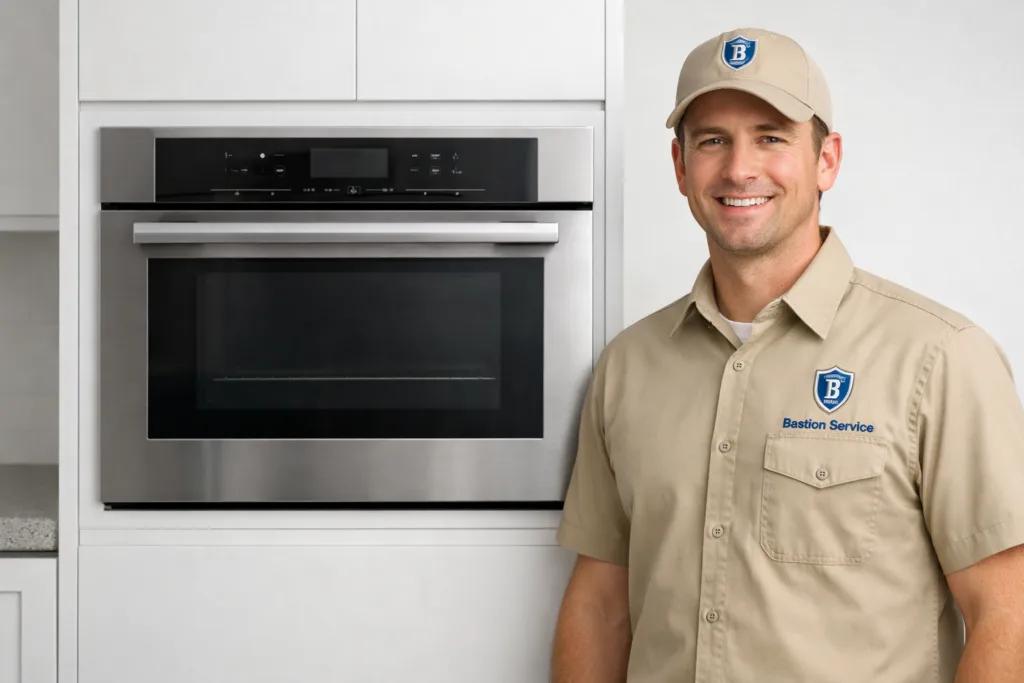
Premium ovens tend to show problems in patterns. One household may notice cookies browning on one side while casseroles stay underdone in the center. Another may see a long preheat, a temperature that drifts during cooking, or a control panel that responds inconsistently. With Miele models, those symptoms can point to very different causes, so the most efficient repair usually starts with matching the complaint to the part of the system that is failing.
Common Miele oven symptoms and what they often mean
Not every oven problem looks the same in daily use. Some faults are obvious right away, while others only become clear after several meals turn out differently than expected. Paying attention to the exact behavior helps narrow down whether the issue is related to heat production, temperature feedback, airflow, controls, or door sealing.
Oven not heating at all
If the oven powers on but never heats, the cause may involve a failed heating element, a bad temperature sensor, a control relay issue, a wiring fault, or a power supply problem. On certain built-in installations, the appliance may appear partially functional even when the heating circuit is not operating correctly.
Slow preheating
An oven that eventually gets hot but takes far too long often points to a weak bake or broil element, a sensor reading problem, or a control issue that prevents the unit from reaching target temperature efficiently. Slow preheat can also be the first sign of a part that has not failed completely yet.
Uneven baking or roasting
If one rack cooks faster than another, or the back of a dish browns while the front lags behind, the issue may be tied to inconsistent heat cycling, fan performance, temperature calibration, or a door that is not sealing properly. In convection models, airflow problems can have a noticeable effect on baking consistency.
Temperature swings
Some fluctuation is normal, but large swings that affect cooking results can indicate a failing sensor, control board problem, or relay issue. Homeowners sometimes describe this as an oven that runs too hot one day and too cool the next, even when using the same settings.
Controls not responding or display problems
A blank display, delayed keypad response, intermittent shutdowns, or recurring error messages can be related to the electronic control, user interface, wiring connections, or incoming power. These issues are especially important to address if the oven starts unpredictably, stops mid-cycle, or locks out certain functions.
Problems that often show up after self-clean
Self-clean cycles place heavy heat stress on oven components. If a Miele oven develops trouble immediately afterward, the problem may involve the door lock assembly, thermal protection components, sensors, wiring connections, or electronic controls affected by high temperatures.
Common post-self-clean complaints include:
- Door stays locked
- Oven will not heat after the cycle
- Display shows a fault code
- Controls stop responding normally
- Cooling fan behavior changes
When this happens, it is better to have the unit inspected than to keep resetting it and hoping the issue clears on its own.
When to stop using the oven and schedule service
Some symptoms are more than an inconvenience. If the oven trips a breaker, gives off a burning electrical smell, overheats surrounding cabinetry, shuts down unexpectedly, or displays repeated fault codes, normal use should stop until the problem is identified. Continuing to run the appliance under those conditions can increase damage to boards, harnesses, sensors, and heating components.
Less dramatic warnings matter too. If preheat keeps getting slower, the door no longer closes tightly, the fan sounds unusual, or cooking results become unreliable, those are often early signs of a repairable issue. Taking action sooner may help avoid a complete loss of operation.
Signs the fault is progressing
- The display flickers before going blank
- The oven heats sometimes, but not on every cycle
- Only certain modes work correctly
- Temperature accuracy gets worse over time
- Error codes appear more frequently
Intermittent problems usually do not stay intermittent forever. They often point to a component failing under heat or electrical load.
Why accurate temperature-related diagnosis matters
Temperature complaints are among the most common and most misunderstood oven issues. Food turning out wrong does not always mean the sensor is bad, and replacing one part based on guesswork can leave the actual problem unresolved. A temperature complaint may stem from calibration drift, weak heat output, poor convection performance, a damaged gasket, a control issue, or a combination of smaller faults.
That is why symptom details matter. Knowing whether the oven overshoots temperature, never reaches it, cycles erratically, or performs differently in bake versus convection can change the repair path significantly.
Built-in Miele oven issues in Los Angeles homes
Many homes in Los Angeles rely on built-in wall ovens as an everyday part of the kitchen rather than a secondary appliance. When one goes down, meal planning, hosting, and routine cooking can become difficult fast. Built-in installations also make correct diagnosis more important, since access, fit, ventilation, and surrounding cabinetry all influence how service is approached.
In residential settings, the goal is not just to restore heat for the moment. It is to determine whether the fault is isolated, whether repair is practical, and whether the oven can return to stable performance without recurring issues.
Repair or replace?
Miele ovens are often worth repairing when the failure is limited to a specific part or system. Heating elements, sensors, fan motors, door components, latch assemblies, certain wiring issues, and some electronic faults can make sense to address if the rest of the appliance is in good condition.
Replacement becomes a more serious consideration when there are multiple major failures, a history of repeated electronic problems, or a repair estimate that does not align with the oven’s age and overall condition. For most homeowners, the right choice depends on several factors:
- Age of the oven
- Type of failure
- Condition of major components
- Past repair history
- Likelihood of reliable performance after repair
A symptom-based evaluation helps separate a single correctable issue from broader wear that may affect long-term value.
What to note before scheduling Miele oven service
Before service, it helps to write down exactly what the oven is doing. Small details can make diagnosis faster and more accurate. Try to note:
- Whether the oven heats at all
- If the problem affects bake, broil, convection, or all modes
- Any fault codes shown on the display
- Whether the issue started after self-clean or a power interruption
- If the door closes and seals normally
- Whether the fan runs differently than before
These observations can help connect the complaint to the likely source of failure and reduce unnecessary parts guessing.
What homeowners can expect from a service-focused evaluation
For Miele Oven Repair in Los Angeles, the useful next step is understanding whether the problem is tied to heating performance, control behavior, door function, or electrical reliability. Once the exact symptom pattern is identified, it becomes much easier to decide whether repair is the right move and what that repair is likely to involve.
Bastion Service helps homeowners in Los Angeles assess Miele oven problems based on real-world performance symptoms, appliance condition, and the most reasonable repair path for the unit in the home.