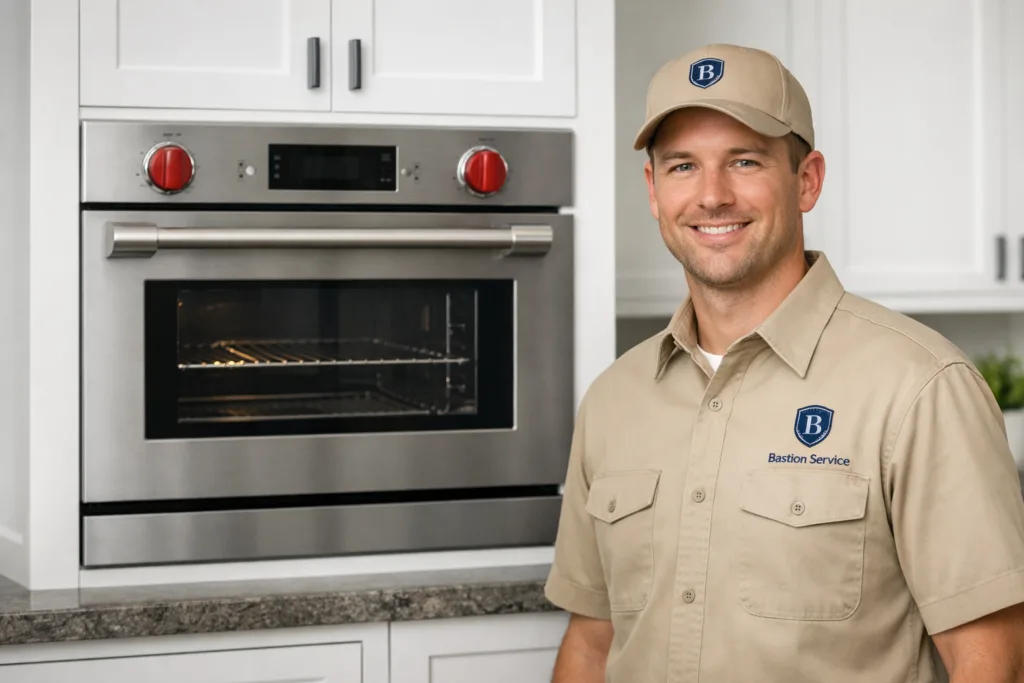
Temperature problems in a Wolf oven usually show up before the appliance stops working completely. You may notice longer preheat times, cookies browning too quickly on one side, casseroles needing extra time, or food that comes out overdone on top and undercooked in the center. Those patterns matter because they help narrow the cause and prevent guesswork.
What common Wolf oven symptoms often mean
Not heating at all
If the oven stays cold, will not begin a bake cycle, or seems to power on without producing heat, the problem may involve a failed heating element, igniter, temperature sensor, control board, relay, or power supply issue. On some models, the display may appear normal even though the heating circuit is not operating correctly.
Slow preheat
A Wolf oven that eventually reaches temperature but takes much longer than usual may have a weak bake element, a weakening igniter on gas models, a sensor reading problem, or a control issue that is not cycling heat correctly. In everyday cooking, this often shows up as recipes suddenly taking longer even when settings have not changed.
Uneven baking
When one rack bakes faster than another or the rear of the oven cooks differently from the front, the issue may involve convection airflow, sensor accuracy, door seal wear, element performance, or temperature regulation problems. Uneven baking is especially frustrating because the oven can seem mostly functional while still producing inconsistent results meal after meal.
Running too hot
If food burns faster than expected, the actual temperature may be higher than the selected setting. This can happen when the sensor is out of range, the control is misreading oven temperature, or the appliance is failing to cycle heat on and off properly. Overheating should not be ignored, especially if it is worsening over time.
Temperature swings during cooking
Some fluctuation is normal during heating cycles, but wide swings that affect results can point to a failing sensor, relay trouble, control faults, or airflow issues. Homeowners often describe this as an oven that seems impossible to trust, with one dish coming out fine and the next one using the same setting turning out poorly.
Error codes, beeping, or random shutdowns
Repeated fault codes, flashing displays, or shutdowns during use usually indicate an underlying electronic or communication problem rather than a one-time glitch. Possible causes include sensor failure, overheating protection events, latch or door switch faults, wiring issues, or board-related problems.
Symptoms that deserve quicker attention
Some oven problems are inconvenient. Others can lead to bigger damage or create safety concerns if the appliance keeps running in a faulty condition. It is smart to stop normal use and schedule service sooner if you notice any of the following:
- The oven trips the breaker during preheat or cooking
- The cavity overheats well beyond the set temperature
- The control panel flickers, resets, or goes blank intermittently
- The door will not close, latch, or unlock properly
- The oven shuts off mid-cycle again and again
- You smell gas from a gas oven beyond a brief ignition-related odor
If there is a persistent gas smell, stop using the appliance. If needed, leave the area and contact the gas utility or emergency services before arranging appliance repair.
Why Wolf oven issues are often misdiagnosed
Several different failures can create the same symptom. Slow preheating, for example, may be caused by a weak igniter, a sensor issue, a heating element problem, or an electronic control fault. Uneven baking can come from airflow problems, calibration drift, gasket wear, or heat regulation issues. That is why replacing parts based only on the symptom can waste time and money while leaving the real failure in place.
In Los Angeles homes, this matters even more when the oven is built into cabinetry or part of a larger premium kitchen setup. A targeted diagnosis helps determine whether the problem is isolated, whether other components have been stressed, and whether the oven should be used before repair is completed.
Problems that often appear after self-clean
Self-clean cycles expose internal components to very high heat, and that can reveal weak parts that were already close to failure. After self-cleaning, some homeowners notice a locked door, an oven that will not restart, a dead display, or new error codes. In many cases, the problem involves the latch system, thermal stress on controls, or wiring and connection issues affected by heat.
If the door will not unlock or the oven will not return to normal operation, forcing the latch or repeatedly cycling power without understanding the cause can make the situation worse.
How to tell whether the issue is getting worse
Oven faults often progress in stages. A small temperature inaccuracy may become repeated undercooking. A preheat delay may turn into no heat at all. An occasional error code may start appearing every time the appliance is used. Watching that progression can help you decide how urgent service is.
Signs the problem is worsening include:
- Preheat times getting longer from week to week
- More frequent cooking inconsistencies with familiar recipes
- Display or control issues appearing during longer bake cycles
- Shutdowns that begin as occasional and become regular
- Door or latch issues that happen after every use
Repair or replace?
Many Wolf oven issues are worth repairing, particularly when the problem is limited to a sensor, igniter, element, fan motor, latch component, or electronic control-related part. Replacement becomes a more serious discussion when there are multiple major failures, repeated electrical issues, severe heat damage, or repair costs would not restore stable long-term performance.
For most households, the better question is whether the oven can return to reliable daily cooking without ongoing uncertainty. That depends on the failed component, the appliance condition, and whether the fault appears isolated or part of a broader pattern.
What homeowners in Los Angeles should have clarified during service
A useful service visit should identify what failed, what symptom it caused, and whether continued use could worsen damage. It should also clarify whether the issue affects heating accuracy, startup reliability, control function, or safe operation. That information makes it easier to decide how urgent the repair is and whether moving forward makes sense for your kitchen.
For residential Wolf oven repair in Los Angeles, the most helpful outcome is not just replacing a part. It is understanding why the oven is behaving the way it is and what is needed to restore predictable cooking performance.