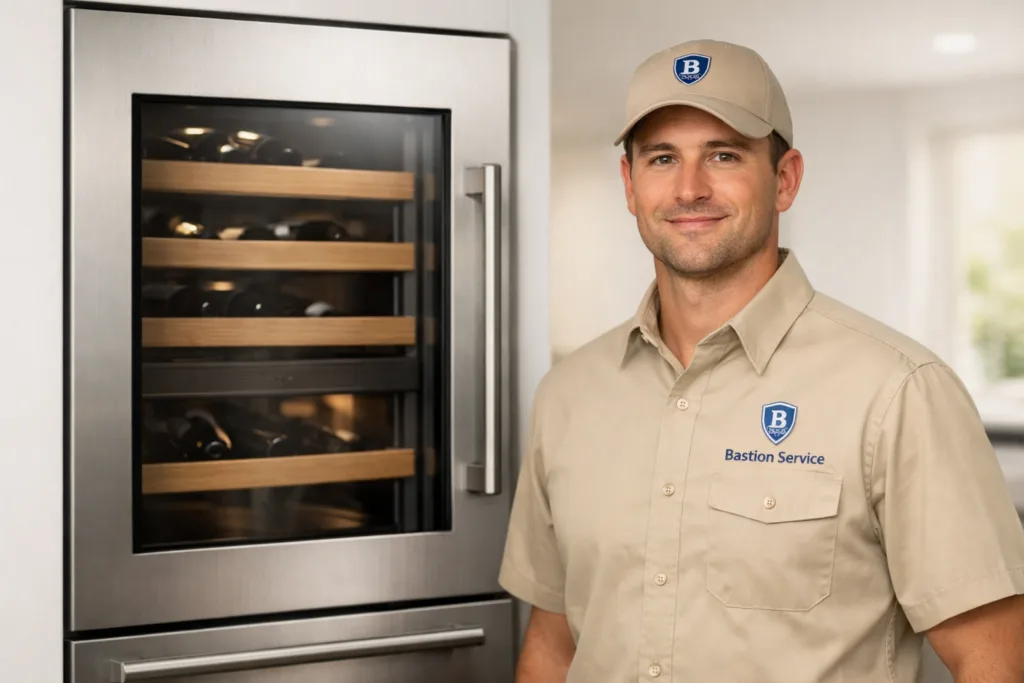
A Monogram wine cooler that runs warm, cycles constantly, or collects water can put a collection at risk quickly. Similar symptoms can come from very different failures, including airflow restrictions, sensor drift, fan problems, door seal gaps, or electronic control issues. The most useful approach is to match the repair path to the exact symptom pattern instead of assuming every cooling complaint means the same thing.
Common Monogram Wine Cooler Problems
Not Cooling Enough
If bottles are no longer staying near the set temperature, the cause may be a weak compressor start device, a failing evaporator or condenser fan, dirty heat-transfer surfaces, a thermistor reading incorrectly, or a control problem. A cabinet that is slightly off temperature points to a different level of fault than one that is fully room temperature. When cooling loss starts, continued operation can add strain to the system and reduce storage stability.
Too Cold or Freezing in Sections
Overcooling can be just as damaging as running warm. If labels are damp, bottles feel colder in one zone than another, or items near a vent begin to freeze, the issue is often related to sensing accuracy, airflow balance, or control regulation. The unit may appear to be working because it still runs, but it is no longer maintaining the steady environment wine storage depends on.
Water Leaks or Interior Moisture
Pooled water, fogging on glass, persistent condensation, or damp shelving usually points to a blocked drain path, a door that is not sealing evenly, or a cooling issue that is creating excess moisture. In a residential setting, that moisture can affect surrounding cabinetry and flooring if it keeps returning. Leak complaints are worth addressing early because they rarely improve on their own.
Unusual Noise or Constant Running
Buzzing, rattling, clicking, humming that becomes noticeably louder, or a cooler that rarely shuts off can all indicate a developing fault. Fan motors may wear, internal components can vibrate, and a cooling system that is losing efficiency may run longer to compensate. Some sound is normal, but a change in sound pattern usually matters more than the sound itself.
Display or Control Problems
If the display flickers, buttons stop responding, settings change unexpectedly, or the unit does not seem to follow the selected temperature, the problem may involve the user interface, sensor feedback, or the main control. These issues can create confusing symptoms because the cooler may still power on while failing to regulate temperature correctly.
How Symptom Patterns Help Narrow the Cause
Wine cooler failures are often easier to understand when looked at as patterns instead of isolated complaints. For example, a unit that runs all the time and still stays warm suggests a different repair direction than one that cools well at first and then drifts. A leak that appears only after frequent door openings may point toward moisture management, while a leak that shows up regardless of use may suggest drainage or sealing trouble.
- Warm cabinet with little airflow: often associated with fan or airflow problems.
- Temperature swings with a working display: may involve sensing or control regulation.
- Condensation around the door: commonly tied to gasket fit, alignment, or humidity entering the cabinet.
- Clicking followed by poor cooling: can indicate compressor start or electrical issues.
- Constant operation with only mild cooling: may reflect reduced system efficiency or heat-removal problems.
That kind of symptom-based review helps prevent unnecessary parts replacement and gives a more realistic idea of whether the repair is likely to be straightforward or more involved.
Why Diagnosis Matters Before Replacing Parts
Wine cooler problems are easy to misread. A homeowner may suspect a thermostat when the real issue is airflow, or assume the compressor has failed when the control is not sending the right signals. Monogram units can present similar outward symptoms from very different internal causes, so testing matters more than guessing. This is especially important when deciding whether the repair is practical for the unit’s age, condition, and performance history.
When Service Should Not Wait
Some issues can be monitored briefly, but others are better handled promptly. If the cabinet is warming quickly, if stored bottles are no longer holding temperature from day to day, or if water is repeatedly collecting inside or under the unit, delaying service can lead to additional damage. Longer run times can also increase wear on motors and cooling components.
In Rancho Palos Verdes homes, it is smart to schedule service when you notice:
- the wine cooler cannot hold its set temperature
- the unit runs almost nonstop
- new buzzing, clicking, or rattling develops
- condensation builds around the door or glass
- water appears inside the cabinet or on the floor
- controls, lights, or display behavior become inconsistent
Repair or Replace?
Whether repair makes sense depends on the failed component, the age of the cooler, the condition of the sealed system, and whether the problem appeared suddenly or after a longer decline in performance. If the cabinet, shelving, and core refrigeration system are otherwise in good shape, a targeted repair is often reasonable. If multiple major faults are present or the cooling system has significant issues in an older unit, replacement may become the better investment.
Homeowners often benefit from weighing three practical questions:
- Is the problem limited to one repairable component?
- Has performance been stable until this recent failure?
- Would the repair restore reliable storage conditions rather than only temporary operation?
What to Notice Before Your Appointment
A few observations can make troubleshooting faster and more accurate. Helpful details include whether the display is lit, whether the interior light responds normally, whether fans can be heard, whether the whole cabinet is off temperature or only part of it, and whether the problem began after a power interruption or developed gradually over time.
It also helps to note if moisture is appearing near the door, if the noise changes after the door closes, or if the cabinet seems to cool better at certain times of day. Those details can help separate airflow, control, drain, and refrigeration issues that might otherwise look the same at first glance.
What Homeowners in Rancho Palos Verdes Can Expect From a Thoughtful Repair Approach
The best service outcome usually starts with a proper diagnosis, followed by a repair recommendation that fits the actual condition of the appliance. For Monogram wine coolers, that means looking beyond the surface complaint and identifying whether the issue is mechanical, electrical, airflow-related, or tied to temperature sensing. A focused evaluation helps homeowners in Rancho Palos Verdes decide whether the repair is routine, urgent, or no longer the best long-term choice.