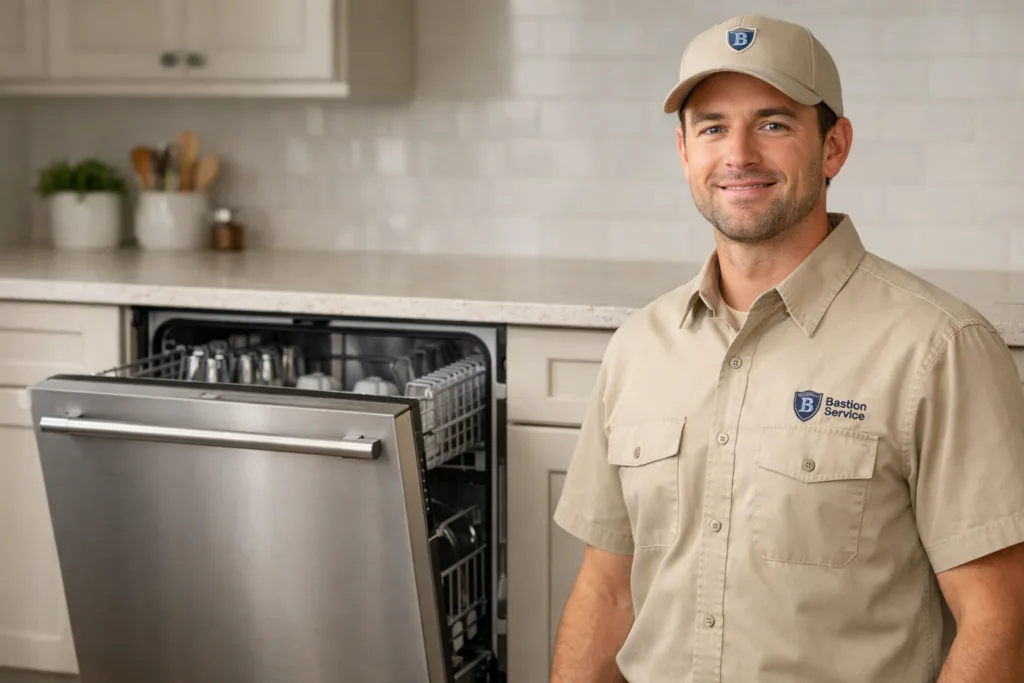
Dishwasher problems usually start with one visible symptom, but the underlying cause is not always obvious. Standing water can come from a blocked drain path, a weak drain pump, or a control issue that never sends the proper drain command. Cloudy dishes may point to circulation trouble, low water fill, spray arm blockage, or heater-related problems. A symptom-based inspection helps narrow the problem before parts are replaced unnecessarily.
Common Monogram dishwasher problems in Rancho Palos Verdes homes
Monogram dishwashers rely on several systems working together at the right time: water inlet, wash circulation, draining, heating, door locking, and electronic control. When one part slips out of range, the dishwasher may still appear to run while delivering poor results. In other cases, the machine may stop mid-cycle, refuse to start, or leak only under certain conditions.
Because these issues can overlap, the most useful repair visit is one that tests the full complaint pattern rather than focusing on a single part name too early. That matters most when the dishwasher behaves differently from one load to the next.
Symptom-based troubleshooting that often points to the real fault
Water left in the tub after the cycle
If a Monogram dishwasher finishes with water still inside, likely causes include a clogged filter area, a restricted drain hose, a blocked air gap, a failing drain pump, or an interruption in the drain sequence. Some homeowners notice the problem only occasionally at first, especially if the restriction is partial rather than complete.
- Water remains at the bottom after the cycle ends
- The unit hums but drains slowly or not at all
- Odor develops from standing water
- Drain behavior changes from one load to the next
It is best not to keep running full cycles in this condition. Repeated standing water can affect cleaning performance and add stress to the pump system.
Dishes come out dirty, gritty, or cloudy
Poor wash results are often blamed on detergent, but many cases trace back to weak circulation, blocked spray arms, water inlet problems, low rinse temperature, or a dispenser issue. If cleaning quality dropped suddenly rather than gradually, that usually suggests a mechanical or control-related fault rather than a loading habit.
Watch for these patterns:
- Upper rack items stay dirty while lower rack items improve
- Glasses develop film even after changing detergent
- Food debris remains on dishes after a full cycle
- The tub seems warm but not properly hot at the end
Leaking under the door or beneath the dishwasher
A leak can come from the door gasket, lower door seal, tub edge, inlet connection, drain line, pump housing, or an internal overflow condition. Some leaks appear only during wash circulation, while others show up after draining. That pattern helps identify where the water is escaping.
Even a small leak deserves prompt attention. Moisture can spread under flooring and cabinets before the problem looks serious from the front of the machine.
The dishwasher has power but will not start
When the display responds but the cycle will not begin, the issue may involve the latch assembly, door switch behavior, interface problems, or a control fault. If the unit appears completely dead, the inspection may shift toward incoming power, wiring, or the main control system.
Intermittent no-start complaints are especially important to diagnose carefully. A machine that works after repeated attempts may have an electrical or switch-related issue that becomes more consistent over time.
Noise during wash or drain cycles
New grinding, buzzing, rattling, or harsh pump noise often indicates debris in the pump area, circulation motor wear, drain pump trouble, or spray arm interference. Noise that grows louder over several cycles usually means the dishwasher should be checked before the problem becomes a full stoppage.
What low rinse temperature or heating trouble can affect
If a Monogram dishwasher is not reaching the proper rinse temperature, homeowners may notice wet dishes, cloudy glassware, weak drying results, or cycles that seem to take longer than expected. Heating-related issues can also affect how detergent dissolves and how well residue is removed from cookware and plates.
Possible causes can include heater problems, sensor faults, wiring issues, or control failures that interrupt the expected heating sequence. Because these problems often look like a simple cleaning complaint, they are easy to misread without testing.
When cycle failures point to more than one issue
Some dishwashers do not fail the same way every time. One day the load finishes with poor cleaning, the next day the machine stops mid-cycle, and later it may flash unusual behavior or require a reset. In these cases, the fault may involve controls, sensors, float operation, pump performance under load, or drainage conditions that only appear at a specific stage of the cycle.
That is why a one-symptom assumption can miss the real problem. A proper evaluation should look at when the cycle stops, whether water is filling and draining normally, and whether the dishwasher is heating and circulating as expected.
When to stop using the dishwasher and schedule service
It makes sense to pause normal use if the dishwasher is leaking, tripping a breaker, giving off a burning smell, leaving repeated standing water, or making severe new noises. Continuing to run loads can turn a repairable issue into damage involving flooring, cabinetry, or additional internal parts.
Scheduling service is also wise when:
- The same problem returns after resets
- Cleaning results have dropped across multiple loads
- The drain pump seems to run too long
- The door does not latch or seal consistently
- The dishwasher starts only occasionally
Repair versus replacement for a Monogram dishwasher
Repair is often reasonable when the dishwasher is otherwise in good condition and the issue is tied to a specific component such as a pump, valve, latch, seal, sensor, or control-related part. Replacement becomes a more serious consideration when the machine has multiple major failures, ongoing leak damage, repeated electronic problems, or broad wear across several systems at once.
For Rancho Palos Verdes homeowners, the best decision usually comes down to the condition of the unit, the scope of the failure, and whether the problem appears isolated or part of a larger decline. That keeps the choice grounded in the actual appliance rather than guesswork.
What a useful service visit should cover
A worthwhile appointment should start with the way the problem shows up in the home: not draining, not cleaning, leaking, not starting, low heat, pump noise, or interrupted cycles. From there, the inspection should determine whether the fault is mechanical, electrical, control-related, or tied to water flow and drainage.
That process is especially important with premium dishwashers, where one failed component can create symptoms that seem unrelated at first. A clear diagnosis and a practical repair plan based on the exact symptom pattern gives homeowners a better basis for deciding what to do next.
Why timely repair matters in a busy household
When a dishwasher becomes unreliable, the inconvenience spreads quickly through the kitchen routine. Hand-washing increases, cleanup takes longer, and small leak or drain issues can become larger household problems if ignored. In Rancho Palos Verdes, prompt attention to a Monogram dishwasher problem can help limit disruption and reduce the chance of secondary damage.
If the unit is showing a repeat symptom, the next step is usually to have that exact behavior tested so the repair decision reflects the real fault, the current condition of the dishwasher, and the risk of continued use.