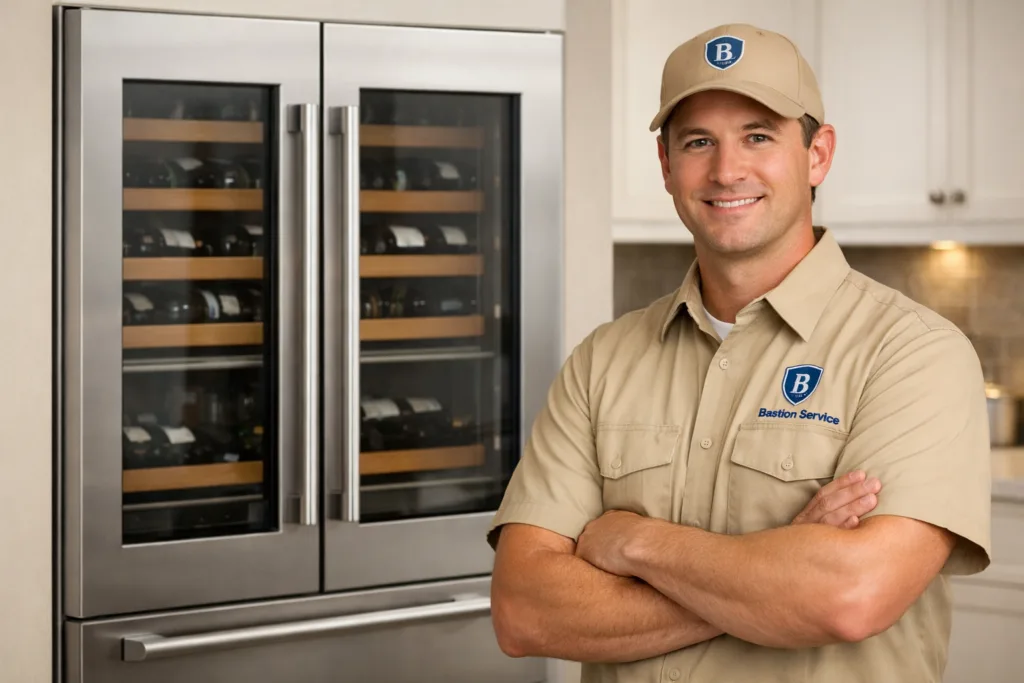
A wine cooler does not have to stop completely to signal a real problem. In many Rancho Palos Verdes homes, the first clue is more subtle: bottles no longer feel consistently chilled, the cabinet seems to run longer than usual, or moisture begins showing up where it did not before. With a Sub-Zero unit, those early changes are worth taking seriously because small performance shifts can point to anything from airflow trouble to a failing sensor or control component.
Common Sub-Zero wine cooler problems homeowners notice
Most issues show up as one of a few symptom patterns. The useful next step is matching the symptom to the most likely system involved rather than assuming every cooling problem means the same repair.
- Temperature swings: the cabinet cools, but not steadily
- Not cooling enough: bottles stay warmer than the set temperature suggests
- Running constantly: the unit seems to work without cycling off normally
- Fan or buzzing noise: new sounds appear during operation
- Condensation or water: moisture forms inside, on the door, or near the base
- Display or control issues: settings do not respond normally or seem inaccurate
Because these symptoms can overlap, the right repair depends on what is actually causing the behavior. A warm cabinet may stem from poor airflow, a weak fan, sensor drift, control failure, or a sealed cooling problem. Condensation may come from a door seal issue, unstable cooling, or air entering where it should not.
When the temperature will not stay where it should
If your Sub-Zero wine cooler is too warm, too cold, or fluctuates throughout the day, the problem is often more than a simple setting issue. Wine storage depends on consistency, so even modest swings matter when they keep repeating.
Possible causes of uneven or unstable cooling
Temperature instability can be tied to restricted air movement, evaporator or condenser fan problems, sensor faults, electronic control issues, or compressor-related trouble. In some cases, the cooler may still seem partly functional while failing to maintain the range you expect.
That partial cooling can be misleading. Homeowners sometimes wait because the unit is “still kind of working,” but a cooler that cannot hold steady conditions is already underperforming. If the cabinet runs long cycles and still does not reach or maintain the selected temperature, service is usually the more sensible move than continued trial and error.
What unusual noise can mean
Sub-Zero wine coolers are not silent, but a change in sound is often one of the clearest warnings that something is off. Clicking, buzzing, rattling, or stronger fan noise may point to different mechanical or electrical issues.
Noise that should not be ignored
A louder fan sound may indicate a fan motor problem, obstruction, or airflow imbalance. Repetitive clicking can suggest a starting or control issue. Buzzing may be normal in short moments, but a new or persistent buzzing pattern deserves attention, especially when it appears alongside poor cooling or long run times.
If the unit is making more noise and also running more often, those symptoms together usually suggest the cooler is working harder than it should. That extra strain can increase wear on components if the cause is left unresolved.
Condensation, leaks, and door seal problems
Moisture issues are common because they can begin gradually. You might notice fogging on glass, damp shelves, drops of water along the interior, or light pooling near the base. These symptoms often trace back to warm air entering the cabinet, a gasket that no longer seals tightly, drainage issues, or cooling that has become inconsistent.
Why a minor seal issue can lead to bigger performance problems
When the door does not close evenly or the gasket no longer seals well, the cooler can pull in warmer household air. That forces longer run cycles, increases condensation, and can make the internal temperature less stable. A misaligned door or worn sealing surface may start as a comfort issue and turn into a cooling complaint.
In Rancho Palos Verdes homes, these problems often show up slowly enough that they are easy to dismiss at first. If moisture keeps returning after basic cleaning and the door still does not feel right, the cause usually needs a closer inspection.
Control and sensor issues on a Sub-Zero wine cooler
Sometimes the cooling system itself is not the first problem. A wine cooler may display the wrong temperature, respond inconsistently to setting changes, or cool too much or too little because the control system is no longer reading conditions accurately.
Sensor and control faults can look like major cooling failures when they are not. They can also create confusing behavior, such as a unit that occasionally works normally before drifting off again. That is one reason symptom-based diagnosis matters: replacing parts based only on the visible complaint can miss the real fault.
When to stop using the cooler and schedule repair
Some issues can wait a short time for observation, but others should move quickly to service. If the cabinet is no longer holding temperature, if stored bottles feel noticeably warmer than expected, or if the unit runs nearly nonstop without reaching the set point, it is better not to keep pushing it.
You should also schedule service if you notice:
- repeated condensation that keeps coming back
- water collecting inside or under the unit
- new clicking, buzzing, or fan noise
- control panel behavior that seems inaccurate or erratic
- a door that does not shut firmly or sits unevenly
Continuing to use a struggling wine cooler can increase wear, especially when a fan is failing, airflow is restricted, or the sealed system is under strain. Even if the appliance is still cooling somewhat, unstable operation is rarely harmless.
Helpful checks before booking service
There are a few basic things homeowners can check without getting deep into do-it-yourself troubleshooting. Make sure the door closes fully, confirm that bottles or shelves are not blocking internal airflow, verify that the settings have not been changed unintentionally, and look for obvious debris in accessible ventilation areas.
If those basic steps do not correct the issue quickly, further guessing usually becomes less productive. Sub-Zero wine coolers can show the same symptom for several very different reasons, so the value comes from identifying the exact fault rather than swapping likely parts.
Repair or replace: how to think about the decision
Many wine cooler problems are repairable, and replacement is not automatically the best answer because performance changed. The more useful question is whether the problem is isolated, whether the cabinet and door system remain in good condition, and whether the appliance has been otherwise reliable.
Repair often makes sense when
- the issue is tied to one identifiable component or system
- the cooler is structurally in good shape
- there is no pattern of repeated major failures
- cooling performance was stable before the current problem
Replacement may be more practical when
- there are multiple major failures at once
- cooling has become chronically unreliable
- the unit has a history of recurring repairs
- repair cost approaches the value of keeping the appliance
The right answer depends on condition, symptom pattern, and what testing shows. A proper diagnosis gives homeowners a realistic basis for that decision instead of relying on worst-case assumptions.
What thorough service should accomplish
Good Sub-Zero Wine Cooler Repair in Rancho Palos Verdes should do more than get the cabinet cold again for the moment. It should identify why the symptom started, determine whether related components were affected, and show whether the recommended repair is likely to restore stable operation.
For a Sub-Zero wine cooler, that means looking at cooling performance, airflow, fan operation, controls, sensors, and door sealing as a complete system. When those pieces are evaluated together, homeowners get a clearer picture of whether repair is the right path and what to expect from the result.
For households in Rancho Palos Verdes, the goal is simple: protect the wine cooler, avoid unnecessary part replacement, and make a sound repair decision based on the actual problem in front of you.