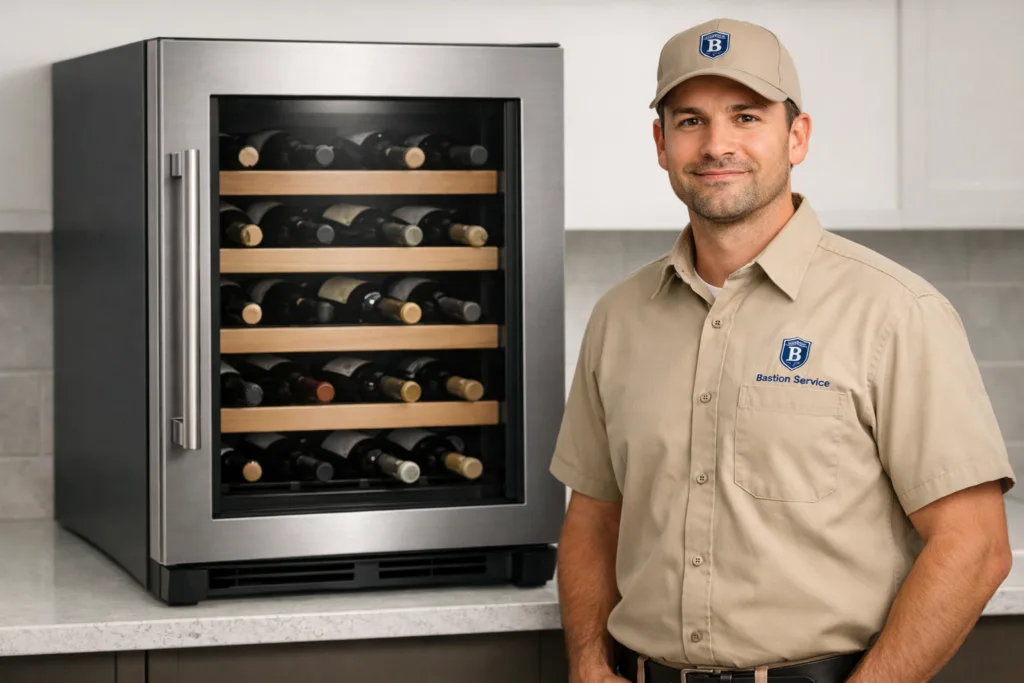
A KitchenAid wine cooler that starts warming up, sweating around the door, or making new noises can affect both short-term storage and longer-term bottle protection. Because these units are designed to hold a narrow temperature range, even a modest performance change can point to a real component problem rather than a simple setting issue.
In many Rancho Palos Verdes homes, the most useful first step is separating the symptom you notice from the part actually causing it. A cabinet that feels warm may involve a sensor, fan, control, gasket, drain issue, or sealed-system fault. The repair path is different for each one, which is why symptom-based testing matters.
What often goes wrong in a KitchenAid wine cooler
Wine coolers rely on a balance of temperature sensing, air circulation, door sealing, and refrigeration performance. If one part of that system falls out of range, the result may show up as unstable cooling, excess moisture, unusual sound, or nonstop operation.
Common problem areas include:
- Temperature sensors or thermostatic controls reading inaccurately
- Evaporator or condenser fan problems reducing air movement
- Dirty coils causing heat buildup and longer run times
- Worn door gaskets letting humid air into the cabinet
- Drain or condensation issues leading to interior water
- Electronic control faults affecting cycling and display behavior
- Compressor or start component problems limiting cooling capacity
Symptom-based repair guidance
Not cooling enough
If bottles are not staying at the selected temperature, the issue may be more than “low cooling.” A weak fan can prevent cold air from moving evenly, a bad thermistor can send incorrect readings to the control, and dirty condenser coils can make the system run harder while cooling less effectively. In some cases, the compressor is operating but not producing the performance it should.
When one section of the cabinet feels cooler than another, that often points to airflow or sensor placement issues. When the entire cooler is too warm, broader refrigeration or control problems become more likely.
Temperature swings
A wine cooler that alternates between too warm and too cold usually has trouble sensing or regulating conditions consistently. That can involve the control board, a failing sensor, poor airflow around shelves, or a door seal that allows warm air to enter between cycles.
Temperature swings are especially important to address early because the unit may still appear to be working while no longer keeping a stable storage environment.
Display does not match actual temperature
If the display looks normal but the bottles feel warmer, the cooler may be misreading internal conditions. This can happen with sensor drift, control errors, or airflow restrictions that create a difference between the measured area and the actual storage space. It can also happen when the unit cycles improperly and never fully reaches its target temperature.
Running constantly or cycling too often
Long run times often mean the system is struggling to reach or hold the set point. The cause may be as simple as restricted ventilation or dirty coils, but it can also point to a failing fan motor, weak door seal, or compressor-related issue. Frequent short cycling, clicking, or repeated restart attempts can suggest a problem with start components or electronic controls.
Ignoring constant operation can increase wear on major cooling parts, so this is one of the more important symptoms to check sooner rather than later.
Fan noise, humming, or clicking
Not every sound means a major failure, but a change in sound pattern matters. Rattling can come from loose panels or vibration, a scraping sound may indicate fan blade interference, and clicking can suggest trouble with relays or compressor startup. A louder hum than usual may mean the system is under strain from heat buildup or a failing mechanical part.
Condensation or water buildup
Moisture inside the cabinet or around the base usually points to one of three things: humid air entering through a poor seal, a blocked drain path, or a cooling pattern that is causing excess condensation. If the door gasket is no longer sealing evenly, the cooler may develop recurring moisture and temperature inconsistency at the same time.
Water issues should not be brushed off, especially when the appliance is installed near cabinetry or on finished flooring.
Door not closing or sealing correctly
If the door needs to be pushed firmly to shut, pops open slightly, or leaves moisture around the frame, the gasket, hinges, or cabinet alignment may need attention. Shelves or bottle placement can also interfere with closure. A weak seal forces the cooling system to run longer and can make other symptoms appear worse than they really are.
When service is worth scheduling
It makes sense to schedule service when the cooler cannot hold temperature, develops recurring condensation, leaks, starts making unusual noise, or appears to run without resting. Service is also worthwhile when the unit seems functional but storage conditions are no longer consistent.
Some warning signs deserve faster attention:
- The cabinet is clearly warmer than the setting
- The compressor tries to start but does not stay running
- The display behaves erratically or stops responding
- There is repeated water accumulation inside or underneath
- Frost, sweating, or door-seal issues keep returning
In those cases, repeated power cycling usually does not solve the problem and can sometimes add unnecessary stress to the system.
Repair or replace?
Many KitchenAid wine cooler issues are repairable, especially when the problem involves a fan motor, control component, thermistor, drain issue, hinge adjustment, or door gasket. If the cabinet is otherwise in good condition and the cooling system is fundamentally sound, repair is often a practical option.
Replacement becomes more likely when diagnosis points to major sealed-system failure, the appliance has a long history of repeat breakdowns, or the total repair path approaches the value of the unit. Age alone does not decide the answer; the more important question is whether the cooler is likely to return to stable, reliable operation after the needed work.
What a proper diagnosis should check
A useful wine cooler service visit should go beyond confirming that the unit is “not cooling.” The goal is to identify why performance changed and whether the fix is likely to hold. That usually means checking actual cabinet temperature, airflow, gasket condition, fan operation, control response, and signs of refrigeration-system stress.
For Rancho Palos Verdes homeowners, that approach helps avoid replacing parts based on guesswork. It also gives a better basis for deciding whether to proceed with repair, monitor the appliance, or plan for replacement.
How to reduce stress on the unit before service
While waiting for repair, a few basic steps may help prevent the problem from getting worse:
- Make sure the door is fully closing and not blocked by bottle placement
- Avoid frequent opening if the cabinet is already struggling to cool
- Check for visible debris or dust buildup around exterior vents
- Watch for water accumulation and protect nearby flooring if needed
- Do not keep resetting controls repeatedly if the unit is not responding normally
These steps do not replace service, but they can help preserve the appliance condition and make the symptom pattern easier to evaluate.
Focused help for KitchenAid wine cooler problems
KitchenAid wine cooler repair in Rancho Palos Verdes is most effective when it stays focused on the specific symptom pattern instead of assuming every cooling complaint has the same cause. Whether the issue is temperature swings, noise, condensation, inaccurate controls, or a cabinet that has stopped cooling properly, the right next step is confirming the fault and judging whether the unit is a strong repair candidate.
That kind of practical repair guidance helps homeowners protect the appliance, avoid unnecessary part replacement, and restore stable wine storage when the cooler is worth repairing.