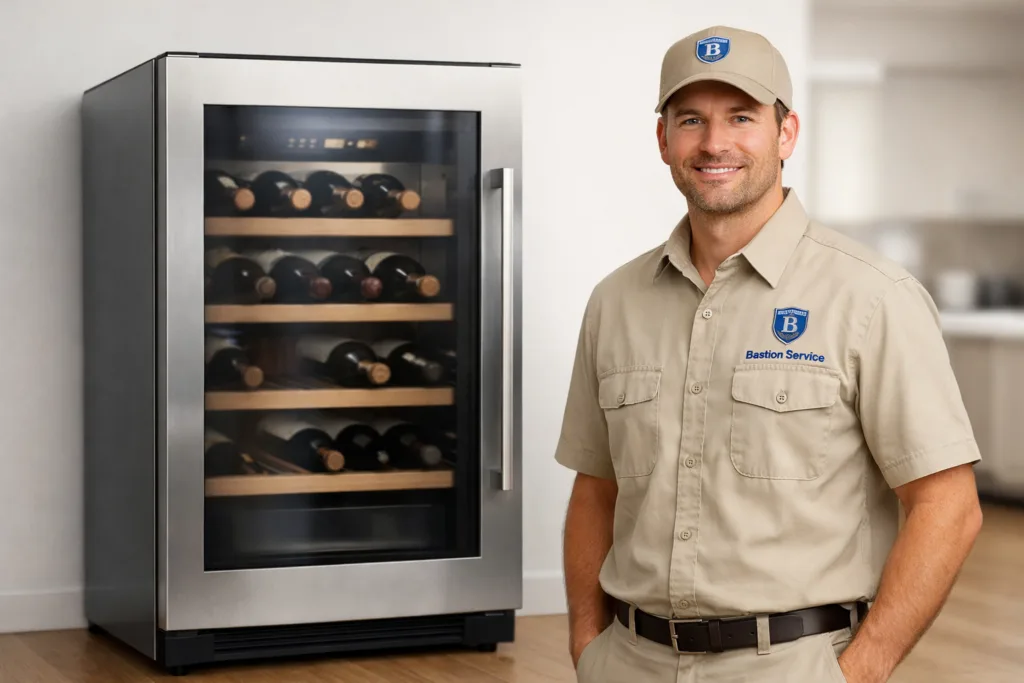
Wine coolers tend to show subtle warning signs before they fail completely. If your Miele unit is taking longer to pull down to temperature, running more often than usual, or developing moisture around the door, those changes usually point to a specific system that needs attention. Acting early can help prevent spoiled bottles, warped labels, and unnecessary strain on cooling components.
Common Miele Wine Cooler Problems Homeowners Notice
Most service calls begin with one of a few symptom patterns. While the symptoms can look simple from the outside, the cause may involve airflow, sensors, sealing, drainage, controls, or the refrigeration system itself. Paying attention to how the unit behaves day to day can make the problem easier to identify.
Cabinet feels warm or temperatures drift
If the interior no longer matches the set temperature, the issue may be caused by weak airflow, a faulty temperature sensor, door gasket leakage, or a cooling-system problem. In dual-zone models, one section may seem normal while the other drifts warm. That often suggests the problem is more specific than a full unit failure and should be checked before wine is exposed to repeated swings.
Unit runs constantly
A Miele wine cooler that rarely cycles off may be struggling to reach the target temperature. Dirty airflow paths, a sealing issue at the door, fan trouble, or a control problem can all lead to long run times. Constant operation is not just a noise issue; it can also increase wear and raise the chance of a more expensive breakdown.
Condensation, water, or damp shelves
Moisture inside the cabinet or around the door usually means warm air is getting in or water is not draining correctly. Sometimes the cause is a worn gasket or a door that is slightly out of alignment. In other cases, a blocked drain or unstable internal temperature allows excess moisture to collect. If left alone, that moisture can affect labels, shelving, and cabinet surfaces.
Buzzing, rattling, or fan noise
Some operating sound is normal, but repeated buzzing, uneven fan noise, clicking, or vibration that suddenly becomes noticeable should not be ignored. The source could be a fan motor, a loose internal component, cabinet leveling, or a compressor-related issue. Noise matters most when it is new, getting worse, or appears together with poor cooling.
Display or control panel problems
If the display flashes, goes blank, stops responding, or shows an error, the problem may involve the user interface, wiring, sensor feedback, or the main control system. A display issue by itself can be inconvenient, but when it appears alongside cooling changes, it becomes much more important to test the unit thoroughly.
What These Symptoms Often Mean
Wine coolers are designed to maintain a stable environment, so small changes can be more important than they would be in a standard refrigerator. A minor temperature drift may point to a fan that is slowing down, a sensor that is misreading, or a door seal that no longer closes tightly. A little condensation may indicate warm air infiltration that is forcing the unit to work harder every day.
This is why symptom-based diagnosis matters. The same “not cooling” complaint can come from several very different failures, and replacing parts by guesswork often wastes time and money. A good inspection should determine whether the problem is isolated and serviceable or whether it points to a larger refrigeration-system concern.
When to Stop Waiting and Schedule Service
It is a good idea to arrange service if you notice any of the following:
- The cabinet temperature no longer feels stable
- One zone cools differently from the other
- The unit runs nearly all the time
- Condensation keeps returning after wiping it away
- The door does not seem to seal firmly
- A new noise continues for more than a short period
- The controls stop responding normally
If the wine cooler has stopped cooling completely, is tripping power, or has a dead display along with other performance issues, it is best to stop relying on it for storage until the fault is assessed.
Repair vs. Replacement Considerations
For many homes in Rancho Palos Verdes, repair makes sense when the cabinet is in good shape and the issue is limited to a fan, sensor, seal, drain, or control-related part. Built-in wine coolers are often worth closer consideration because replacement can involve matching cabinet openings, trim, and overall appearance.
Replacement becomes a more serious consideration when the unit has major cooling-system failure, multiple faults at once, or repair costs that no longer make sense compared with the age and condition of the appliance. The right decision usually depends on what failed, how extensive the repair is likely to be, and whether the cooler is otherwise a strong candidate for continued use.
What a Service Visit Should Clarify
A useful appointment should do more than confirm that the cooler is not working as expected. It should narrow the problem to the system involved, explain whether the contents are at immediate storage risk, and identify whether continued operation could worsen the failure. That gives you a realistic next step instead of a vague recommendation.
For homeowners scheduling Miele Wine Cooler Repair in Rancho Palos Verdes, the main goal is understanding whether the issue involves airflow, controls, sealing, drainage, or the sealed cooling system. Once that is clear, it becomes much easier to decide whether repair is straightforward, time-sensitive, or no longer the best investment.
Protecting the Cooler Between First Symptoms and Service
While waiting for service, avoid repeatedly changing the temperature setting in an attempt to force the unit colder. That usually does not solve the underlying fault and can make symptom tracking harder. Check that the door is closing fully, avoid overloading shelves in a way that blocks airflow, and minimize unnecessary opening if the interior is already warming up.
If you see active leaking, heavy condensation, or signs that the unit is overheating or struggling to restart, discontinue normal use and have it evaluated. Early action often prevents a limited repair from turning into a more serious failure.