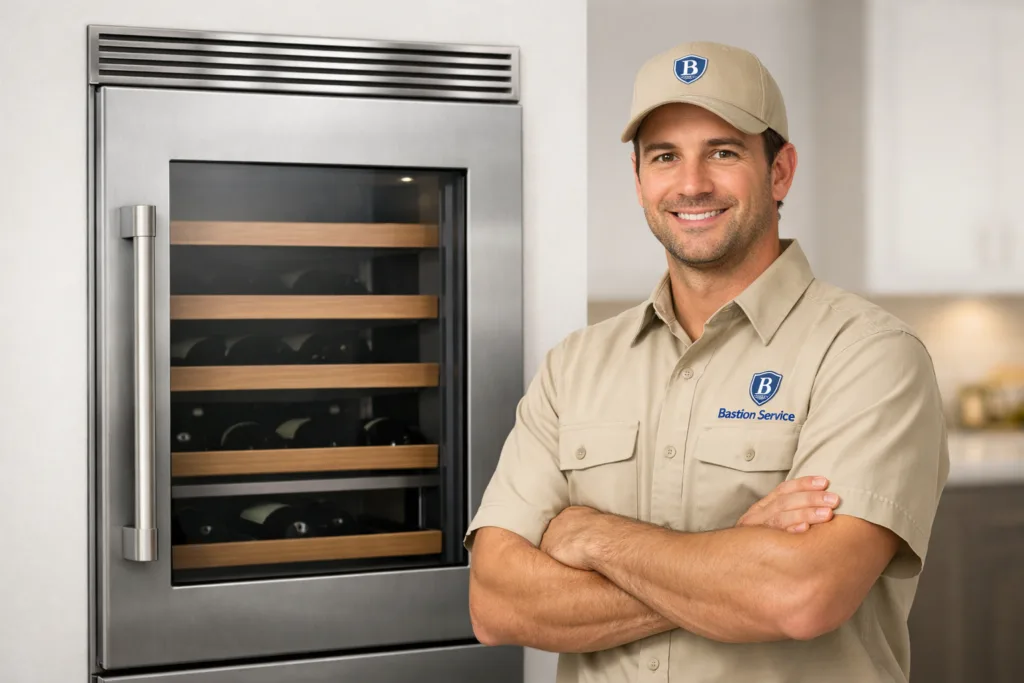
Temperature stability matters more in a wine cooler than many homeowners realize. Even when a Viking unit still appears to be running, subtle swings in cabinet temperature, uneven cooling from shelf to shelf, or excess moisture inside can signal a developing fault. In Rancho Palos Verdes homes, catching those symptoms early can help prevent spoiled storage conditions and reduce the chance of a more involved refrigeration repair.
Common Viking wine cooler problems homeowners notice first
Most wine cooler problems begin with a change in performance rather than a complete shutdown. A unit may look normal from the outside while the interior gradually becomes too warm, too cold, or too humid. Because several different components can create similar symptoms, the pattern matters.
Not cooling enough
If bottles are no longer staying at the selected temperature, the cause may involve restricted airflow, a weak fan motor, dirty condenser components, a temperature sensor issue, a control fault, or a compressor-related problem. In some cases, the display still shows the expected setting even though the actual cabinet temperature is off.
Cooling unevenly
When one section of the cabinet feels cooler than another, airflow is often part of the problem. Internal circulation needs to move consistently through the compartment. If fan performance drops, frost develops in the wrong area, or vents become obstructed, the temperature can vary noticeably between shelves.
Running too cold
A wine cooler that starts freezing certain areas or overchilling bottles should also be checked. This can point to sensor misreads, control board issues, or circulation problems that keep the unit from balancing temperature correctly. Overcooling is not harmless simply because the appliance still feels cold.
Moisture, condensation, and water under the unit
Water inside or underneath a Viking wine cooler usually means more than a simple nuisance. Moisture can develop from a blocked drain path, a door gasket that is no longer sealing tightly, frost buildup affecting airflow, or a cooling issue that causes heavy condensation.
Signs worth paying attention to include:
- Water pooling at the bottom of the cabinet
- Condensation on shelves or glass
- Damp surrounding cabinetry or flooring
- A musty smell developing inside the cooler
- Recurring moisture after wiping the unit dry
If left unresolved, water problems can affect nearby finishes and may indicate the cooling system is working harder than it should.
What new noises can mean
Wine coolers are not completely silent, but they should sound relatively consistent. A noticeable change in noise level is often one of the clearest early warnings that service is needed.
Buzzing or humming that lasts longer than usual
This can happen when the compressor is under strain or when a start component is not operating correctly. If the sound becomes more frequent while cooling performance declines, both issues may be related.
Clicking
Clicking can be normal during cycling, but repeated clicking without proper startup may point to an electrical or control problem. If the unit tries to start, clicks, and stops, it should be evaluated before continued attempts cause further stress.
Rattling or vibrating
Some rattling comes from a loose panel or a unit that is no longer sitting evenly, but it can also come from fan blade interference or a component that has shifted out of position.
Fan noise
A scraping, whining, or unusually loud fan sound can suggest a worn motor or airflow obstruction. Because fan performance directly affects cooling consistency, this is a symptom that should not be ignored.
Why early diagnosis matters
Refrigeration appliances often continue operating after performance has already started to decline. That can make a problem seem minor when it is actually causing additional wear. A wine cooler that runs nearly nonstop, short cycles, or struggles during warmer parts of the day may be compensating for a fault that has not fully surfaced yet.
Early service is especially helpful when you notice:
- Cabinet temperature drifting from the setting
- Longer run times than usual
- Humidity building up inside
- Repeated condensation after cleaning
- Noise changes paired with weaker cooling
Addressing the issue before complete failure may help prevent secondary damage to fans, controls, or compressor-related components.
When repair usually makes sense
Many Viking wine cooler issues are worth repairing when the cabinet, insulation, and core refrigeration system are otherwise in good condition. Problems involving door sealing, drainage, circulation fans, sensors, controls, or certain electrical components are often reasonable repair candidates when identified in time.
Service is usually a smart next step when:
- The cooler is warm or fluctuating but still powers on
- The display works but the temperature does not match the setting
- Condensation keeps returning
- The unit has new buzzing, clicking, or fan noise
- The door does not close or seal as firmly as it used to
- Water is collecting inside the cabinet or underneath the unit
When to limit use until it is checked
Some symptoms suggest the appliance should not be allowed to keep running normally until the cause is known. Continued operation in these situations can increase wear or create water damage around the installation area.
- The cabinet no longer maintains a stable storage temperature
- The unit repeatedly attempts to start and stops
- Heavy frost is blocking airflow
- Leakage is reaching surrounding flooring or built-ins
- The cooler is running constantly without recovering temperature
Repair versus replacement considerations
Homeowners in Rancho Palos Verdes often want to know whether repair is still the better investment. The answer depends on the failed part, the age and condition of the appliance, prior repair history, and whether the issue is isolated or part of a broader decline.
Repair is generally more appealing when the problem is limited to one system and the rest of the unit remains structurally sound. Replacement becomes a stronger consideration when there are major sealed-system concerns, repeated cooling failures, significant corrosion, or multiple aging components failing close together.
A helpful service visit should identify not just what is malfunctioning, but whether the repair path is sensible for the condition of that specific wine cooler.
What a service visit should evaluate
For Viking wine cooler repair in Rancho Palos Verdes, symptom-based testing is the most useful approach. A thorough visit should focus on how the unit is actually performing, not just whether it powers on.
That typically includes checking:
- Actual cabinet temperature versus the displayed setting
- Airflow and evaporator fan operation
- Condenser condition and heat exchange performance
- Door gasket seal and signs of air leakage
- Drainage and sources of interior condensation
- Control response and sensor behavior
- Compressor operation and startup behavior
That kind of inspection gives homeowners a practical repair plan instead of guesswork, especially when the symptoms involve a mix of cooling, moisture, and noise changes.
Signs your Viking wine cooler should be checked soon
If the unit is no longer preserving a steady storage environment, the problem is unlikely to correct itself. Scheduling service sooner is usually the better move when you notice warm bottles, shelf-to-shelf inconsistency, moisture buildup, louder operation, or cycling that seems abnormal for the way the appliance used to run.
For many Rancho Palos Verdes households, the goal is simple: restore reliable wine storage without waiting for a small refrigeration issue to become a complete breakdown.