
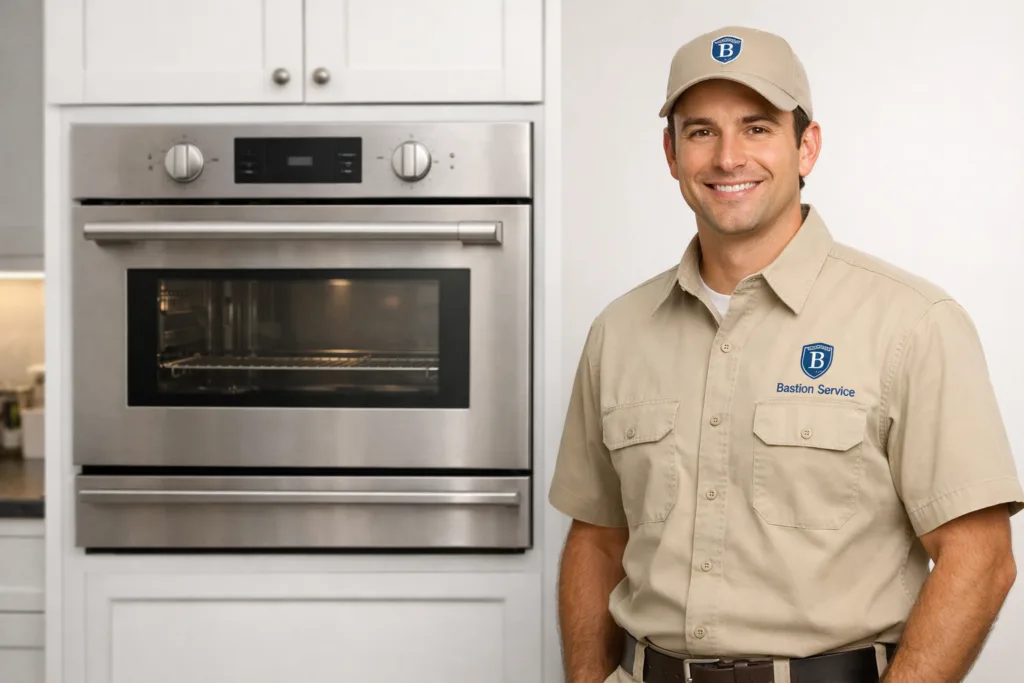




Monogram appliance problems often share symptoms, but the failure behind them can be very different
A refrigerator that feels warm, an oven that bakes unevenly, or a dishwasher that leaves water in the tub can all seem straightforward at first. In practice, the visible symptom is only the starting point. The same complaint may come from a control issue, a worn mechanical part, an airflow problem, a drain restriction, a temperature sensor fault, or normal age-related wear. Sorting that out early helps homeowners avoid unnecessary parts changes and repeated breakdowns.
In Rancho Palos Verdes homes, appliance trouble usually becomes urgent quickly. Food storage, meal preparation, cleanup, and specialty cooling can all be disrupted by a single failure. The most useful next step is to look at how the appliance is behaving now, whether the issue is getting worse, and whether continued use could create a safety or water-damage risk.
How symptom-based diagnosis helps with Monogram appliances
Two appliances can show the same general problem while needing completely different repairs. “Not starting” might be caused by a door switch, latch, user interface, control board, or power supply issue. “Not cooling” may point to airflow trouble in one case and a more serious cooling-system concern in another. “Not heating” on a cooking appliance can involve an element, igniter, relay, sensor, or wiring fault.
That is why symptom patterns matter. Is the problem constant or intermittent? Did it appear suddenly after working normally, or did performance decline over time? Are there unusual noises, repeated clicking, long run times, error codes, or visible leaks? Those details often narrow the repair path much faster than the headline symptom alone.
Refrigerator and freezer issues homeowners commonly notice
Monogram refrigerators and freezers often show problems through inconsistent temperatures, frost buildup, noisy operation, water leaks, or an ice maker that stops working normally. A fresh-food section that warms up while the freezer still seems cold can indicate an airflow or defrost issue rather than a total loss of cooling. Heavy frost may block circulation and lead to uneven temperatures throughout the cabinet.
Other common warning signs include a compressor that seems to run all the time, clicking or buzzing sounds that were not there before, or water appearing under drawers or on the floor. These symptoms can come from blocked drains, failing fans, damaged seals, sensor issues, or strain in the cooling system.
Food safety is the priority. If temperatures are no longer stable, it is best not to assume the unit will recover on its own. Ongoing operation while the refrigerator is struggling can increase wear and turn a smaller repair into a larger one.
When refrigerator behavior deserves faster attention
- The interior feels warm even though the display is set correctly
- Frost keeps returning after being cleared
- The appliance runs constantly with little cooling improvement
- Water collects inside the compartment or on the floor
- Ice production drops suddenly or stops along with cooling changes
Dishwasher problems that usually point to more than one possible cause
Monogram dishwashers may stop mid-cycle, leave residue on dishes, fail to drain fully, leak, or become much louder than normal. Standing water at the bottom of the tub can be caused by a drain obstruction, pump issue, or a problem in how the machine advances through the cycle. Poor cleaning may come from spray arm blockage, wash system trouble, low water fill, filtration buildup, or detergent-related residue interacting with a mechanical fault.
Leaks deserve prompt attention because even a small amount of repeated water exposure can affect surrounding cabinetry and flooring. Some leaks begin at the door gasket, while others come from internal components or connections underneath the unit. If the dishwasher shuts off and leaves water inside regularly, it is usually a sign that the issue is progressing rather than resolving.
Dishwasher symptoms to keep track of
- Whether water remains after every cycle or only sometimes
- If the leak forms at the door, under the unit, or near one side
- Whether the machine fills, washes, and drains in the usual order
- If dishes are dirty throughout the rack or only in certain areas
- Any humming, grinding, or repeated start-stop behavior
Cooktop and range problems can involve ignition, heat control, or electrical faults
Monogram cooktops and ranges often show trouble through burners that will not ignite, continuous clicking, uneven flame, weak heating, controls that do not respond, or surface elements that run too hot or not hot enough. Gas models may click repeatedly because of moisture, switch issues, misalignment, or ignition component wear. Electric cooking zones may heat inconsistently because of element failure, sensor trouble, control problems, or wiring faults.
Intermittent burner performance usually means the problem is moving in the wrong direction. A burner that works only sometimes, a control that responds unpredictably, or a heating element that overshoots temperature can make everyday cooking unreliable and, in some cases, unsafe.
If there is visible sparking, erratic power behavior, or a persistent gas odor, stop using the affected appliance until it is evaluated. Those are not symptoms to monitor casually.
Oven and wall oven performance issues usually show up in cooking results first
Monogram ovens and wall ovens often reveal problems through slow preheating, inaccurate temperatures, uneven baking, broil failure, door issues, or display problems. Homeowners may first notice that familiar recipes suddenly cook too fast, too slowly, or unevenly from one side to the other. That can point to a temperature sensor issue, calibration drift, a weak heating component, airflow disruption, or a control fault.
An oven that shuts off during use or trips power should be taken more seriously than simple temperature inconsistency. When electrical behavior changes, the cause may involve components that should not be ignored. Likewise, if the door does not close properly, heat retention and cooking performance can both suffer.
Not every disappointing cooking result means the appliance is at the end of its life. Many oven complaints come from isolated failures that are repairable, especially when the rest of the unit is in solid condition.
Signs the oven problem is likely getting worse
- Preheat times keep getting longer
- The display resets or goes blank during cooking
- Food browns heavily in one area and stays pale in another
- The oven reaches temperature inconsistently from day to day
- The appliance shuts off before the cycle is complete
Wine cooler problems tend to develop gradually
Monogram wine coolers often fail in subtle ways before there is a complete loss of temperature control. Owners may notice increased noise, excess condensation, warmer bottles, uneven cooling from shelf to shelf, or a cabinet that cycles more often than usual. These symptoms can relate to sensor problems, airflow restrictions, seal wear, control issues, or cooling-component trouble.
Because the change is often gradual, it is easy to dismiss early signs as temporary. But if the cooler no longer holds the set temperature reliably, repeated resetting is unlikely to solve the underlying problem. Temperature-sensitive storage depends on stable operation, not occasional recovery.
When it makes sense to stop using the appliance
Some appliance issues are inconvenient but contained. Others can lead to water damage, food spoilage, or unsafe operation if the unit stays in service. It is generally best to stop using the appliance and arrange inspection when you notice the following:
- Cooling appliances are no longer keeping food at safe temperatures
- Water is leaking onto the floor or into surrounding cabinetry
- Burners do not ignite correctly or heat unpredictably
- An oven overheats, underheats badly, or shuts off mid-use
- The appliance trips power, flashes repeated errors, or will not complete cycles
- New grinding, buzzing, rattling, or clicking sounds continue to return
Even when the appliance still functions partly, struggling operation often places extra strain on supporting parts such as pumps, fans, motors, seals, and electronic controls.
Repair or replacement depends on the condition of the whole appliance
For many Rancho Palos Verdes homeowners, the decision is not based on one symptom alone. Repair is often the better choice when the problem is isolated, the appliance has otherwise performed well, and the rest of the system remains in good condition. Replacement becomes more likely when failures are repeating, several systems are declining at once, or the appliance shows a broader pattern of wear.
With premium built-in Monogram products, the value of repair can be higher than it would be with standard freestanding equipment. Fit, finish, and kitchen integration matter, especially when replacing one unit would affect surrounding cabinetry or the overall look of the space. That makes an accurate diagnosis especially important before assuming replacement is the only practical option.
What to note before scheduling service
A few observations can make troubleshooting more efficient. It helps to note when the issue first appeared, whether it is constant or intermittent, whether there was a recent power interruption, and whether any error codes were displayed. For refrigerators and freezers, note where frost or leaking appears. For dishwashers, note whether the water remains after the cycle or the unit stops before draining. For cooktops and ranges, note which burner is affected and whether the problem happens every time. For ovens, note whether the issue is preheating, temperature accuracy, shutdowns, or display behavior.
Those details help connect the symptom to the most likely failure path. For households looking into Monogram appliance repair in Rancho Palos Verdes, that usually leads to better decisions about urgency, repair value, and whether the appliance should stay in use while the issue is being addressed.


