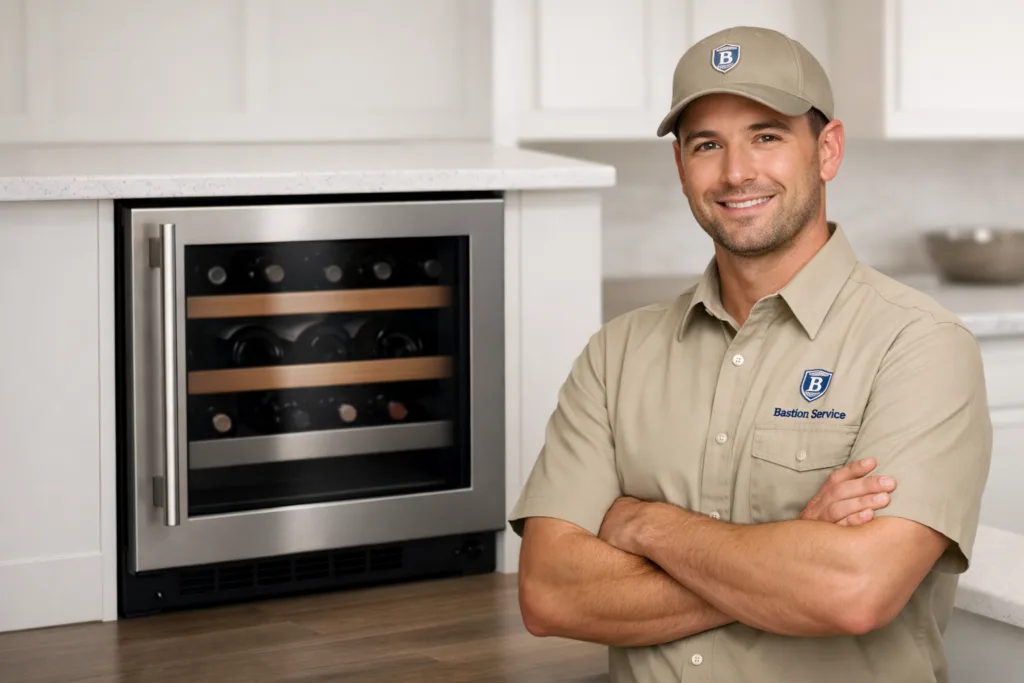
Small changes in wine cooler performance can affect both serving temperature and long-term storage conditions. If a U-Line unit starts drifting warm, develops moisture, or sounds different than usual, the most useful next step is to match the symptom to the likely failure path instead of assuming the first visible issue is the cause.
How U-Line wine cooler problems usually show up
Most service calls begin with one of a few patterns: the cabinet is too warm, temperatures vary from shelf to shelf, condensation keeps returning, or the cooler runs louder or longer than normal. In many cases, more than one symptom appears at the same time. That overlap matters because a sensor issue, airflow problem, door seal leak, or cooling-system fault can all create similar complaints.
Running warm or not cooling enough
If the interior temperature stays above the setting, the cause may be as simple as restricted condenser airflow or as involved as a compressor or sealed-system problem. Other possibilities include a failed temperature sensor, a control issue, or a door gasket that is allowing room air into the cabinet. A unit that runs constantly without reaching temperature should be checked promptly, since extended run time adds wear to the cooling components.
Uneven cooling inside the cabinet
When one section feels colder than another, or bottles near the back cool differently than bottles on other shelves, airflow is often part of the problem. A circulation fan that is slowing down, obstructed internal airflow, or a control that is not responding correctly can all lead to hot and cold spots. Uneven temperatures do not always mean the appliance has completely failed, but they do mean storage conditions are no longer consistent.
Too cold or freezing in a wine cooler
A wine cooler that starts overcooling may have a thermostat, sensor, or electronic control fault. In some cases, the unit keeps cooling because it is not receiving the correct temperature reading. If contents are getting colder than expected, it is worth having the controls and sensing system evaluated before the problem affects the appliance more broadly.
Condensation, water, or recurring moisture
Water inside the cabinet or around the base can come from several directions. A blocked drain path, frequent warm-air intrusion from a weak door seal, or persistent temperature swings may all contribute. Condensation on glass can also point to sealing or cooling performance issues. What looks minor at first can become an ongoing nuisance if moisture continues to collect around cabinetry or flooring.
Clicking, buzzing, or new fan noise
U-Line wine coolers are not silent, but a change in sound usually means something has changed mechanically or electrically. Repeated clicking may suggest a start problem. Buzzing can point to vibration, fan obstruction, or compressor-related stress. A scraping or rattling noise may come from a fan blade, mounting issue, or panel contact. If the new noise appears together with weak cooling, the unit should not be ignored.
Common issues homeowners notice in Rancho Palos Verdes
In Rancho Palos Verdes homes, the most common complaints with a U-Line wine cooler tend to include:
- Temperature will not stay at the selected setting
- Interior light and display work, but cooling is weak
- Cabinet runs for long periods or seems to cycle too often
- Moisture forms on the glass, shelves, or door frame
- Controls respond inconsistently or display readings do not match actual cooling
- Door does not close or seal as firmly as it should
- Fan or compressor noise becomes more noticeable over time
These symptoms are often connected. For example, a poor door seal can lead to condensation, longer run times, and unstable temperature all at once.
What can cause temperature swings in a U-Line wine cooler
Temperature instability is one of the most common reasons people seek service. In a residential setting, swings may be caused by dirty condenser components, weak internal airflow, intermittent sensor readings, control board trouble, or warm-air leaks around the door. Less commonly, the unit may be developing a sealed-system problem that reduces its ability to hold temperature steadily.
Because several different failures can produce the same warm-cool-warm pattern, replacing a single part based on guesswork often does not solve the issue. Symptom-based troubleshooting is more helpful when the cooler sometimes recovers, then falls out of range again.
When the door seal may be part of the problem
Door gasket issues are easy to underestimate. If the gasket is torn, compressed, loose, or no longer sealing evenly, the cooler can pull in humid room air. That may lead to condensation, longer compressor run times, and difficulty maintaining a stable interior temperature. In some cases, homeowners first notice the effect as fogging on glass or a door that does not feel snug when closed.
A sealing problem is often more repairable than a cooling-system failure, which is why it is worth separating gasket-related symptoms from deeper refrigeration issues before making a replace-or-repair decision.
Signs the controls or sensors may be failing
Electronic control and temperature sensing problems often create confusing behavior. The display may show one number while the actual interior temperature feels different. The unit may stop cooling too early, run too long, or behave unpredictably from day to day. If settings change but cabinet performance does not, the control system may not be interpreting or responding correctly.
These faults can sometimes look like compressor trouble at first, especially when the wine cooler is only cooling part of the time. The distinction matters because control-related repairs and sealed-system repairs are very different in scope.
When to schedule service
It makes sense to schedule service when the cooler cannot hold temperature, moisture keeps coming back, controls stop acting normally, or sound levels change noticeably. Intermittent issues also deserve attention, especially when the unit works for a while and then slips out of range again. That pattern often means a component is weakening rather than failing all at once.
If the cabinet is warm, the compressor is repeatedly clicking, or the unit seems to run nonstop, continued operation may increase wear and make the problem worse. The same is true when a torn gasket or airflow problem is forcing the system to work harder than it should.
Repair or replacement: how to evaluate the decision
Not every wine cooler problem points to replacement. Many repairs are easier to justify when the failure involves a fan, control, sensor, gasket, drain issue, or another accessible part. If the cabinet is otherwise in good condition and the problem is isolated, repair may make sense.
Replacement becomes more likely when the appliance has multiple issues at once, when major cooling-system work is required, or when recurring problems suggest broader wear. Age alone does not decide the answer; the better question is whether the failed component and the overall condition of the unit support a sensible repair path.
What a service visit should help you determine
A useful appointment should do more than confirm that the cooler is warm or noisy. It should identify whether the problem is tied to airflow, controls, sensing, sealing, drainage, or the refrigeration system itself. That gives the homeowner a practical repair plan and a clearer idea of whether the appliance is worth fixing.
For homeowners in Rancho Palos Verdes, the goal is usually straightforward: understand what failed, whether continued use risks more damage, and what next step makes sense for the unit in its current condition.