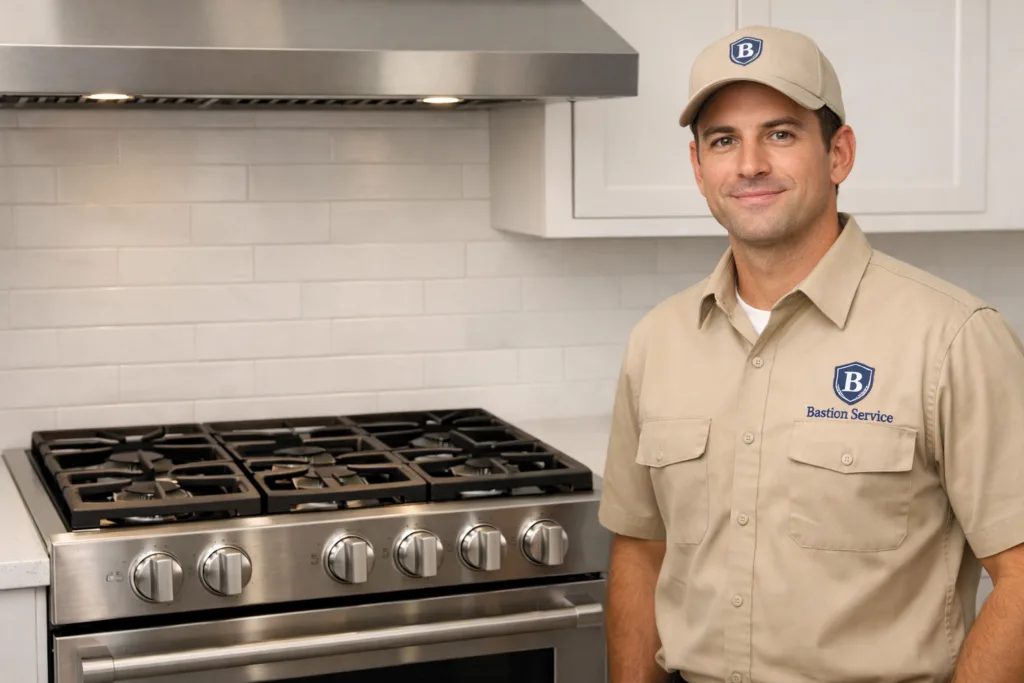
Cooktop problems rarely stay small for long. A burner that only misfires once in a while can turn into a daily nuisance, and uneven heat can affect everything from quick breakfasts to longer stovetop cooking. With Monogram units, the most useful approach is to match the symptom pattern to the likely failed component rather than guessing from one visible issue.
Common Monogram cooktop problems homeowners notice first
Most service calls start with one or two symptoms that seem straightforward, but cooktops often have overlapping causes. What looks like a bad burner may actually involve the ignition system, control parts, wiring, or a fuel or power issue depending on the model.
Burners that click but do not light
On gas Monogram cooktops, repeated clicking without ignition is one of the most common complaints. Sometimes the cause is simple, such as moisture after cleaning or a burner cap that is slightly out of position. In other cases, the problem points to a worn igniter, a failing spark switch, or a spark module issue affecting one burner or several at once.
If only one burner is affected, the fault is often localized. If multiple burners begin clicking oddly or lighting inconsistently, the problem may involve shared ignition components rather than the burner itself.
Burners that light but heat poorly
A burner can ignite normally and still perform badly. Weak flame, uneven flame spread, or slow heating may mean burner ports are blocked, gas flow is restricted, or the burner assembly is no longer distributing heat correctly. Homeowners usually notice this as longer cooking times, trouble simmering, or pans heating more on one side than the other.
Heat levels that do not change correctly
If turning the knob does not produce a predictable change in flame or temperature, the cooktop becomes hard to use safely and accurately. This can happen when a valve is not responding properly, when a switch is wearing out, or when the control interface is no longer regulating heat as it should.
This symptom is especially frustrating during low-heat cooking, where a stable simmer matters. It can also make high-heat cooking less controlled than expected.
Electric elements that stay cold or overheat
On electric Monogram cooktop models, elements may fail to heat, cycle on and off incorrectly, or run hotter than the setting suggests. That can point to a failed element, a bad infinite switch, temperature regulation problems, or damaged wiring. Because several different faults can create similar behavior, symptom-based testing matters more than part swapping.
Cracked glass or surface damage
If the cooktop has a glass surface, visible cracks should not be ignored. Surface damage can affect safe operation and may expose the unit to further stress from heat and normal use. Even when the cooktop still appears to function, cracked glass often changes the repair discussion because the condition of the surface becomes part of the decision.
Signs the problem should not be put off
Some issues are inconvenient. Others are a reason to stop using the cooktop until it is inspected. If you notice visible sparking away from the burner area, smell gas when ignition fails, see signs of scorching around controls, or find that the unit trips electrical protection during use, it is best not to keep testing it.
Less urgent symptoms can still worsen with time. Repeated clicking, delayed ignition, erratic heat output, and controls that feel loose or inconsistent may put extra wear on related parts. Early service can help limit the scope of the repair instead of allowing a single failure to affect connected components.
What a proper cooktop diagnosis usually looks for
Because the same symptom can have several causes, diagnosis typically focuses on isolating whether the failure is tied to one burner, one control, or a shared system. On a gas model, that often means checking ignition behavior, burner alignment, switch response, and flame quality. On an electric model, it usually involves confirming element function, switch operation, and wiring condition.
The goal is not just to find a bad part. It is also to verify whether the rest of the cooktop is operating normally and whether the repair path is reasonable for the appliance’s overall condition.
Repair or replace: what usually makes the difference
Repair is often worthwhile when the issue is limited to a burner assembly, ignition part, switch, valve-related component, or accessible control problem and the rest of the Monogram cooktop is in good shape. Many homeowners in Pico-Robertson choose repair when the unit still fits the kitchen well and replacement would mean more disruption than fixing the actual fault.
Replacement becomes more likely when there is extensive surface damage, multiple major failures at once, or repair costs that no longer make sense compared with the condition and age of the cooktop. That decision is usually easier once the exact failed components are identified and the full scope is clear.
Simple checks before scheduling service
There are a few basic things homeowners can check before moving forward:
- Make sure burner caps and grates are seated properly after cleaning.
- Look for obvious food debris blocking burner ports.
- Note whether the problem affects one burner or all burners.
- Pay attention to whether the symptom is constant or intermittent.
- For electric models, notice whether the element stays cold, overheats, or cycles unpredictably.
If those checks do not change the behavior, or if the cooktop shows signs of unsafe operation, the next step is service rather than repeated trial and error.
When to schedule Monogram cooktop service in Pico-Robertson
It is time to schedule service when a burner stops heating, ignition becomes unreliable, clicking continues after basic cleaning and repositioning, or temperature control no longer feels accurate. The same applies when the cooktop shows multiple symptoms together, such as poor ignition combined with uneven heat or a nonresponsive control.
For households in Pico-Robertson, the most helpful outcome is straightforward: identify the exact fault, understand whether repair is worthwhile, and get the cooktop back to consistent everyday use without unnecessary parts replacement.