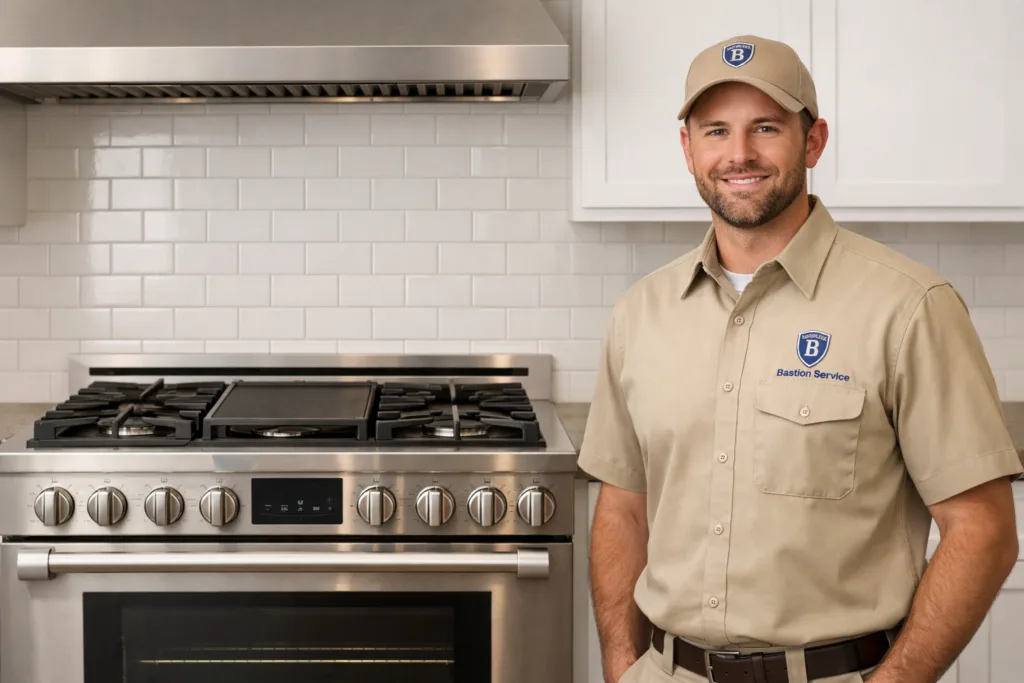
Surface burner and oven problems do not always point to the same failed part, even when the symptoms look similar. A Monogram range may struggle with ignition because of burner cap alignment, debris in the burner head, a worn spark switch, or a failing igniter. Oven heating issues can come from a weak igniter, a bad sensor, an element problem, or control failure. Sorting those possibilities correctly is what keeps a repair focused and cost-conscious.
Common Monogram range symptoms and what they can mean
Ranges combine gas, electric, and electronic systems in one appliance, so performance issues often show up in patterns. Paying attention to when the problem happens, whether it affects one function or several, and whether it is getting worse can help narrow the cause faster.
Burners that click but do not light
Repeated clicking usually means the ignition system is trying to spark but the flame is not catching reliably. Sometimes the cause is minor, such as a wet burner area after cleaning or a cap that is sitting slightly out of position. In other cases, the issue is tied to the spark module, ignition switch, burner head blockage, or gas flow reaching that burner.
If one burner is affected while the others work normally, the fault is often more localized. If multiple burners start acting erratically, the problem may involve shared ignition components or moisture affecting several switches at once.
Oven takes too long to preheat
A slow preheat is one of the more useful early warning signs because it often appears before the oven stops heating altogether. On gas models, a weak igniter can still glow while failing to draw the proper current to open the gas valve consistently. On electric systems, a damaged bake element or wiring issue may reduce heat output without causing an immediate total failure.
Homeowners in Pico-Robertson often first notice this as longer dinner prep times, food that needs extra minutes, or recipes that suddenly feel unreliable.
Uneven baking or temperature drift
When one rack browns too quickly and another stays pale, the issue may involve temperature sensing, convection performance, partial heating failure, or a control that is no longer regulating heat accurately. These complaints are easy to dismiss at first because they can look like cookware or recipe problems. If the same pattern repeats across different meals, the range usually needs more than a settings adjustment.
Oven will not heat at all
A complete no-heat condition points to a smaller list of possibilities, but the exact source still matters. Depending on the design, the cause may be a failed igniter, a broken element, a blown thermal protection component, wiring failure, or an electronic control issue. If the display appears normal but the oven never starts heating, that often suggests the problem is deeper than simple user error.
Display, keypad, or control problems
If the panel does not respond, resets on its own, or shows inconsistent behavior, the issue may involve the user interface, main control board, wiring connections, or incoming power. These faults can affect both the oven and surface functions, especially on models with more integrated controls.
Signs the problem is getting worse
Some range issues stay minor for a while. Others progress quickly and turn a manageable inconvenience into a full cooking outage. Service is worth scheduling sooner when you notice:
- Ignition working only after several tries
- Clicking that continues after the burner is lit
- Preheat times growing longer week by week
- Food baking unevenly in a way that was not happening before
- Error behavior, resets, or controls that lag
- Burners that work intermittently instead of consistently
These patterns often mean a component is weakening rather than failing all at once. Catching that stage early can help prevent strain on related parts.
When to stop using the range
Some symptoms should not be worked around. Stop using the appliance and arrange service if you notice a persistent gas smell, visible sparking where it should not occur, tripped power that keeps repeating, or heat levels that become unpredictable enough to raise safety concerns. A range that overheats, fails to shut off properly, or behaves differently every time it is used should not be treated as a minor nuisance.
What makes Monogram range diagnosis different
Monogram ranges often include higher-end features, more specialized controls, and tighter integration between cooking functions. That can make symptom overlap more misleading. For example, what looks like a simple temperature complaint may actually involve communication between the sensor and control system rather than a basic heating part alone.
Because of that, guessing at parts is especially risky on premium models. Replacing the obvious part first does not always solve the real problem, and it can add cost without restoring reliable performance.
Repair or replace?
For many households in Pico-Robertson, repair makes sense when the range is in otherwise solid condition, the issue is isolated, and the appliance still fits the kitchen well. A targeted burner repair, igniter replacement, sensor correction, or control-related fix is often easier to justify than replacing a premium unit over one specific failure.
Replacement becomes more likely when several major systems are failing at once, when overall condition shows broad wear, or when the cost of restoring the unit approaches the value of keeping it in service. The deciding factor is usually not the symptom alone, but how much of the appliance is actually affected.
How to describe the problem before service
A detailed symptom description can make the visit more efficient. It helps to note:
- Whether the problem affects the oven, surface burners, or both
- If the issue is constant or intermittent
- Whether one burner behaves differently from the others
- If preheat is slow, incomplete, or inconsistent
- Any recent cleaning, spillover, or power interruption before the problem started
- Whether the display shows unusual behavior or error patterns
Even simple observations can help separate an ignition fault from a gas delivery issue, or a heating problem from a control problem.
What homeowners usually want from a service visit
Most people are not just looking for a part recommendation. They want to know what failed, whether the range is safe to use in the meantime, whether the issue is likely to spread, and whether repair is a smart investment. A productive visit should answer those questions in plain language and identify the most sensible next step based on the appliance’s actual condition.
Monogram range repair in Pico-Robertson with symptom-based troubleshooting
When a range becomes unreliable, the most helpful path is one based on how the appliance is failing in real use. Whether the issue involves burner ignition, oven temperature, nonstop clicking, or control response, symptom-based testing gives a better picture of what is worth repairing and what is not. For homeowners in Pico-Robertson, that approach makes it easier to move forward with confidence instead of guessing.